Industry news
A California fund paid factory deposits. That is not a new home loan.
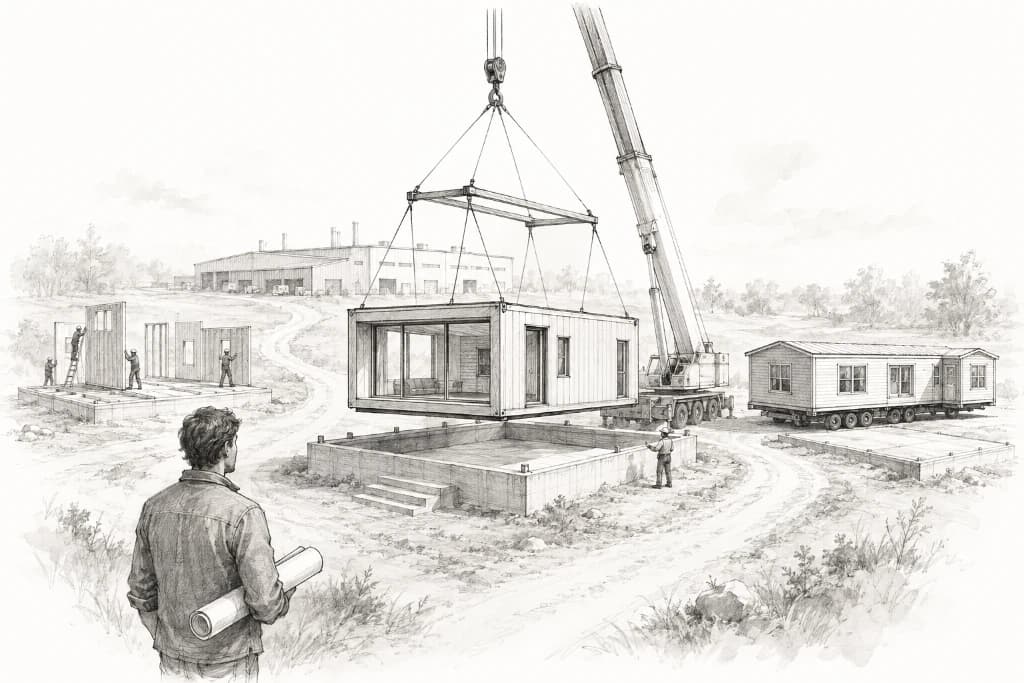
The Housing Accelerator Fund says its first $10 million for industrialized construction is committed across four Northern California projects. The money is for factory deposits and production-line slots, not a mortgage for a house on a private lot.

The Housing Accelerator Fund said on Aug. 6, 2026, that the initial $10 million Industrialized Construction Catalyst Fund is fully committed. HAF counts four Northern California affordable developments and about 430 homes. It also says the fund was raised to $15 million with support from JPMorganChase and the Chan Zuckerberg Initiative. Founding backers, according to the same release, include CZI and the U.S. Treasury’s CDFI Fund.
What the product actually buys is early cash that a typical affordable-housing loan does not. HAF says volumetric modular work needs factory deposits, production-line reservations, off-site materials, and early design money before the construction loan closes. Assemblymember Buffy Wicks, quoted in the release, put it as financing that “understands how industrialized construction works, from factory deposits to production-line reservations.” That is a developer-side gap. It is not a new FHA or conventional mortgage for a buyer shopping a single house.
The four projects HAF named
HAF lists Distel Circle in Los Altos (90 homes, EAH Housing, nearing completion more than four months ahead of schedule); Fairview Terrace in Stockton (74 senior homes, Mutual Housing California, modules in production); 2165 The Alameda in San Jose (172 middle-income homes, Cloud Apartments and Community Housing Works, construction financing expected in Q1 2027); and Cleveland Commons in Campbell (92 homes for seniors and veterans, Charities Housing, also targeting a Q1 2027 financing close).
Those four add to 428 units. HAF’s “approximately 430” is the figure to keep. HAF also projects that revolving the $15 million could support more than 1,000 homes over a decade. Treat that as the fund’s outlook, not a pipeline Prefably can verify.
What this is not
This is nonprofit and multifamily capital in California. It does not change how a household finances a modular home on their own lot. For that path, read modular home financing. Keep the type label honest: these projects are factory-built modules set to local code, not HUD-code manufactured homes. Prefab vs modular is the short version.
Shoppers looking at prefab homes in California should still ask which plant, which code path, and whether a factory slot is actually reserved. Listed companies that do volumetric modular in-state should say so on the profile. A Bay Area CDFI filling deposit checks is not a reason to blur those labels.
Keep reading