Buyer guide
Are Modular Homes as Durable as Traditionally Built Ones?
It's the question nearly every factory-built housing buyer asks first, and it deserves a direct, evidence-based answer.

Dmitry Bilchenko
Co-founder, Prefably
- Published
- Reading time
- 11 min read

Are modular homes as durable as traditionally built homes? It's the question nearly every factory-built housing buyer asks first, and it deserves a direct, evidence-based answer. The skepticism makes sense. For decades, "modular" and "mobile home" were used interchangeably in casual conversation, and older manufactured housing from the 1970s and 1980s did earn a rough reputation for wear. Modern modular construction is a different animal entirely, and the engineering data backs that up. This article walks through the code requirements, structural testing, real weather-event assessments, and maintenance realities so you can judge any modular home's durability on actual evidence. If you want to compare specific builders before you commit, Prefably's state-indexed directory lets you browse builder profiles and customer reviews to see which companies have a proven track record in your area. By the time you finish reading, you'll know exactly what to look for and what to ask.
Building codes and inspections: modular homes meet the same standard as site-built homes
The foundational fact that changes the entire durability conversation is this: modular homes must comply with the same state and local building codes as site-built homes. They are not held to a softer federal standard, and they are not in a regulatory gray zone. A modular home built for delivery in Texas must meet Texas building code, just like a house framed on a lot in Houston.
The confusion usually traces back to a real distinction that buyers deserve to understand clearly. HUD-code homes, commonly called manufactured or mobile homes, are governed by a federal standard set by the Department of Housing and Urban Development. That federal code is separate from state building codes, and it carries different implications for financing, insurance, and resale value. Modular homes belong to a different category entirely. They leave the factory with a state-issued compliance insignia certifying that the structure meets the applicable state code before it ever ships. That distinction matters enormously when you apply for a mortgage, shop for homeowners insurance, or eventually sell.
What makes modular construction particularly notable on the inspection side is the layered review process. Modules are inspected at multiple stages during factory production, and then a local inspector reviews the installation after the home is set on its foundation. That review covers foundation connections, utility hookups, seam sealing between modules, and final code sign-off. Many site-built homes receive fewer total inspection touchpoints across their entire construction timeline than a modular home receives from factory floor to final placement.
What FEMA data and engineering reports say about modular durability
The most credible third-party evidence on modular structural performance comes from FEMA's post-Hurricane Andrew assessment. The report's findings were direct: "Overall, relatively minimal structural damage was noted in modular housing developments," and "the module-to-module combination of the units appears to have provided an inherently rigid system that performed much better than conventional residential framing." That language is not from a builder's marketing brochure. It comes from a federal agency's post-disaster field assessment.
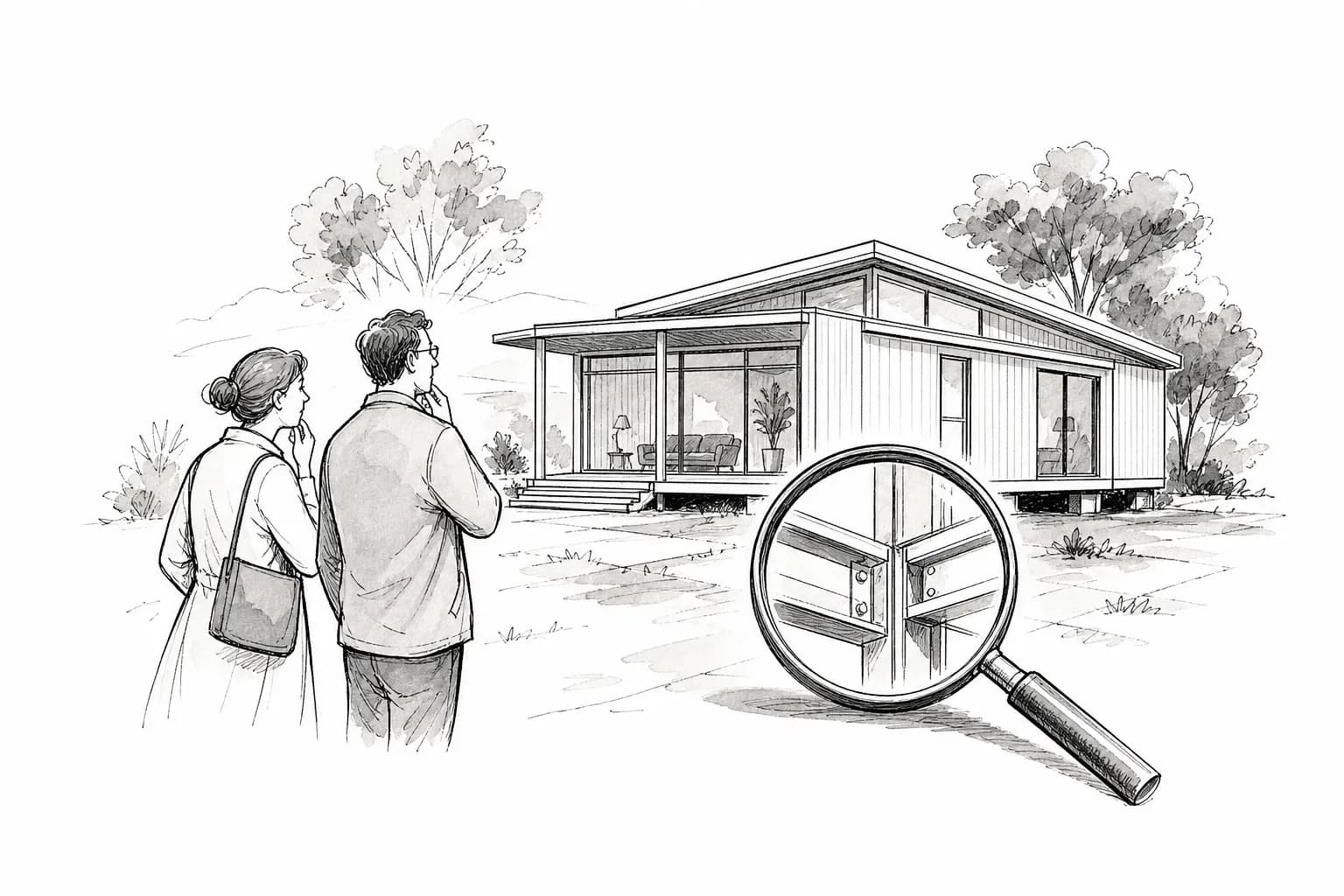
The engineering reason behind that finding matters. When individual modules are bolted together, the combined structure does not behave like a conventional stick-framed house built one stud at a time. Each module is essentially a rigid box, and when you connect rigid boxes with structural hardware and anchor them to a permanent foundation, the resulting structure distributes lateral wind forces through a fundamentally different load path than a site-built frame. That inherent rigidity is the mechanism FEMA observed performing well under Andrew's wind loads.
On seismic design, modular homes can be engineered to meet regional earthquake requirements, and the module-to-module and module-to-foundation connections can be designed for the shear and uplift demands that seismic zones require. What determines seismic performance is the engineering specification chosen for that home and that site, not the factory-built method itself. Buyers in earthquake-prone regions or hurricane corridors should ask builders specifically about wind and seismic design ratings before signing a contract.
How factory production quality shapes long-term durability
Controlled factory production creates durability advantages that are easy to overlook because they happen before anyone sees the finished home. Temperature and humidity inside a factory are managed throughout fabrication, which means wood framing cures under controlled conditions rather than sitting exposed to rain and sun during a multi-week framing phase. Precision assembly reduces the gaps and misalignments that become hidden moisture entry points over decades. These are not theoretical advantages, they show up in fewer defects found during on-site inspection and in lower long-term repair frequency when a factory maintains strict production discipline.
Several material choices make the biggest difference over a home's lifetime:
- Galvanized steel framing, which resists rot, termites, and warping better than standard timber
- Engineered wood trusses that provide consistent structural performance across the span
- Closed-cell spray foam that creates a tight air seal and limits the condensation that quietly damages wall cavities
- Corrosion-resistant connectors and fasteners at structural connection points
All of these choices are available in modular construction and are often specified more consistently in a factory setting than on a custom site-built project, where subcontractor substitutions are harder to monitor.
When evaluating a builder's quality discipline, two signals are worth requesting directly. ISO 9001 certification means the factory operates a documented quality management system with calibrated inspection equipment, staged production checks, and formal corrective-action processes. That certification doesn't apply to the home itself, rather, it confirms the company has a system designed to make quality repeatable rather than accidental. Third-party inspection programs add a second layer of verification, confirming that an independent reviewer, not just factory employees, is checking modules before they ship.
Extreme weather performance: wind, flooding, and foundation anchoring
Building on that engineering foundation, it's worth addressing weather performance directly. Modular homes are not automatically disaster-proof, and any builder who implies otherwise is oversimplifying. What is accurate is that a well-designed modular home on a properly engineered permanent foundation meets the same hazard-resistant code requirements as a site-built home in that region. The key variables are engineering specification, foundation design, and site-specific anchoring, not construction method.
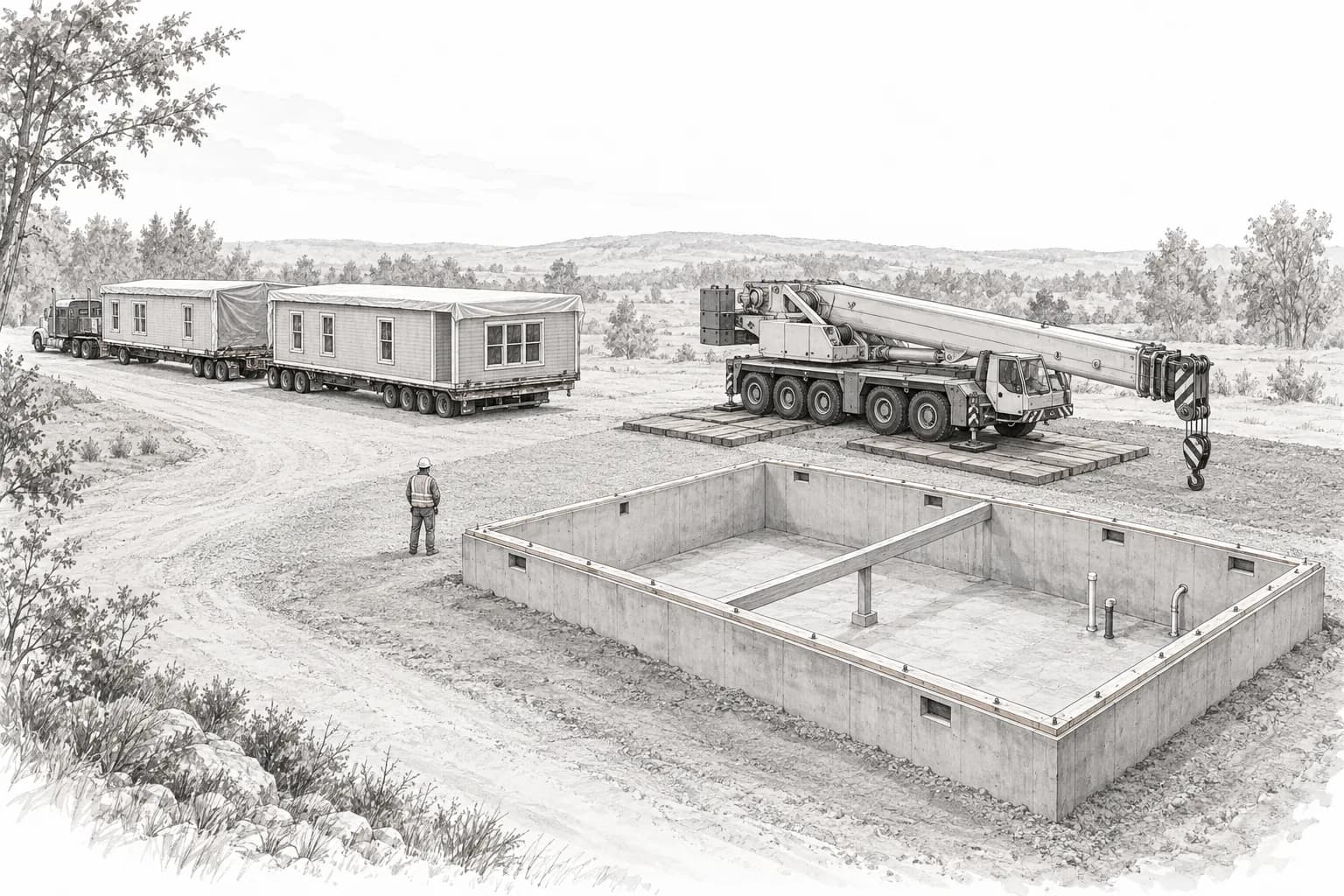
Modular homes are set on permanent foundations, including crawl spaces, basements, and slabs, and anchored with hardware designed to resist uplift, overturning, and lateral loads. A licensed engineer typically designs the foundation and anchorage system to match the site's soil conditions, wind zone, and frost depth requirements. That is a very different situation from older mobile homes on pier-and-tie systems, and buyers should not let confusion between those two categories drive their durability assessment.
Flood performance follows the same logic. Whether a home stays dry in a flood event depends on foundation elevation, floodplain engineering, and FEMA Base Flood Elevation compliance. A factory-built structure elevated to the correct height on a properly designed foundation performs the same as a site-built home at the same elevation. Buyers in flood zones need to verify that their builder and foundation engineer have addressed those requirements, regardless of which construction method they choose.
Long-term maintenance: what modular homeowners actually face
Modular homeowners face the same core maintenance categories as any homeowner: roof integrity, gutter and drainage management, HVAC service, foundation monitoring, exterior siding and sealants, and plumbing and electrical upkeep. None of those are surprises, and none are specific to factory-built construction. The one additional watchpoint that genuinely applies to modular homes is the connection seam between modules.
Where two modules meet, there is a sealant joint that requires periodic inspection and reapplication over the home's life. Water intrusion at these seams is the most commonly cited modular-specific maintenance item, and when it goes unchecked, it can lead to moisture damage that is more expensive to remediate than routine weatherstripping replacement. Checking seam sealants during an annual home inspection adds a modest extra step but carries no major cost burden when caught early. Left unnoticed for several seasons, however, it can become a costly repair.
Industry sources consistently put a well-maintained modular home's lifespan at 50 to 100-plus years on a permanent foundation, the same range cited for site-built homes. What drives longevity in either case is the quality of the materials, the consistency of maintenance, and the climate the home sits in. Construction method is not the dominant variable.
How to evaluate a specific builder's durability claims
Understanding that modular homes are as durable as traditionally built homes is the starting point, not the finish line. The more useful question for any buyer is whether the specific builder they're considering actually delivers on that standard. Warranty terms, inspection history, and customer references from older installations are where that question gets answered.
Before signing any contract, ask a prospective builder the following questions:
- What state and local building codes does your factory inspection program certify against?
- What foundation types do you work with, and do you engage a licensed engineer on foundation and anchorage design?
- What does your structural warranty cover, and for how long? (The industry standard is a 1-2-10 structure: one year for workmanship, two years for mechanical systems, and ten years for structural defects.)
- Can you provide contact information for homeowners who have had your homes for five or more years?
- Do you hold ISO 9001 certification or participate in any third-party inspection programs?
Prefably is built for exactly this kind of due diligence. The directory organizes modular, prefab, manufactured, and ADU builders by state so you can filter for companies that actually deliver and set in your county. Builder profiles include ratings and direct contact information, and because Prefably does not sell buyer inquiries as leads, your research stays private. You're comparing builder track records, not triggering a sales pipeline. When a builder makes durability claims in a sales conversation, having access to verified reviews from real customers in the same state is a meaningful check that generic search results simply can't provide.
The bottom line on modular home durability
The myth that factory-built homes are somehow less durable than site-built homes does not survive contact with the actual evidence. When you ask whether modular homes are as durable as traditionally built homes, the honest answer, backed by state code requirements, rigorous layered inspections, and FEMA's own post-hurricane field assessment, is yes, and in some conditions, they can outperform conventional framing under serious wind loads. Long-term durability comes down to the builder's quality discipline, the foundation engineering, and consistent ongoing maintenance. Prefab vs. site-built durability is not a question of which method is inherently stronger; it is a question of how well the engineering, materials, and workmanship are executed. The factory-built method itself is not the limiting factor.
Start your search with clear criteria in hand: the right codes, the right foundation type for your land, a structural warranty you understand, and references from homes that have been standing for a decade or more. Browse Prefably to find modular builders with verified reviews in your state and contact them directly, without your information being sold to anyone. The information you need to make a confident, durability-focused decision is out there. You just need to know what to ask.
Sources
Prefably does not provide construction, legal, appraisal, insurance, or lending advice. Requirements and costs vary by jurisdiction, property, contractor, and financing program. Verify the project with the relevant building officials and qualified professionals before signing contracts or transferring funds.
- Modular Building Institute: FAQ, quoting FEMA's post-Hurricane Andrew building performance report
- SoFi: How Long Do Mobile and Manufactured Homes Last?
- New York State Department of State: Factory Manufactured Buildings (Modular)
- Modular Home Builders Association: Guidelines, Standards, and Codes for the Residential Modular Industry
FAQ
- Are modular homes as durable as site-built homes?
- Yes. Modular homes are built to the same state and local building codes as site-built homes, and FEMA's post-Hurricane Andrew assessment found modular housing developments sustained relatively minimal structural damage compared to conventional framing. Long-term durability depends more on the builder's quality discipline, the foundation engineering, and ongoing maintenance than on the construction method itself.
- How long do modular homes last?
- Industry sources consistently put a well-maintained modular home's lifespan at 50 to 100 or more years on a permanent foundation, the same range cited for site-built homes. What actually drives longevity is the quality of the materials, the consistency of maintenance, and the climate the home sits in, not the construction method.
- Do modular homes hold up in hurricanes and severe weather?
- A well-designed modular home on a properly engineered permanent foundation is built to meet the same hazard-resistant code requirements as a site-built home in that region. FEMA's assessment after Hurricane Andrew found that the module-to-module connections created an inherently rigid structure that performed better than conventional residential framing under wind loads. Foundation design and site-specific anchoring, not the factory-built method, are the variables that matter most.
- What maintenance does a modular home need that a site-built home doesn't?
- The main extra item is the sealant joint where two modules meet. That seam should be checked during an annual home inspection and resealed as needed, since unnoticed water intrusion at these seams is the most commonly cited modular-specific maintenance issue. Every other maintenance category, roofing, HVAC, foundation, siding, plumbing, and electrical, is the same as for any home.
- What should I ask a builder to confirm a modular home's durability?
- Ask what state and local codes the factory inspection program certifies against, what foundation types the builder works with and whether a licensed engineer designs the foundation and anchorage, what the structural warranty covers and for how long, whether the builder holds ISO 9001 certification or uses third-party inspection programs, and whether they can connect you with homeowners who have lived in one of their homes for five or more years.
Keep reading