Research
Modular Home Quality: How Does It Compare to Stick Built?
A home built in a factory carries a reputation problem the codes, the engineering, and the storm data don't actually support.

Dmitry Bilchenko
Co-founder, Prefably
- Published
- Reading time
- 13 min read
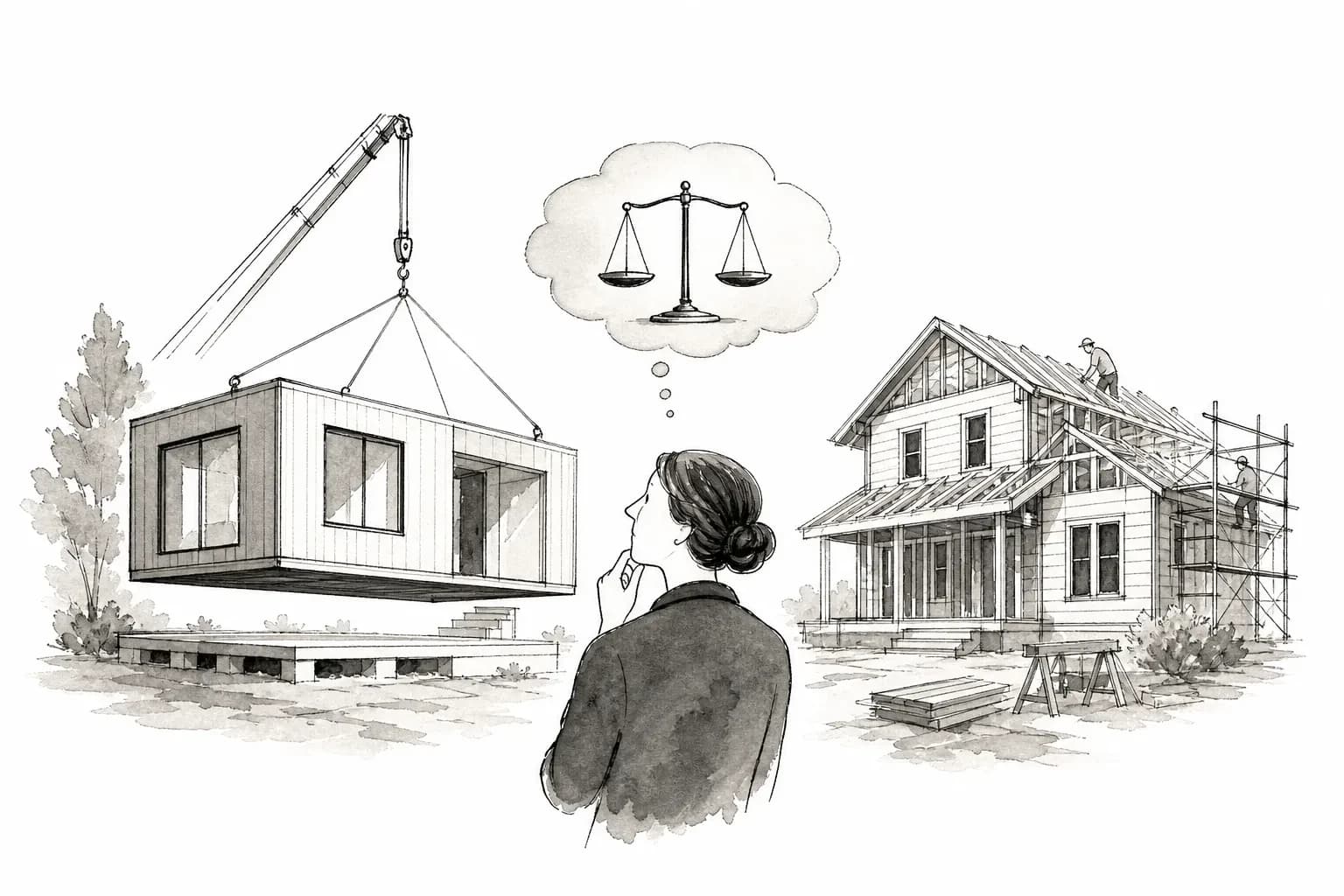
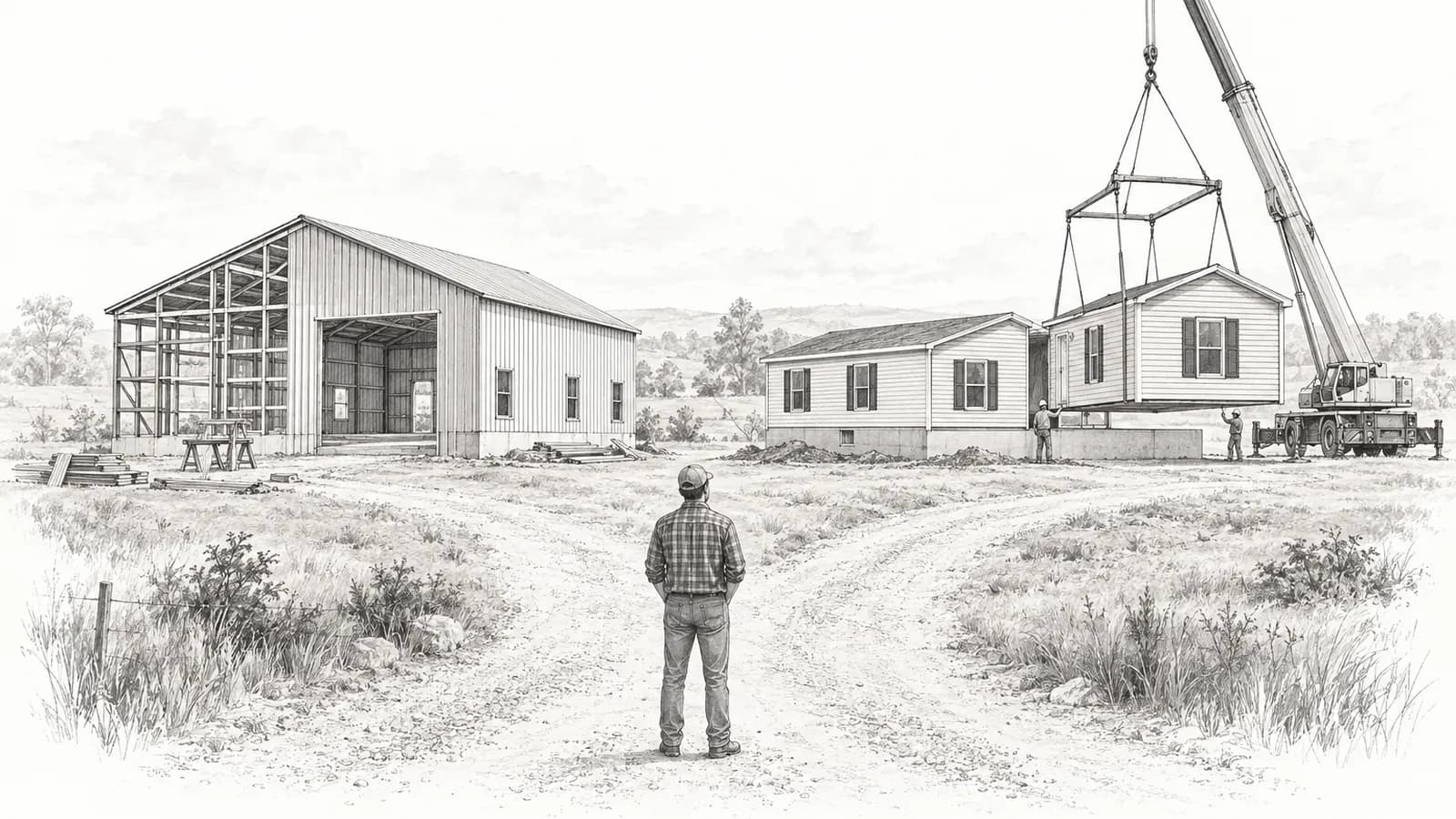
Many buyers walk into the prefab research process carrying a quiet assumption: that a home built in a factory must be a step below one built on-site. Questions about modular home quality are understandable given how the industry has been marketed over the past few decades, but when you hold those concerns up against actual building codes, engineering data, and documented performance metrics, they get harder and harder to defend.
The quality of a modular home is shaped by a specific set of factors: the codes it must meet, how the production environment affects structural consistency, its energy performance over time, and the defects buyers should actually watch for. This article works through each of those factors so you can compare modular and site-built construction on evidence rather than assumption. For cost, timeline, financing, and resale side by side, see Modular vs Stick-Built Homes; this guide goes deep on the quality question alone.
Where modular home quality reputation came from
The skepticism has a real origin, and it isn't entirely unfair in its historical context. Decades of marketing language around "prefabs" and "mobile homes" blurred important distinctions in the public mind, and that blurring created a lasting impression that hasn't kept pace with how the industry has evolved.
The manufactured vs. modular distinction most buyers miss
Manufactured homes are built to the federal HUD Code, a performance standard administered at the federal level and separate from any state or local building code. Modular homes are built to the state-adopted building code, typically the International Residential Code (IRC) for one- and two-family homes or the International Building Code (IBC) for multifamily, plus all applicable state amendments. This is not a technicality. It determines which materials, framing methods, electrical systems, and insulation levels are required, and it places modular construction under the same regulatory framework as the conventionally built house next door.
The category confusion runs deep enough that many buyers still treat "prefab," "manufactured," and "modular" as synonyms. They are not legally, structurally, or code-wise equivalent. Conflating them is what created the quality problem in the first place, and separating them is where any serious comparison has to start.
Why the old reputation doesn't reflect modern factory construction
The mental reference point for many buyers is a 1980s double-wide. Factory construction methods, quality assurance processes, and materials have changed substantially since then. Modern modular builders routinely use engineered lumber, high-performance insulation systems, and digital dimensional tolerances that simply weren't part of factory production in that era. The valid comparison for a modern modular home is a site-built home built under the same state building code, not a previous generation of manufactured housing. Once you make that comparison correctly, the picture looks very different.
How factory production can strengthen structural performance
Factory-built construction offers structural advantages that an open job site can't replicate with the same consistency. The common buyer worry, "isn't it weaker because it's built in pieces?", turns out to have an answer grounded in basic engineering requirements.
The structural demand of transport and crane setting
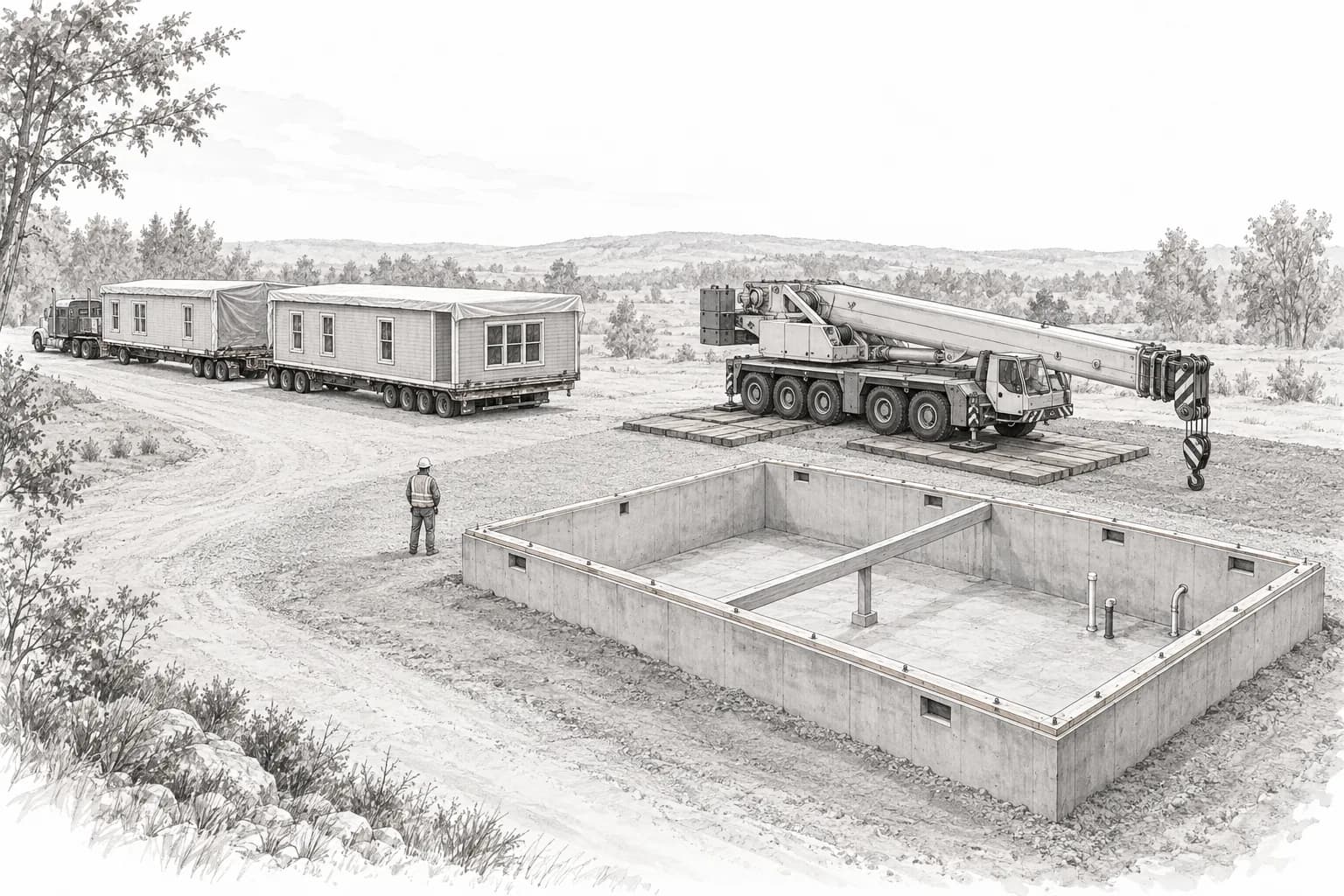
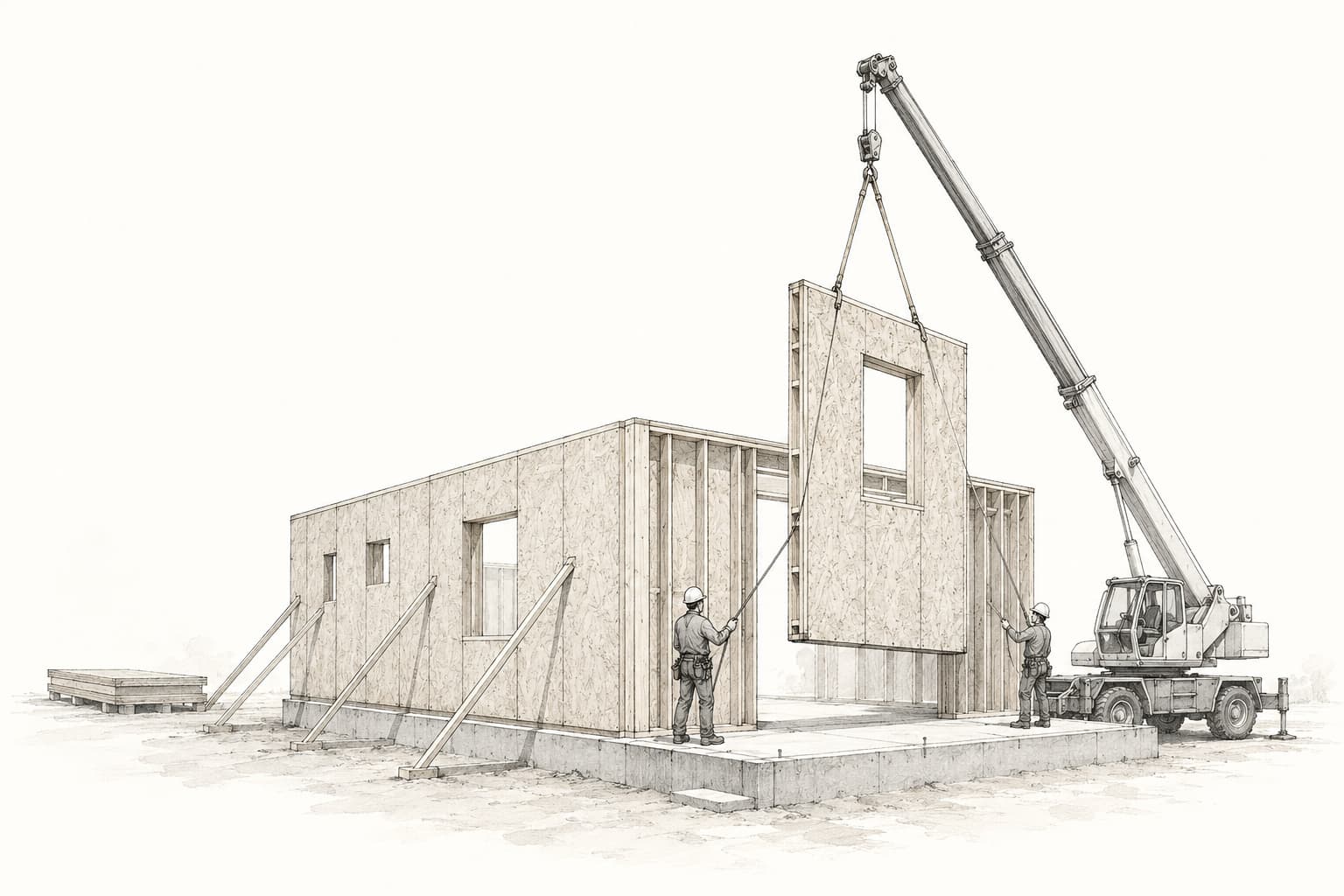
Before a modular unit ever connects to a foundation, it must survive flatbed transport over public roads and crane placement at the build site. Surviving those loads requires additional framing reinforcement and connection hardware beyond what a comparable site-built wall section demands. That's an engineering requirement built into the production process, not a marketing claim. As a result, modular home quality at the structural level often meets or exceeds the specifications of equivalent site-built framing, because the transport-and-crane loading case imposes forces that standard residential construction never has to account for.
Controlled environment and quality control checkpoints
Building in a factory removes weather exposure during framing. Moisture intrusion during the framing stage is a well-documented problem in site-built construction, and eliminating that exposure window is one of the clearest production advantages modular builders hold. Structural, mechanical, and envelope elements are verified at integrated inspection checkpoints during the production line, before the modules ever leave the plant. Site-built construction relies on on-site supervision, which is less consistent by nature. The factory environment doesn't guarantee better quality in every case, but it creates conditions that make consistent quality easier to achieve.
What FEMA documented after Hurricane Andrew
After Hurricane Andrew struck Florida, FEMA assessments found that modular homes in the affected area sustained relatively minimal structural damage compared to surrounding site-built structures. The finding was attributed to the module-to-module connection system, which created an inherently rigid structure that performed well under wind loading. For context, FEMA documented that over a third of site-built homes in the affected area were substantially damaged, while the vast majority of manufactured homes were destroyed. Modular homes sat in a different category entirely, performing comparably to or better than conventional construction.
The building codes modular homes must actually meet
This is the most direct correction to the lower-quality assumption. Buyers often expect modular homes to be held to a softer standard. In practice, they are built to the same code as any other house in the jurisdiction. In many states, they also face additional state-level certification requirements that site-built homes don't encounter.
Modular homes must satisfy the applicable state building code, including energy codes, plumbing codes, mechanical codes, and electrical codes. That's the full regulatory stack, not just structural framing. Several states have formalized modular certification programs with their own oversight layers. New York requires modular units to bear an Insignia of Approval under the Uniform Code and State Energy Code. South Carolina runs its own modular certification program with detailed plan reviews and inspections. California's Department of Housing and Community Development administers a program covering design approval, factory inspections, and site inspections. These programs are not rubber stamps, and they don't exist everywhere, but where they do, they add a verification layer that site-built construction doesn't carry.
After the modules arrive on site, local authorities conduct a final inspection before issuing a certificate of occupancy. That document is legally identical to the certificate issued on a conventionally built home. Lenders and insurers treat it the same way, because it is the same document.
Assessing modular home quality through energy efficiency and long-term performance
Factory-controlled assembly produces a consistently tighter building envelope because joints and connection points are assembled under controlled conditions rather than exposed to variable on-site workmanship. That consistency shows up in standardized energy testing.
HERS scores and airtightness in modular construction
ENERGY STAR-certified modular homes have been documented at average HERS scores around 50, compared to the code-reference benchmark of 100 for a code-minimum site-built home. Airtightness measured at 2.82 air changes per hour (ACH) has been reported in ENERGY STAR modular programs, against the EPA's tight-envelope benchmark of 3.50 ACH. Lower ACH numbers indicate a tighter building envelope, so the modular figures represent meaningfully better performance than the EPA threshold. The key advantage is consistency: factory production reduces the workmanship variability that causes performance gaps in site-built homes. A well-designed site-built home can match these numbers, but achieving them reliably across a production run is harder without the controlled environment.
Expected lifespan of a properly built modular home
Published guidance from trade organizations and structural engineering literature consistently places the lifespan of a properly installed, well-maintained modular home in the same range as a site-built house. Longevity is driven by the same factors in both construction types: foundation quality, moisture management, design, and maintenance. There is no inherent structural limitation tied to factory origin. A modular home built on a permanent foundation and maintained normally carries no shortened life expectancy compared to a conventionally built house next door.
Common defects, inspection red flags, and what to watch at delivery
Being evidence-based means acknowledging where problems actually occur. Modular construction has documented defect categories, and knowing them puts buyers in a better position than relying on general impressions.
The defect categories that show up most often
Quality-control research on modular construction defects identifies geometric and dimensional issues as the largest defect category, accounting for around 26.7% of reported cases. These include misalignment, out-of-plumb conditions, interface levelness problems, and set-out deviations. Material and component defects follow at 22.1%, covering concrete deterioration, non-conforming materials, and substandard connection components. Water leakage at module joints and insulation gaps in the building envelope appear consistently across studies. MEP defects, including plumbing leaks and HVAC faults, are the least frequent category at under 6%, though they still occur.
What a buyer or inspector should examine at and after delivery
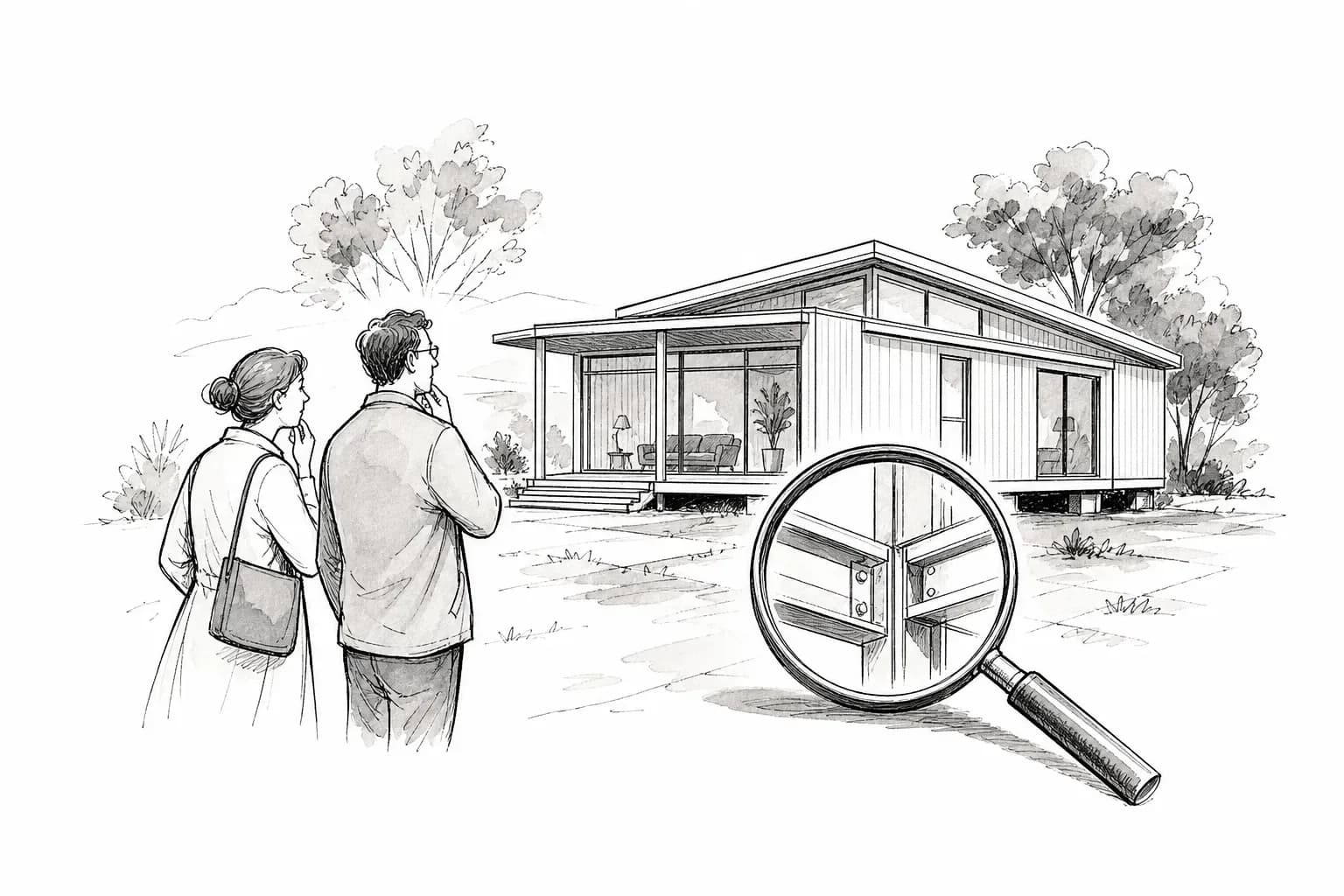
The module-to-module connections and seams deserve close attention. Look for gaps or cracking where sections join, poorly sealed cladding, and defective fire-stopping, all of which are recurring field issues in documented research. Interior finishes, door and window alignment, and rough electrical work also carry elevated defect rates. A third-party inspection at delivery and again after final site completion is worth the cost on any factory-built home purchase. Inspector associations and modular industry groups consistently recommend independent inspections for factory-built homes for exactly this reason: an independent inspector who knows modular construction will catch issues that fall between the factory checkpoint and the local authority's final walkthrough.
Warranties, resale value, and choosing the right builder
The quality picture doesn't end at the certificate of occupancy. What happens after you move in, and who stands behind the product, matters just as much as the construction process itself.
Understanding the 1-2-10 warranty structure
The industry-standard warranty framework covers workmanship and materials for one year, mechanical systems (electrical, plumbing, and HVAC) for two years, and structural defects for ten years. Some manufacturers extend structural coverage to 12 or 20 years. The warranty is typically split among the factory, the on-site builder, and sometimes a third-party warranty insurer, so buyers need to know which party handles which type of claim before signing anything. A structural defect claim directed to the wrong party can stall for months. Get the coverage split in writing and ask specifically who you call for each category.
Resale value and financing implications
Modular homes built on permanent foundations are classified as real property, the same classification as site-built homes. This makes them eligible for conventional mortgages, and appraisers generally value them using comparable site-built sales rather than applying a factory-origin discount. According to the U.S. Census Bureau's American Housing Survey, factory-built homes on owned land have shown appreciation rates very close to site-built homes over multi-decade periods, though it's worth noting that data for manufactured homes on owned land is more extensive than modular-specific longitudinal datasets. Some local markets still show modest resale friction due to buyer perception, but this is a market-behavior effect in specific regions, not a standard appraisal rule. For the lending process itself, see Modular Home Financing: Can You Get a Conventional Loan?
Finding a quality modular builder using verified ratings
No set of codes or warranty terms fully substitutes for a builder's track record. Builder quality varies significantly within the modular category, and the gap between a strong factory operation and a weak one is wide enough to affect everything from delivery accuracy to post-move-in support. Prefably's builder directory is designed to help buyers make that comparison. It lists modular home companies organized by state, with builder profiles that include customer ratings so you can review documented feedback before any sales conversation begins. That step, evaluating track records before picking up the phone, is where most well-prepared modular buyers start.
The bottom line on modular home quality
Modular home quality, when evaluated on code compliance, structural engineering, and documented performance data, holds up well against site-built construction. These homes are built to the same building codes as conventionally constructed houses, often reinforced beyond those standards by transport and installation requirements, and documented to perform comparably on structural durability, energy efficiency, and long-term lifespan. The lingering quality skepticism is mostly a product of category confusion, specifically conflating modular with HUD-code manufactured housing, rather than current evidence about how modern factory-built homes actually perform.
Buyers who focus on code compliance, factory QC processes, module joint workmanship, and builder reputation will make a more informed decision than those who default to gut-level assumptions based on an outdated industry image. Overall, modular home quality matches or exceeds site-built homes when buyers choose code-compliant builders with documented track records. The evidence supports factory-built construction as a legitimate, well-regulated alternative to site-built homes, not a compromise.
If you're ready to compare builders in your state, Prefably's directory gives you a lead-free starting point with customer ratings and state-indexed profiles. The directory is organized by state, includes buyer feedback on each builder profile, and requires no contact with builders to browse.
Sources
Prefably does not provide construction, legal, appraisal, insurance, or lending advice. Requirements and costs vary by jurisdiction, property, contractor, and financing program. Verify the project with the relevant building officials and qualified professionals before signing contracts or transferring funds.
FAQ
- Is a modular home lower quality than a stick-built home?
- Not inherently. Modular homes are built to the same state-adopted building code as stick-built homes in the same jurisdiction, and the transport-and-crane loading case they must survive often requires additional structural reinforcement beyond standard site-built framing.
- Are modular homes and manufactured homes the same thing?
- No. Manufactured homes are built to the federal HUD Code. Modular homes are built to the state-adopted building code, typically the IRC or IBC plus state amendments, the same regulatory framework as a conventionally built house. Conflating the two is the main source of the modular quality reputation problem.
- How did modular homes perform in Hurricane Andrew?
- FEMA assessments found modular homes in the affected area sustained relatively minimal structural damage compared to surrounding site-built structures, attributed to the rigidity of the module-to-module connection system. Over a third of site-built homes nearby were substantially damaged, while the vast majority of manufactured homes were destroyed.
- Are modular homes more energy efficient than stick-built homes?
- ENERGY STAR-certified modular homes have been documented at average HERS scores around 50, against a code-minimum benchmark of 100, with airtightness reported at 2.82 ACH against the EPA's 3.50 ACH tight-envelope threshold. A well-built site-built home can match those numbers, but factory production makes hitting them consistently easier.
- What are the most common defects in modular construction?
- Quality-control research identifies geometric and dimensional issues, misalignment, out-of-plumb conditions, and set-out deviations, as the largest defect category at around 26.7% of reported cases, followed by material and component defects at 22.1%. Module-to-module joints and seams are the most consistent problem area.
- How long do modular homes last?
- Trade organizations and structural engineering literature place the lifespan of a properly installed, well-maintained modular home in the same range as a site-built house. Longevity depends on foundation quality, moisture management, design, and maintenance, not the construction method.
- What warranty coverage should a modular home have?
- The industry-standard 1-2-10 structure covers workmanship and materials for one year, mechanical systems for two years, and structural defects for ten years, sometimes extended to 12 or 20. Coverage is typically split among the factory, the on-site builder, and sometimes a third-party insurer, so confirm in writing which party handles which claim type.
- Do modular homes hold their resale value?
- Modular homes on permanent foundations are classified as real property and are typically appraised using comparable site-built sales rather than a factory-origin discount. Some local markets still show modest resale friction from buyer perception, but that is a market-behavior effect in specific regions, not a standard appraisal rule.
Keep reading