Buyer guide
Prefab Tiny Homes: Types, Codes and Real Costs
Two tiny homes can look the same in the listing photos and cost about the same. One of them is legally a vehicle. The other is a house. The certification label is what decides which is which.

Dmitry Bilchenko
Co-founder, Prefably
- Published
- Reading time
- 14 min read
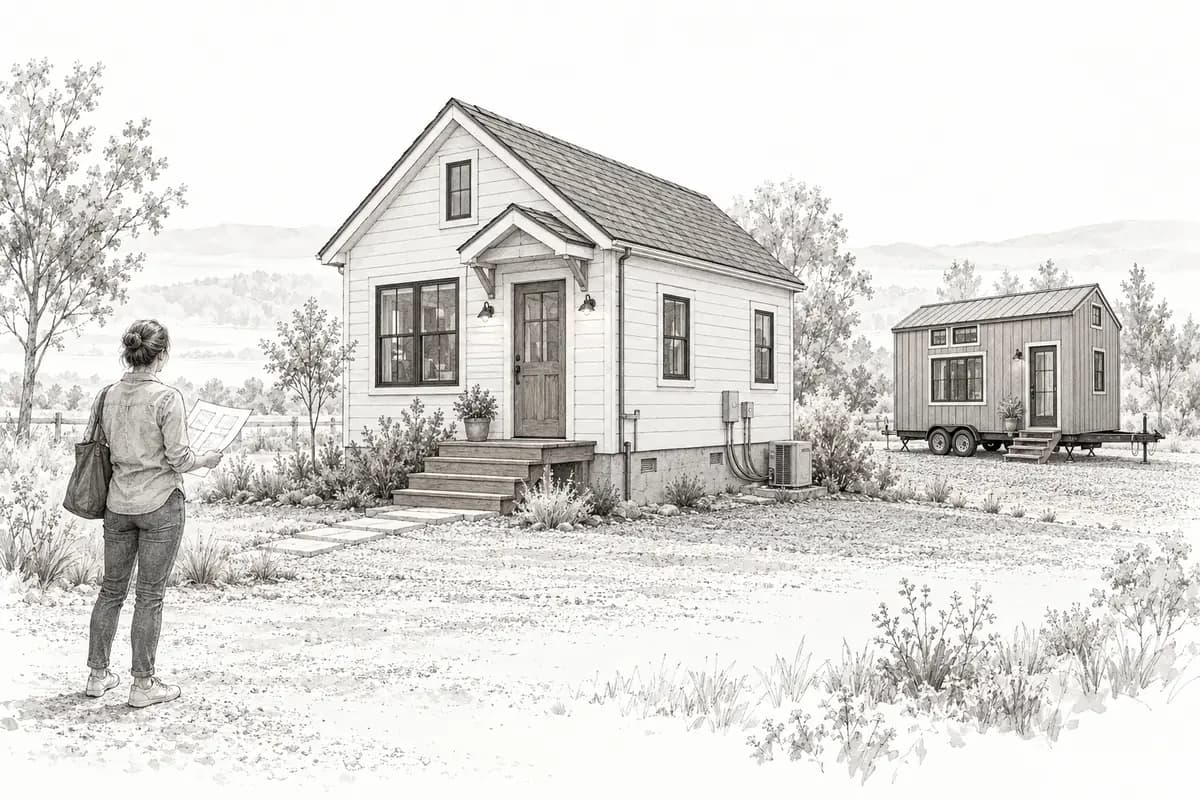
Two tiny homes can look the same in listing photos and carry nearly the same price. On 28 September 2026, one Kentucky builder's inventory page listed a 399 sq ft park model RV at $64,135.50 and a 480 sq ft modular cabin, approved under Kentucky code, at $61,150 (Trailhead Cabins). Nothing in the photos tells you which one is legally a vehicle and which one is a house. The certification label does.
That label is the argument of this guide. With prefab tiny homes, the rulebook a unit is certified to decides where you can live in it, how you can pay for it and what it costs once it is on your land. It matters more than the floor plan or the sticker price.
"Prefab tiny home" covers everything from an unfinished shell to a code-built cottage, so the sections below separate how a tiny home is built from which rulebook it follows. Then they look at what published prices leave out, and how to shortlist builders.
What counts as a prefab tiny home
"Tiny" has a code definition. The International Residential Code's Appendix AQ treats a tiny house as a dwelling of 400 square feet or less, not counting lofts (ICC, 2021 IRC Appendix AQ). Builders use the word more loosely: one company in the price snapshot further down lists 480 and 576 sq ft cabins alongside its 399 sq ft park models.
"Prefab" is the wider word. A prefabricated tiny home is one where a large share of the house is built off site, in a factory or shop, then delivered. Modular is one prefab method among several, which is why prefab and modular are not the same thing, even though listings often use them interchangeably.
So every prefab tiny home listing hides two separate decisions:
- How it is built: finished modules, flat panels, a kit, or a house on a trailer chassis.
- Which rulebook it is certified to: an RV standard, the park model RV standard, the federal HUD Code, or a state or local building code.
A prefab tiny home, then, is a small dwelling, usually 400 sq ft or less, built largely in a factory. It can be certified as an RV, a park model RV, a HUD Code manufactured home or a code-built house, and that certification decides where it can be placed, how it is financed and how it is taxed.
Build method × rulebook: how the two decisions combine
| Build method | RV (NFPA 1192) | Park model RV (ANSI A119.5) | HUD Code manufactured home | IRC or state modular code |
|---|---|---|---|---|
| Finished modules | Rare | Rare | Possible | Common |
| Flat panels | Not applicable | Not applicable | Rare | Common |
| Kit or shell | Not applicable | Not applicable | Not applicable | Possible, once finished and inspected on site |
| Trailer chassis (tiny house on wheels) | Common | Common | Possible | Rare |
Based on the definitions in RVIA's tiny homes guidance, 24 CFR 3280.2 and IRC Appendix AQ. "Possible" means the definitions allow it, not that it is typical.
How prefab tiny homes are built
The build method shapes the timeline, how much work happens on your lot, and how the home travels. It does not settle whether you can live in it there.
Modular tiny homes
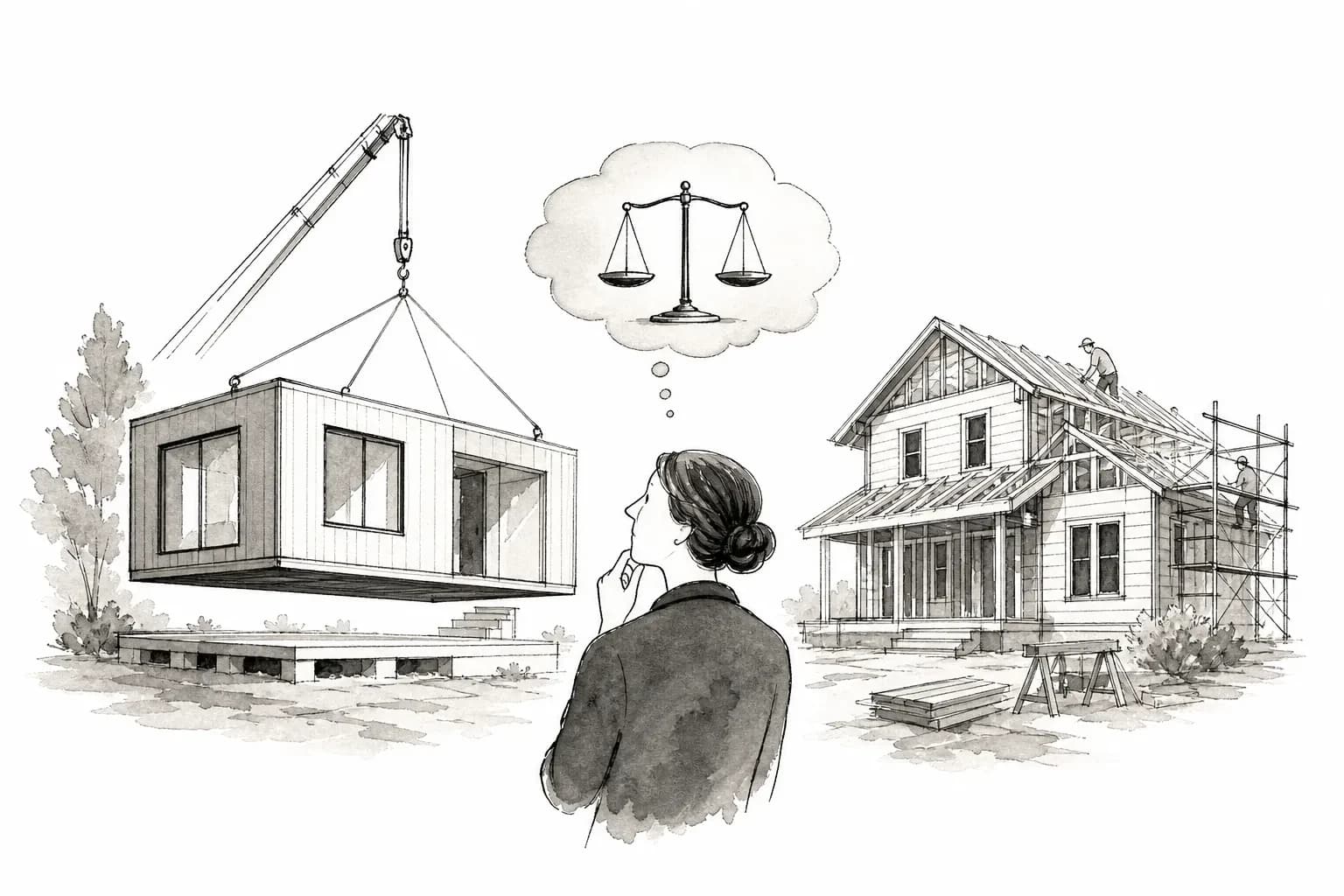
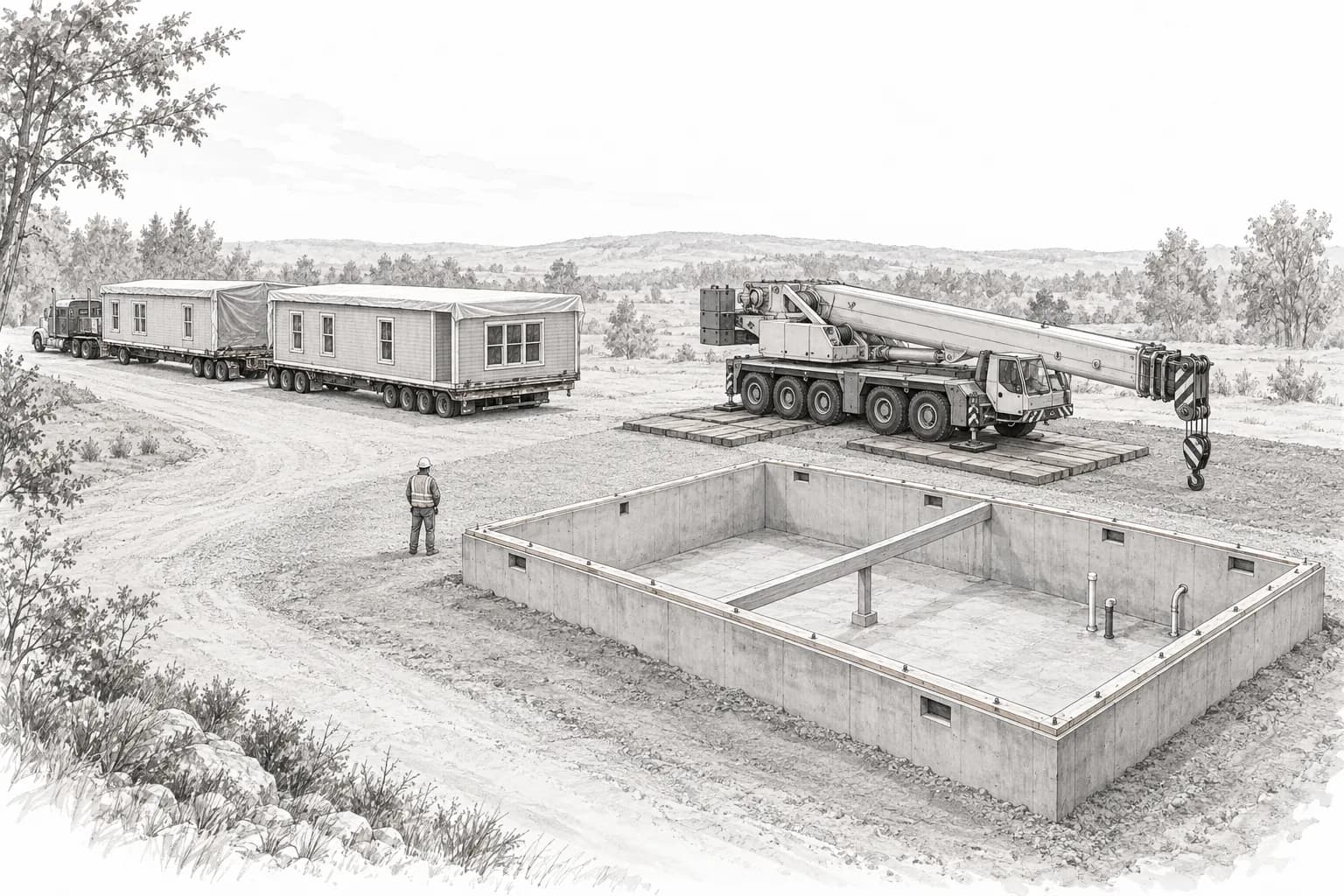
Prefab modular tiny homes are built as finished three-dimensional boxes in a plant, trucked to the site, craned onto a foundation and connected there. Modular construction follows the same building codes as a site-built house; there is no separate modular code, and in most states a state agency oversees the plants (Modular Building Institute). Riverside Cabins in Montana, for example, says its modular cabins are built to the IRC and must be secured to a permanent foundation (Riverside Cabins FAQ).
Panelized tiny homes
Walls, floors and roof are built as flat panels and assembled on your foundation, so more of the finishing happens on site than with modules. The rulebook is the same local building code as any house. The tradeoffs are covered in the panelized homes guide.
Kits and shells
Tiny house kit homes are materials packages, sometimes pre-cut, that you or a contractor assemble. A shell is a weathertight exterior with little or nothing finished inside. If a "tiny home" is listed at a fraction of the prices in the snapshot below, check whether it is a kit or shell, and read the listing for what is missing: foundation, plumbing, electrical, insulation, permits. If you want to do the build yourself, the kit homes guide covers owner-builder financing and inspections.
Tiny houses on a trailer chassis
A tiny house on wheels is built on a trailer, and many look and feel like small houses inside. TruForm Tiny, for example, describes its homes on wheels as RVIA-certified and "built on custom DOT-approved trailers" (TruForm Tiny). The construction may look residential. The rulebook usually is not.
The rulebook decides where it can legally live
Most finished prefab tiny homes you will see listed are certified to one of four rulebooks. Each was written for a different use, and that original use follows the home onto your land.
RVs built to NFPA 1192
The RV Industry Association defines recreational vehicles as vehicle-type units designed primarily as temporary living quarters for recreational, camping or seasonal use. They are regulated as vehicles by the National Highway Traffic Safety Administration and certified to the NFPA 1192 standard (RVIA). By that definition, an RV can be towed on public roads without a special highway permit.
Park model RVs built to ANSI A119.5
A park model RV is a trailer-type unit on a single chassis with a gross trailer area of no more than 400 sq ft in setup mode, certified to ANSI A119.5. By RVIA's definition, it is still temporary or seasonal living quarters (RVIA). Several builders in the snapshot sell park models, including Alabama Custom Cabins, which describes its cabins as "ANSI 119.5 certified" (Alabama Custom Cabins).
RVIA's own guidance contains the line that matters most for buyers. If a manufacturer markets its tiny homes for permanent residence, those units cannot be considered RVs or park model RVs. They must meet local building codes, state modular codes or HUD rules instead (RVIA).
Some builders of tiny houses on wheels add third-party certification. NOAH combines NFPA 1192, ANSI A119.5 and the electrical code with residential energy and structural requirements, and inspects each home during construction. NOAH is also clear that each local jurisdiction decides how long you can live in a tiny home on wheels (NOAH). A better-built RV is still an RV to your county.
HUD Code manufactured homes
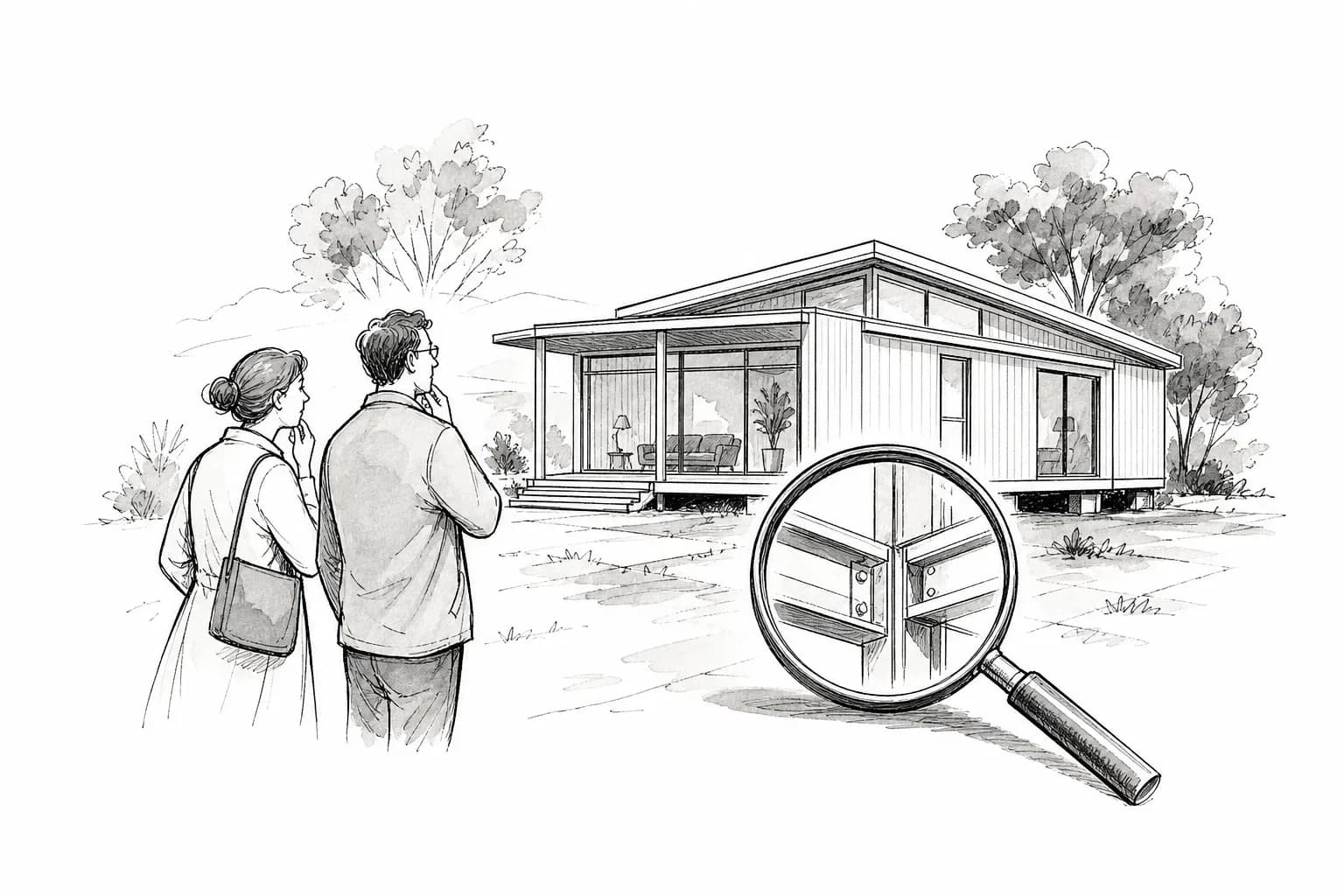
A manufactured home is built to the federal HUD Code. Under 24 CFR 3280.2, that means a transportable structure that is 8 body feet or more wide or 40 body feet or more long when traveling, or 320 sq ft or more when set up, built on a permanent chassis and designed as a dwelling with or without a permanent foundation (24 CFR 3280.2). HUD authorizes a certification label for each section of a compliant home (HUD). Size alone does not make a home HUD Code: it also has to be built on a permanent chassis and carry that label. Ask to see it rather than assume.
Code-built tiny houses on a foundation
A tiny house on a permanent foundation can be built to the IRC or a state modular program. On tiny home code requirements, Appendix AQ relaxes the rules that are hardest to meet in 400 sq ft: compact stairs, ladders to lofts, loft ceiling heights, and loft guards and escape openings. It still sets floors, such as 6 ft 8 in ceilings in habitable rooms and hallways, and 6 ft 4 in in bathrooms and kitchens (ICC).
Appendix AQ is an appendix, so it only applies where a state or city adopts it. Local zoning on lot size, setbacks and minimum dwelling size still applies either way. The guide to finding a tiny home builder that ships to your state covers Appendix Q and zoning checks in more detail.
Why the label matters more than the floor plan
Once you know the rulebook, most of the practical questions answer themselves.
| Rulebook | Designed for | Financing starts with | Tax question to ask | Confirm with |
|---|---|---|---|---|
| RV (NFPA 1192) | Temporary, recreational or seasonal use | Lenders that finance vehicles | Is it registered as a vehicle or assessed as property? | County planning and assessor |
| Park model RV (ANSI A119.5) | Temporary or seasonal use, up to 400 sq ft | Lenders that finance park models or vehicles | Same as RV | County planning and assessor |
| HUD Code | A dwelling, with or without a permanent foundation | FHA Title I and other manufactured home loans | Personal or real property, depending on how it is titled and affixed | County zoning, assessor, lender |
| IRC or state modular | A permanent dwelling on a foundation | Mortgage and construction loans, like other houses | Real property | Building department and lender |
Financing. HUD's Title I program insures loans for new or used manufactured homes when the buyer will live in the home as a principal residence (HUD). A code-built modular tiny home on a permanent foundation is financed like other houses. Riverside Cabins makes exactly that point about its IRC-built modular cabins (Riverside Cabins FAQ). For how lenders treat each type, see how to get a mortgage for a factory-built home and the modular home financing guide.
Taxes. Whether you pay property tax on the home, or vehicle-style registration, depends on whether your county treats it as personal property or real property. Call the county assessor before you buy, with the certification label in hand.
ADUs. An accessory dwelling unit is a second home on a lot that already has one. It is a zoning category, not a construction method. Because an ADU is permitted as a dwelling, a code-built tiny home fits that path most directly. Whether a tiny house on wheels can serve as an ADU is a local decision. The prefab ADU guide covers the permitting side.
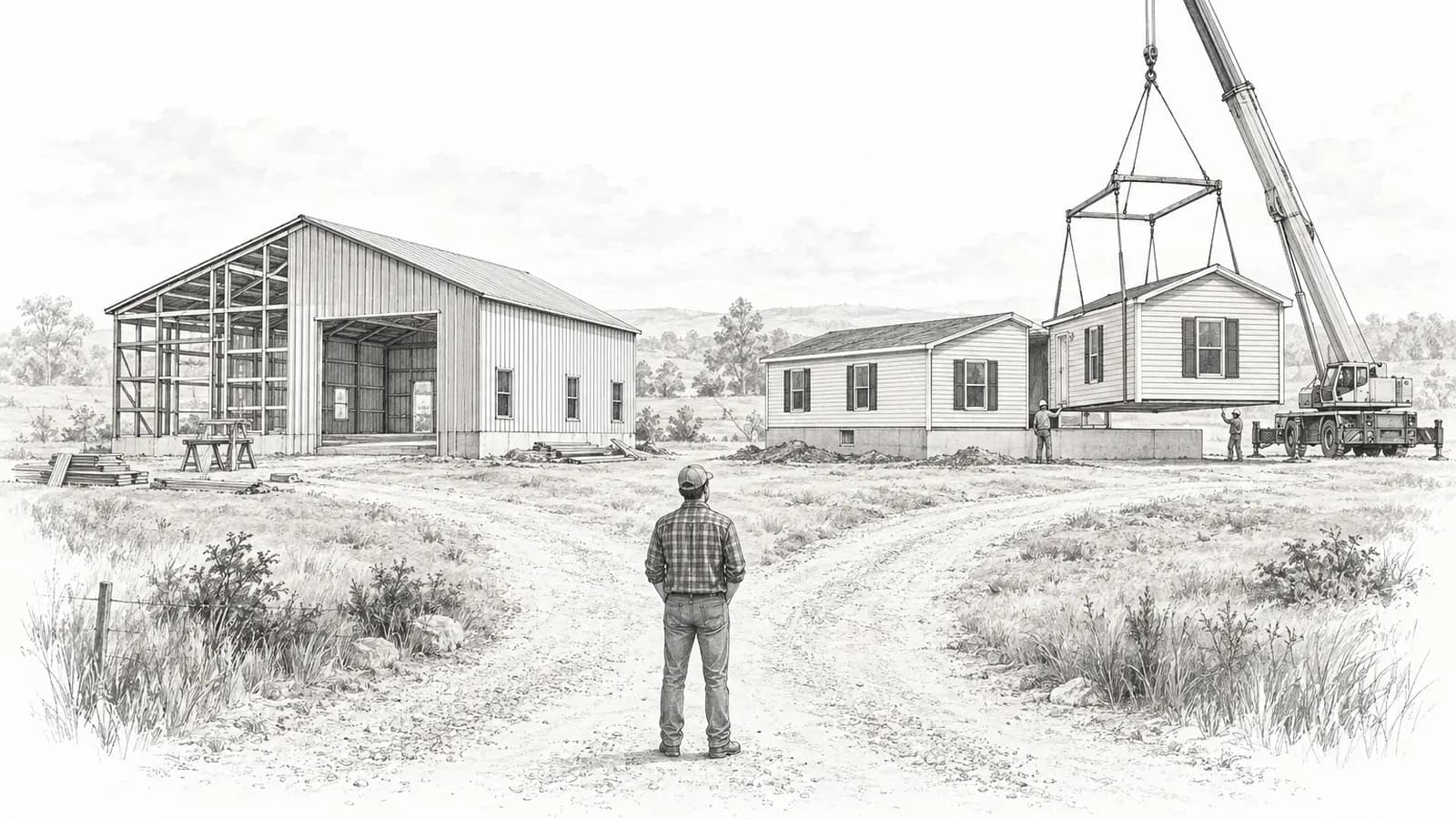
The counterargument: isn't a tiny home on wheels the more flexible choice?
The case for wheels is real. A tiny house on wheels certified as an RV is treated as a vehicle rather than a building, can go to an RV park, and can move if your plans or the local rules change. For some buyers that flexibility is the whole point.
It holds up for seasonal use, for travel, and on land where the county explicitly allows long-term RV occupancy. It breaks down for the most common goal behind a tiny home search: living full time on your own lot, financing the home like a house, and selling it later as real estate. RVIA itself says RVs and park models are not designed or intended to be permanent homes (RVIA), and NOAH leaves the length of stay to the local jurisdiction (NOAH).
So the flexibility is real, and it applies to a particular kind of life. Choose the rulebook that matches the way you plan to live, then choose the model.
What the listed price includes, and what it doesn't
Tiny home prices only compare cleanly within the same rulebook and the same scope. A shell kit, a park model and a code-built modular cabin are three different purchases, even at similar square footage.
To show how this plays out, we collected published prices from the websites of tiny home builders listed on Prefably on 28 September 2026. These are starting or listed prices on one date, not averages or quotes, and they change.
| Builder (state) | Model | Published price | Size | Rulebook stated | What the price covers, per the builder |
|---|---|---|---|---|---|
| Alabama Custom Cabins (AL) | The Nest | From $38,999 | 216 sq ft | ANSI 119.5 park model | Fully finished; delivery included within 100 miles |
| Trailhead Cabins (KY) | The Claremont | $64,135.50 | 399 sq ft | Park model RV | "Turn Key" |
| Trailhead Cabins (KY) | The Concho | $61,150 | 480 sq ft | Modular, Kentucky code approved | "Turn Key" |
| Modern Tiny Living (OH) | 12 to 18 ft homes | $79,000 to $99,000 | 12 to 18 ft long | On wheels, none stated on pricing page | Upgrades extra |
| NOMAD Tiny Homes (TX) | The Nomad | From $95,000 | 24 or 28 ft | Site links to NOAH+ certification | "Move-in ready" with standard selections |
| TruForm Tiny (OR) | Urban Payette | From $99,500 | Not stated | RVIA-certified, on wheels | Not stated |
| Spindrift Tiny Homes (OR) | The Sonoma | $110,000 | 26 x 8.5 ft | Not stated on model page | Everything in the model photos, except decor |
| Seattle Tiny Homes (WA) | ALKI PMRV | $115,500 | 10 x 32 ft | Park model RV | Not stated |
| Riverside Cabins (MT) | Modular cabins | Quote only | Varies | IRC modular, permanent foundation | Shipping, crane and installation; buyer handles site prep and foundation |
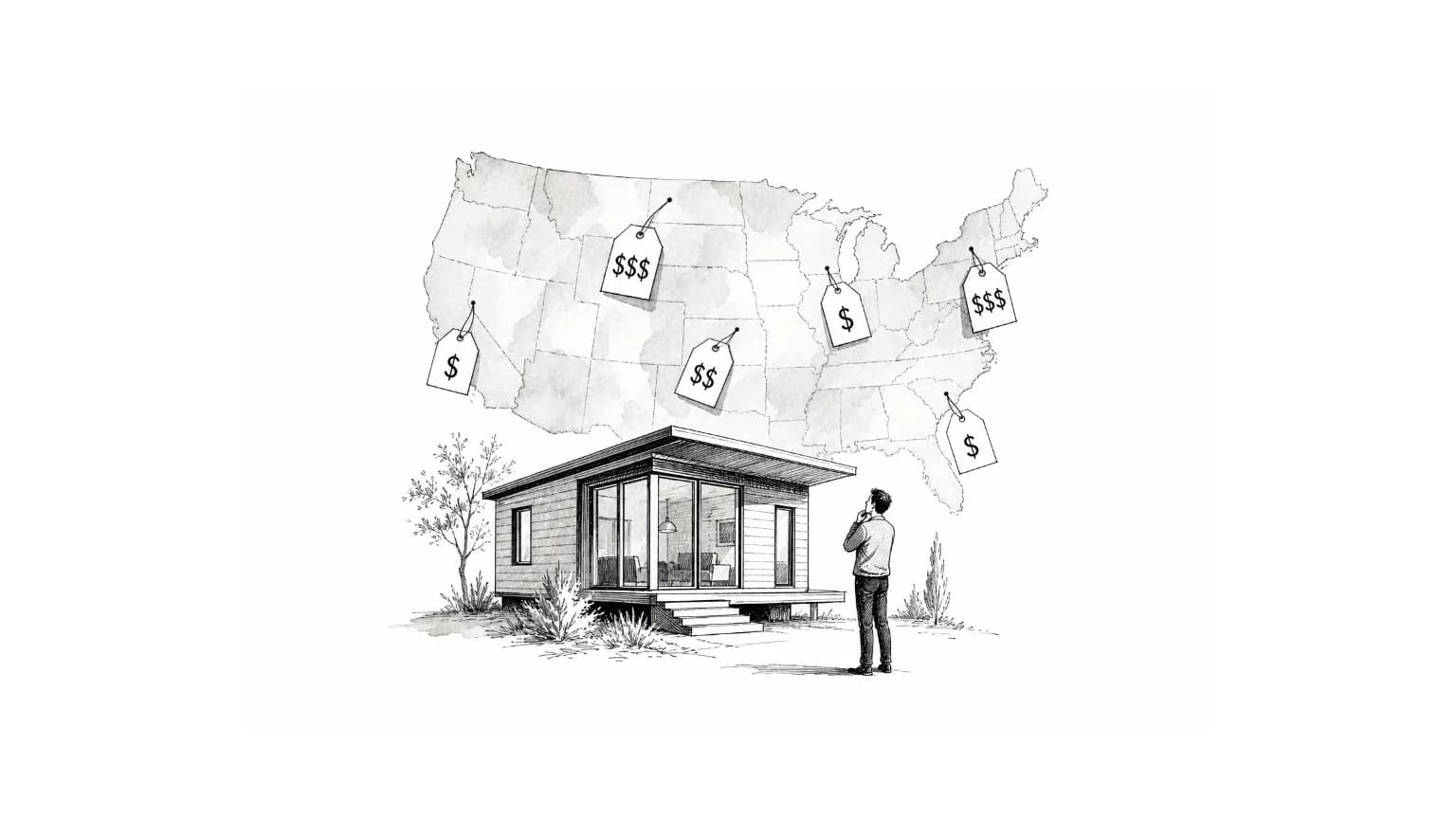
Three things stand out. First, price does not reveal the rulebook: RV, park model and code-built units all sit inside the same $38,999 to $115,500 band of published prices. At Trailhead, the code-approved modular is larger and $2,985.50 cheaper than the park model next to it on the same page.
Second, scope wording is different on every page, from "turn key" to "delivery within 100 miles" to nothing at all. Third, Riverside, the one builder in the set that describes its whole line as IRC-built, publishes no price at all.
The costs that usually sit outside the listed price are the site ones: land, site preparation, a foundation or pad, utility connections, permits, and delivery and set when they are not included. Alabama Custom Cabins' own disclaimer lists land, site preparation, utilities, permitting, taxes and insurance as outside the cabin price (Alabama Custom Cabins). The factory home budget guide walks through those line items. The tiny home shipping guide covers transport.
Is it cheaper to buy a prefab tiny home or build one? Only an equal comparison answers that: the same rulebook, the same size and the same scope, including everything from the lot line to move-in. A kit price against a turnkey park model price tells you nothing.
Shortlisting builders once you know your rulebook
With the rulebook settled, three questions narrow a list quickly:
- Which label will this unit carry? An RVIA seal, a HUD certification label, or a state modular insignia, and does that match what your county allows for how you plan to use it?
- What exactly is in the quoted scope? Delivery, setup, foundation, utility connections, appliances and permits, in writing.
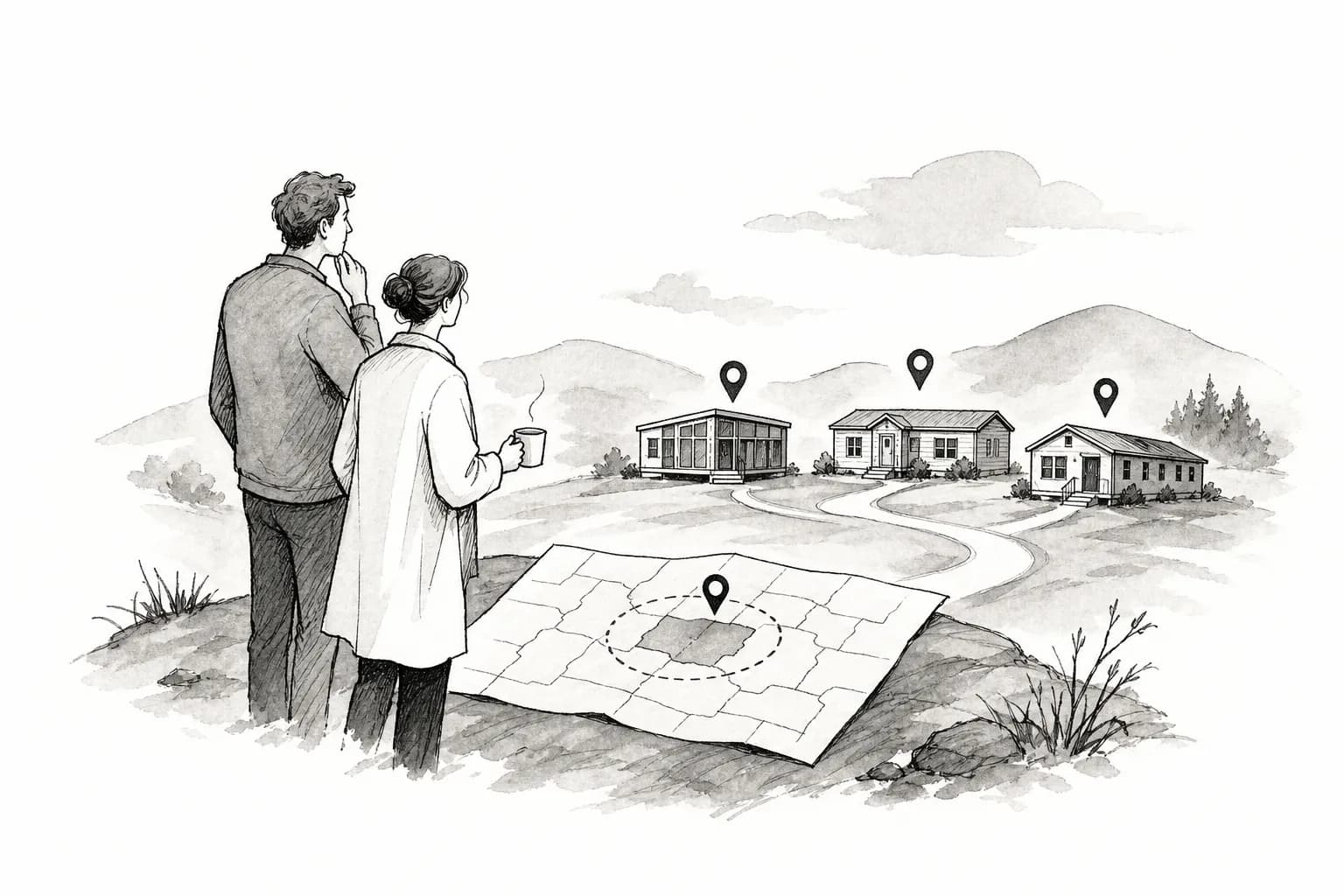
- Do you deliver and set in my county? Get an answer for your county specifically, not just your state.
For the rest of the due diligence, including warranties, factory visits and contract red flags, use the guide to finding and vetting a prefab home builder near you.
When you are ready to compare companies, you can browse factory-built home builders by state on Prefably. Basic listings are free, you contact builders directly, and your inquiry is not sold on as a lead. How Prefably works explains the model.
The short version
Pick the rulebook before you pick the house. Whether a prefab tiny home is an RV, a park model, a HUD Code home or a code-built house decides where it can sit, how you finance it and what the full price turns out to be. The build method and the floor plan come after that.
Sources
Prefably does not provide construction, legal, appraisal, insurance, or lending advice. Requirements and costs vary by jurisdiction, property, contractor, and financing program. Verify the project with the relevant building officials and qualified professionals before signing contracts or transferring funds.
- RV Industry Association, "Important Information Regarding 'Tiny Homes' and the RV Industry"
- International Code Council, 2021 IRC Appendix AQ Tiny Houses
- 24 CFR 3280.2, definition of manufactured home
- HUD Office of Manufactured Housing Programs
- HUD, FHA Title I Manufactured Home Loan Program
- NOAH, "Comparing Certifications of Tiny House Builds"
- Modular Building Institute, "Breaking Down the Modular Building Code"
- Builder prices: each builder's own website, accessed 28 September 2026 (linked in the price table above)
FAQ
- Are tiny homes built to the HUD Code?
- Some are. A manufactured home must meet the size thresholds in 24 CFR 3280.2 and be built on a permanent chassis, and many tiny homes are certified as RVs or park models instead. Ask the builder for the HUD certification label.
- Can you live full time in a park model RV?
- Park model RVs are designed as temporary or seasonal living quarters under ANSI A119.5. Whether you can occupy one full time depends on your local jurisdiction, so check with county planning before you buy.
- Do tiny houses pay property taxes?
- It depends on how your county classifies the home. A tiny home treated as real property is usually taxed like a house. One treated as a vehicle may be registered instead. Your county assessor can tell you which applies.
Keep reading