Buyer guide
Modular Home Price Per Square Foot by State (2025 Data)
2025 modular home price per square foot by state: regional installed ranges, labor and delivery drivers, code add-ons, and how to get a site-specific quote.

Dmitry Bilchenko
Co-founder, Prefably
- Published
- Reading time
- 11 min read
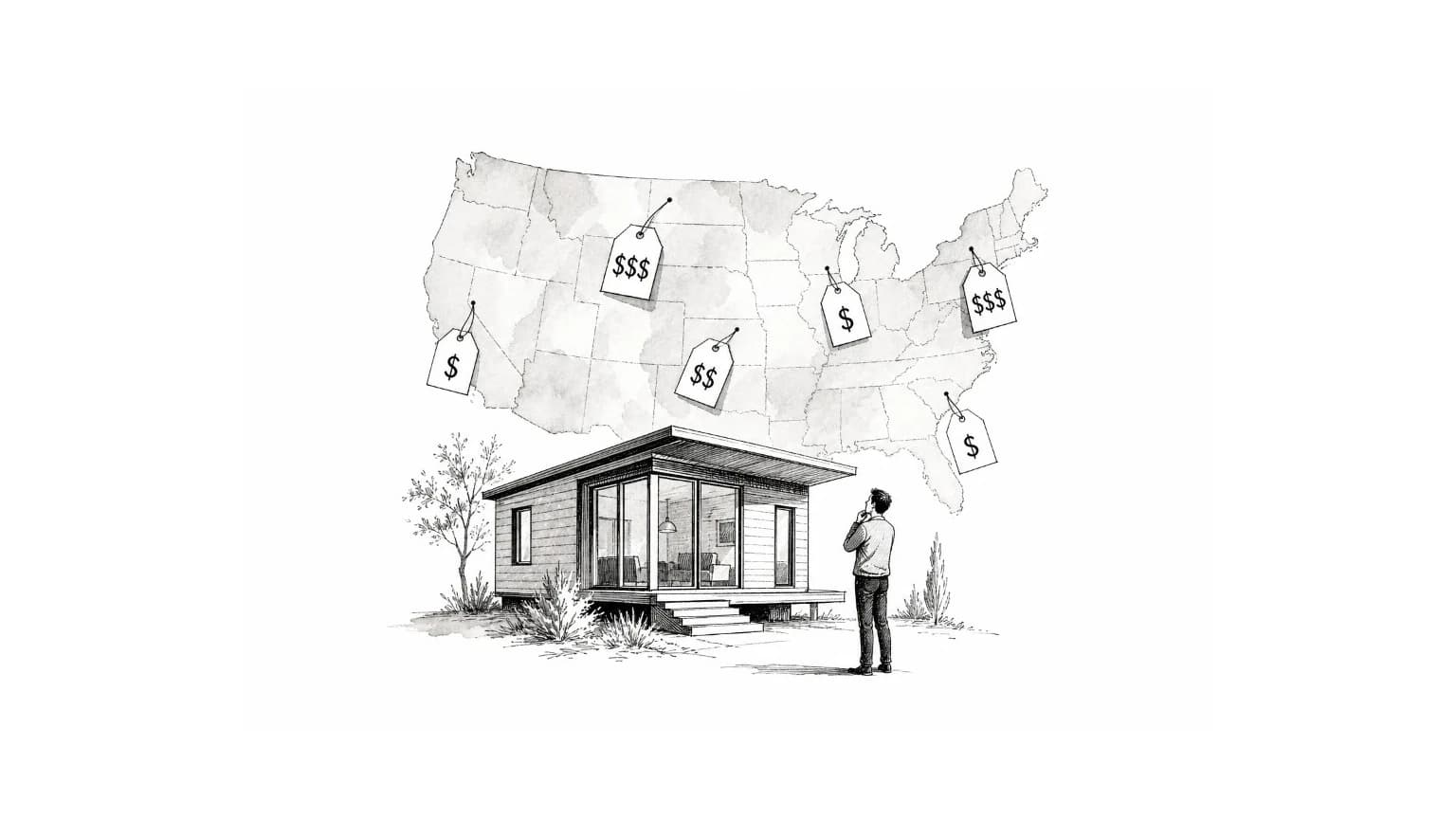
In 2025, the modular home price per square foot by state varied far more than a national average can show. The band people repeat, $80 to $160 per square foot installed, is directionally right and almost useless for a budget. A coastal California set and a rural Ohio set can differ by $100 per square foot or more. Materials inflation, tariff pressure, and regional labor made that gap harder to ignore.
This guide is for buyers who already use Prefably's state directories and need a local number, not a national slogan. You will get 2025 regional installed ranges, the labor and delivery drivers behind them, the code and site add-ons that sit on top of a factory quote, and a path to a written price for your lot. Figures are 2025 baselines. Some markets have moved in 2026. Treat them as planning bands, then rebuild the number from scopes you can compare.
If you need the full all-in worksheet (land, contingency, owner-builder vs turnkey), use How much does a modular home cost. This page is the regional PSF layer of that conversation.
What the per-square-foot number actually includes
Price the product you are actually buying. A modular home is built to the state or local residential code path (IRC-based in most states) and set on a permanent foundation. A manufactured home is built to the federal HUD code. Manufactured usually costs less per square foot and is not the same financing or resale file. Prefab vs modular keeps the labels honest.
Factory-only (often about $50 to $100 per square foot on Prefably's working band) is the box leaving the plant. Installed (the $80 to $160 band most articles cite) means the home is set and closed in. It still may omit utilities, driveway, well or septic, and finish site work. Turnkey should mean occupancy, and salespeople use that word for different scopes.
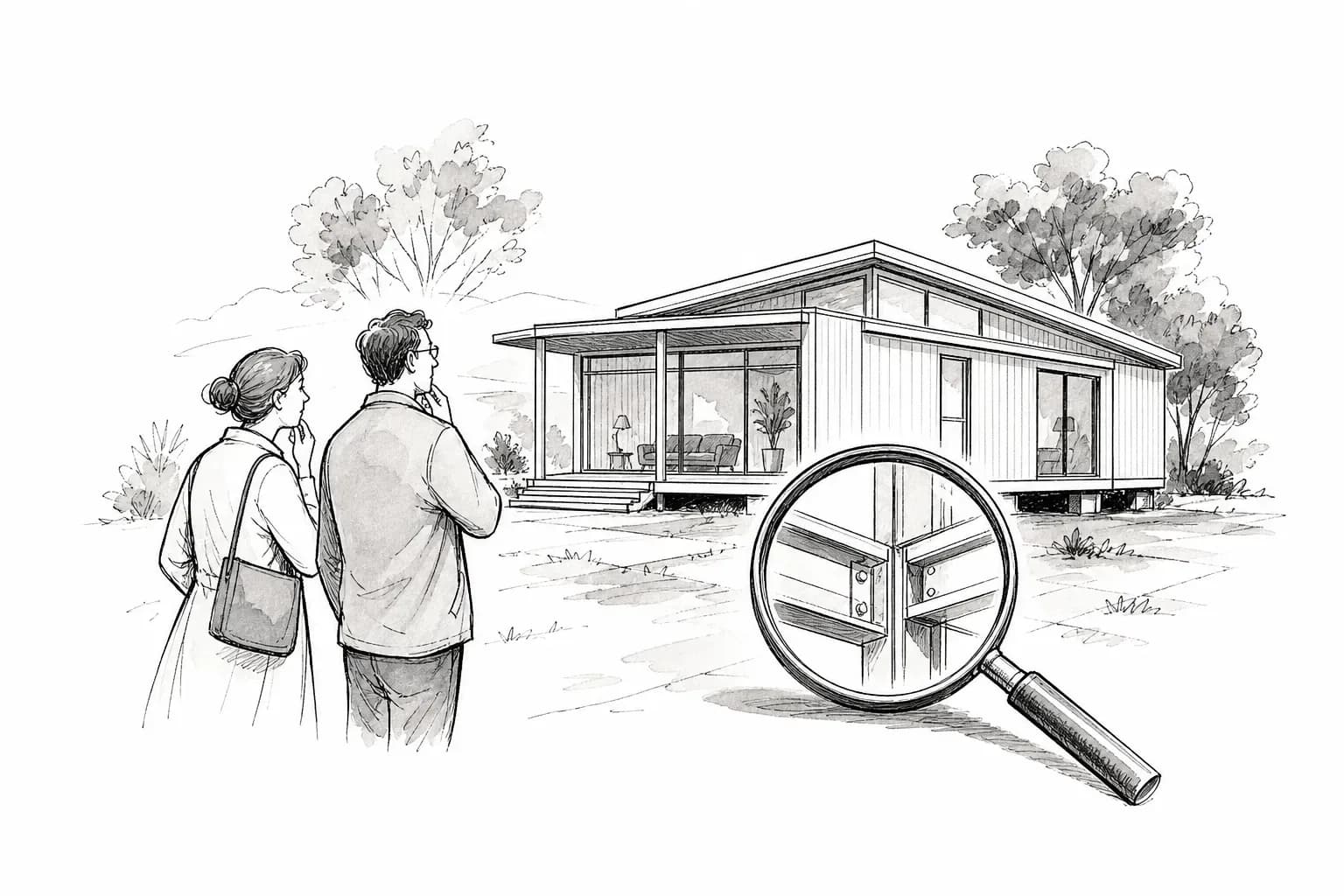
When you compare prefab home price per square foot across builders, lock the scope first: factory unit, delivery, set crew, foundation, and utility connections. A cheaper PSF that drops freight or the foundation is not a win.
| Label | Usually includes | Usually excludes |
|---|---|---|
| Factory-only | Modules, factory structure and many finishes | Freight, crane, foundation, utilities, permits |
| Installed | Factory package plus set on a foundation, closed in | Utility taps, well/septic, driveway, landscaping |
| Turnkey / all-in | Whatever that builder wrote down as occupancy-ready | Anything listed as by-owner, allowance, or exclusion |
2025 regional baselines
A standard modular install in 2025 often sat in the $80 to $160 per square foot installed band. Premium specs ran $150 to $250. High-cost coastal markets went higher. The national midpoint of those bands tells you almost nothing about your county.
The four U.S. regions had different floors. These ranges come from industry cost guides and regional builder data compiled through mid-2025. County, builder, and finish level still move the quote.
| Region | 2025 installed band | State examples |
|---|---|---|
| South | $85–$150 / sq ft | Texas about $85–$145; North Carolina about $92–$155 |
| Midwest | $88–$180 / sq ft | Ohio about $88–$148 (lower end of the Midwest band) |
| Northeast | $120–$250 / sq ft | New York metro sits at the high end of the floor |
| West Coast | $130–$280 / sq ft | California about $140–$230 |
These are regional-builder installed numbers, not factory-only quotes for a house shipped across the country. Delivery, set crew, and site labor are already in the band. That is the version you can budget against. A factory-only PDF will always look cheaper than it should.
Why your state changes the number
Labor is the first lever. New York, New Jersey, and California carry higher installation and set-crew rates than many right-to-work markets in the South and parts of the Midwest. Union premiums commonly run about 20% to 40% above non-union rates in BLS employer compensation series. In high-cost markets, site labor that runs about $40 to $75 per square foot can add roughly $10 to $30 per square foot to the installed price before you count the house. Rural counties inside expensive states sometimes sit outside metro wage structures.
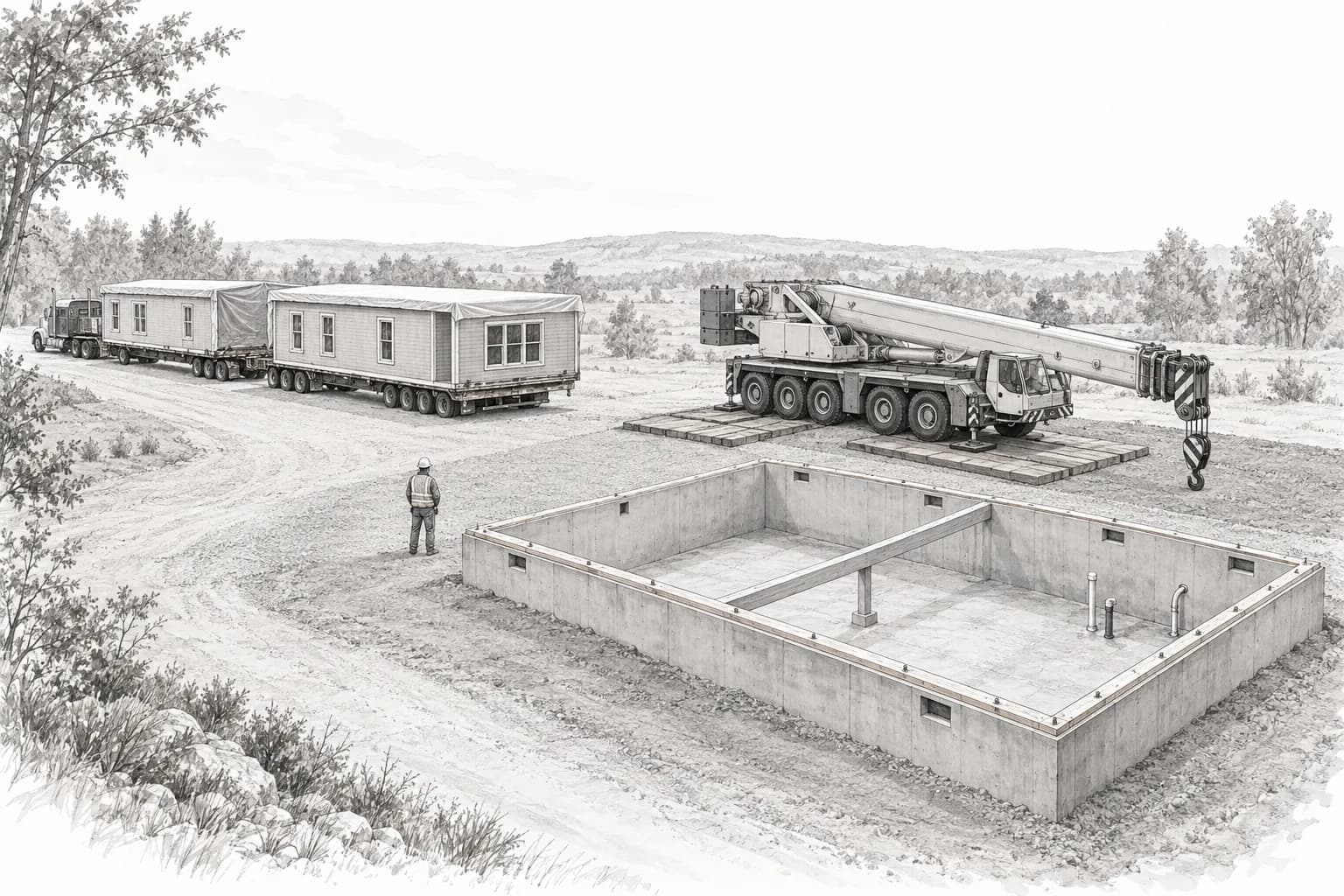
Delivery is the second lever. Modules move by truck. A common planning rule is $5 to $10 per square foot, or about $3,000 to $20,000 total, depending on distance and how many sections you haul. Buyers in thin-factory states (Wyoming, Montana) often pay more freight than buyers in Pennsylvania or Texas. Past about 200 miles, freight climbs fast. Wide-load permits and pilot cars are a state DOT issue, not a catalog footnote.
The expensive markets stack both. A West Coast buyer pulling a Midwest plant pays high freight and high local set labor. That is why California and Washington sit at the top of the regional bands. Crane time on set day is part of that local labor, not a surprise add-on you discover after the deposit.
State rules and fees that move the quote
Code packages show up in the bid whether they are itemized or buried. California seismic and energy requirements, plus local impact fees, can add $10,000 to more than $30,000. Florida hurricane-resilience products typically add $20,000 to $40,000. Those are risk-map costs, not upgrades.
Ohio's usual code add-on is frost-line foundation depth, often about $2,000 to $8,500, and the state's modular approval path is comparatively consistent. Texas sites without existing utilities often face $15,000 to $35,000 in hookups, with a lighter permit process than most coastal metros. Permitting still varies by county. Call the building department before you treat a state average as your lot.
New York is its own stack: state building and energy code plus metro installation rates. Building in a rural county can cut labor without changing the code path. For HUD-code setup line items (pier vs permanent foundation, lot rent), use the factory home budget guide.
Add-ons that change the all-in PSF
The factory quote is the house. It is not the lot. Site prep, grading, and driveway access often run $5,000 to $20,000 on an ordinary suburban lot, more on wooded or remote land. A simple slab or crawlspace can start around $5,000 to $15,000. Frost depth, poor soil, and full basements run higher. Do not treat a $5,000 to $8,000 foundation line as a national bid.
Utilities split suburban and rural files. Electrical near existing infrastructure often sits between $250 and $5,000; raw land goes higher. Water and sewer commonly run $500 to $20,000 depending on distance to the tap. Modular permits often land between $500 and $3,100, with coastal metros and strict zoning above that.
A first planning buffer of 10% to 15% above the factory quote covers a utility-ready lot's site work, foundation, utilities, and permits. Rural or undeveloped land needs more. Turnkey modular cost per square foot, factory through finished connections, often lands 15% to 25% above factory-only once those lines are in. The modular cost guide is the longer checklist.
Worked example: a 2,000 square foot modular home
Take a 2,000 square foot plan and apply the 2025 installed bands. South: about $170,000 to $300,000. Midwest: about $176,000 to $360,000. Northeast: about $240,000 to $500,000. West Coast: about $260,000 to $560,000. A Texas file near $85 to $145 per square foot plans about $170,000 to $290,000. A California file near $140 to $230 plans about $280,000 to $460,000.
Those totals assume installed scope, not a factory PDF and not a raw-land well-and-septic job. Luxury finishes, complex roofs, long hauls, and climate packages push you toward the top of the band or past it. If a quote is far below the regional floor, look for a missing foundation, a manufactured product labeled as modular, or freight sitting in a later change order.
What 2025 did to factory-built pricing
Factory-built housing absorbed real input pressure in 2025. Eye on Housing reported U.S. building-material prices up about 3.5% year over year in September 2025, the largest annual rise since early 2023. Metal-intensive parts moved more than wood-frame components. Tariff exposure added thousands of dollars per new home across the industry; treat any single $7,500 to $10,000 headline as an industry estimate, not your invoice.
The factory model still kept a labor edge: plant labor often ran about 15% to 20% below comparable site labor because of repetition, bulk purchasing, and weather-independent schedules. Modular still came in about 10% to 20% below comparable stick-built pricing in most regions in 2025. The gap was widest where site labor is most expensive. Modular vs stick-built is the full comparison.
How to get a state-specific number
A PSF quote is only useful if both sides mean the same scope. Before you ask, know whether power, water, and sewer are at the property line, your county's permit and setback rules, and the finish level you actually want. Then ask whether the number covers delivery, set, foundation, and utility connections, or only the factory unit.
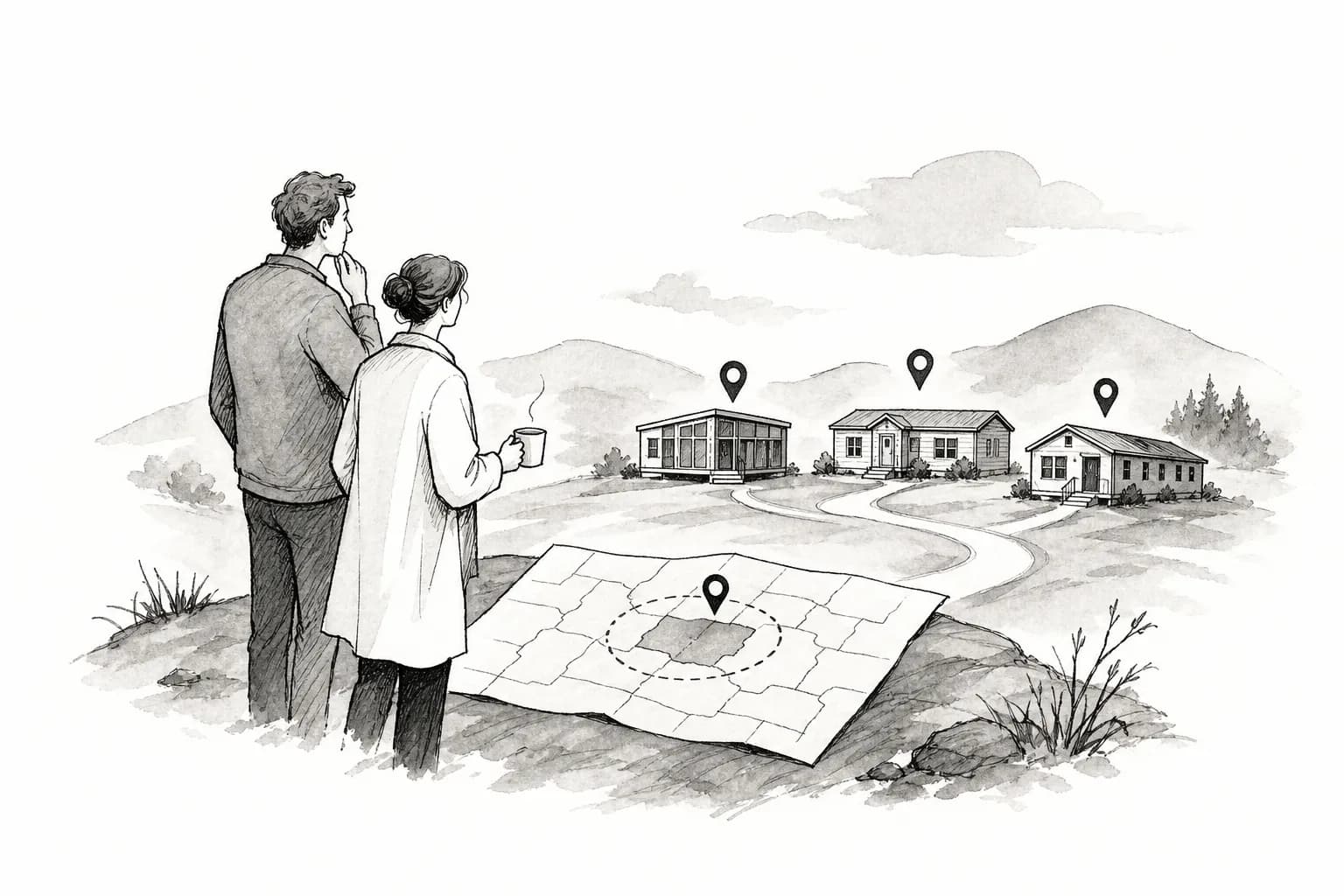
The fastest way off a regional average is a builder who already delivers to your county. Prefably is an independent directory of 1,400+ prefab, modular, manufactured, and ADU companies organized by state and delivery area. Browsing is free. You contact the company yourself. Prefably does not route your inquiry to a lead board.
- Filter your state hub for modular, not a mixed manufactured list.
- Confirm the plant's delivery radius and recent sets in your county.
- Get a written factory-versus-site split, plus what the deposit covers.
- Ask who pulls permits and who owns crane day if weather slips.
- Keep modular versus manufactured labeling in that written split. Mixing those products is the usual reason two quotes look $40 per square foot apart.
From a regional band to your lot
The 2025 modular home price per square foot by state was too wide for one national figure. The South and Midwest offered the lowest installed entry points, about $85 to $180. The Northeast and West Coast ran about $120 to $280 once labor, compliance, and delivery are in. Site prep, utilities, and permits still sit on top of the factory quote.
Materials inflation did not erase the factory cost advantage in most regions. The reliable next step is a written quote from a builder who delivers in your state. Start on Prefably, compare a few profiles, and email them the same lot notes. That is how a regional band becomes a number you can take to a lender.
FAQ
- What was the modular home price per square foot by state in 2025?
- Installed regional bands compiled through mid-2025 ran about $85 to $150 in the South, $88 to $180 in the Midwest, $120 to $250 in the Northeast, and $130 to $280 on the West Coast. Texas often sat near $85 to $145, Ohio near $88 to $148, North Carolina near $92 to $155, and California near $140 to $230. These are planning ranges, not a bid for your lot.
- How much does a 2,000 square foot modular home cost?
- Using 2025 installed bands, a 2,000 square foot modular home often planned around $170,000 to $300,000 in the South, $176,000 to $360,000 in the Midwest, $240,000 to $500,000 in the Northeast, and $260,000 to $560,000 on the West Coast. Finish level, haul distance, foundation, and utilities can move the total outside those bands.
- What does an installed modular price per square foot include?
- Installed usually means the home is set on its foundation and closed in. It does not automatically include utility connections, driveway, well or septic, or finished site work. A factory-only quote is lower because those lines are missing. Compare written factory-versus-site splits before you treat two PSF numbers as equal.
- Is it cheaper to build a modular home than a stick-built house?
- In most 2025 markets, modular still landed about 10% to 20% below a comparable stick-built budget after materials inflation, with the widest gap in high-labor Northeast and West Coast markets. Site work, land, and permits can erase that gap. Compare complete scopes, not factory stickers. See modular vs stick-built.
- Are manufactured homes cheaper per square foot than modular homes?
- HUD-code manufactured homes usually cost less per square foot. They are a different product: federal HUD construction standards, often a different foundation and title path, and different financing and resale treatment. Do not average a manufactured Census sticker against a modular installed bid. Prefab vs modular is the short split.
- Why do California and New York cost more than Texas or Ohio?
- Union and metro set-crew rates, longer hauls when the plant is far away, and state or local code packages (seismic and energy in California, hurricane products in Florida, frost-depth foundations in Ohio, New York energy and building code) stack on top of the factory box. Rural counties inside expensive states can shave labor without changing the code path.
- How do I get a real per-square-foot quote for my lot?
- Know whether power, water, and sewer are at the property line, plus your county permit and setback rules and finish level. Ask each builder whether the number covers delivery, set, foundation, and utilities, or only the factory unit. Shortlist companies that already deliver to your county on Prefably's builder directory and contact them directly. Prefably does not sell the inquiry as a lead.
- Can you finance a modular home like a site-built house?
- Often yes. A completed modular home on a permanent foundation is usually financed as real estate, not as a vehicle. New construction typically needs a construction loan first. Prefably does not broker loans. See modular home financing.
Keep reading