Buyer guide
How to Find Modular Home Builders Who Deliver to Your County
How to find modular home builders who deliver to your county: confirm delivery zones, verify licensing, compare itemized transport and site-prep quotes, and shortlist builders by state on Prefably.

Dmitry Bilchenko
Co-founder, Prefably
- Published
- Reading time
- 13 min read

Here's a frustrating scenario that happens more often than it should: you spend an hour researching a modular home builder online, you like what you see, you pick up the phone, and the first thing they tell you is that they don't deliver to your county. Days of research, wasted. The problem isn't that good builders don't exist near you. The problem is that most buyers treat delivery zone as an afterthought instead of the very first filter in their search.
County-level coverage determines whether a builder can physically serve your lot, and it shapes every cost estimate, timeline, and permitting conversation that follows. This guide walks you through how to find a reputable modular home builder that delivers to your specific county, what questions separate serious contenders from a wasted phone call, how to verify reputation and licensing, and what delivery and site-prep costs actually look like. Throughout, we'll point you toward Prefably, a state-indexed directory built specifically for this kind of targeted builder search.
How do I find a reputable modular home builder that delivers to my county?
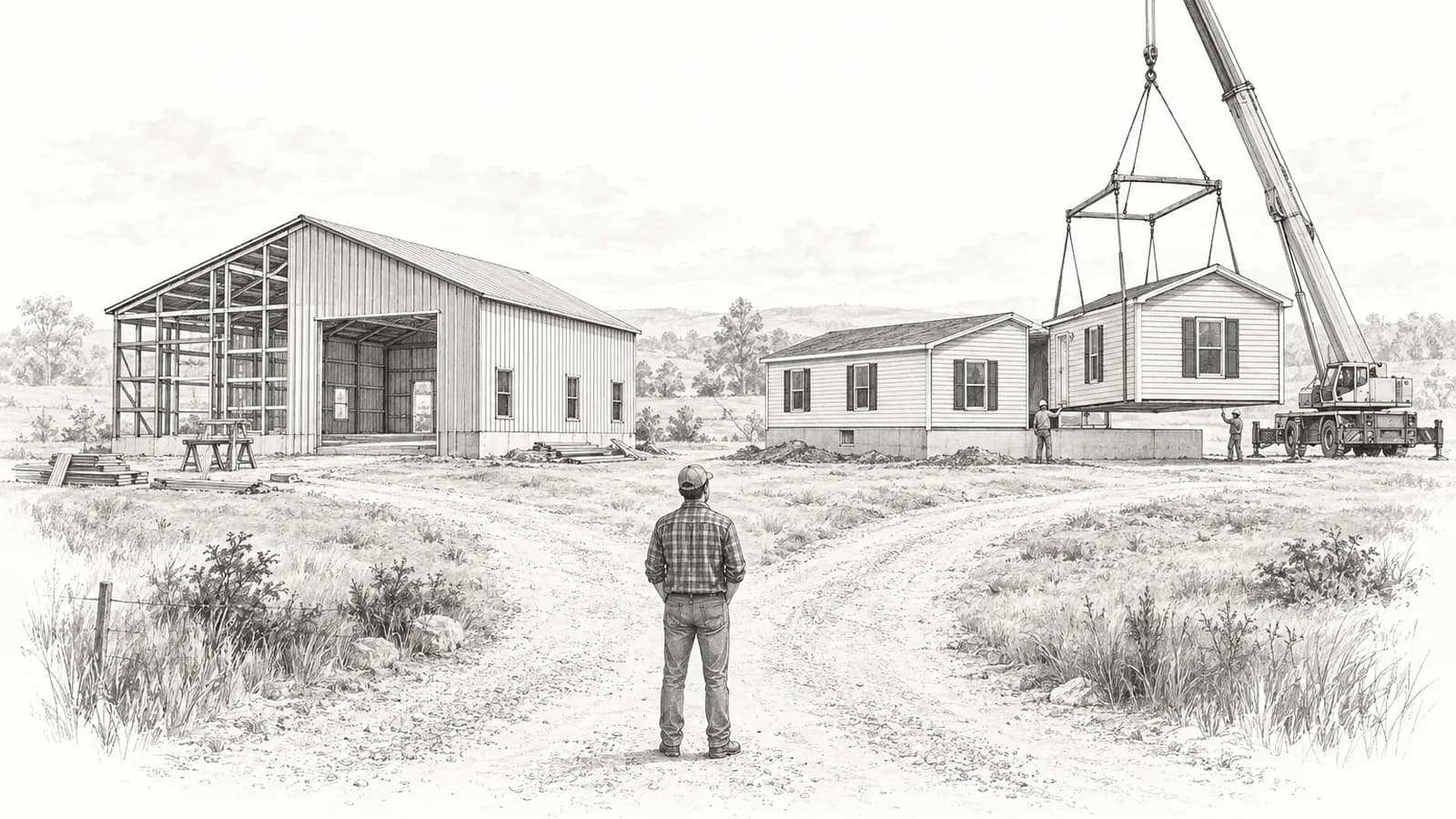
Start with delivery zone, not design, not price. Before anything else, confirm that a builder can physically reach your lot. Modular home delivery zones are shaped by transport logistics, installer networks, road infrastructure, and regional crane availability. Most buyers assume that any modular home builder advertising in their state can reach their property. In practice, that assumption is often incorrect. A builder headquartered on the eastern edge of a state may have few or no local set crews in the western counties, and no amount of good intentions changes that logistical reality.
Once you've confirmed delivery capability, reputation and licensing determine whether a builder stays on your shortlist. The sections below walk through each step, from finding reputable modular home builders near you to verifying credentials and comparing itemized quotes.
Why your county matters more than you might expect
Road access and transport restrictions shape every delivery
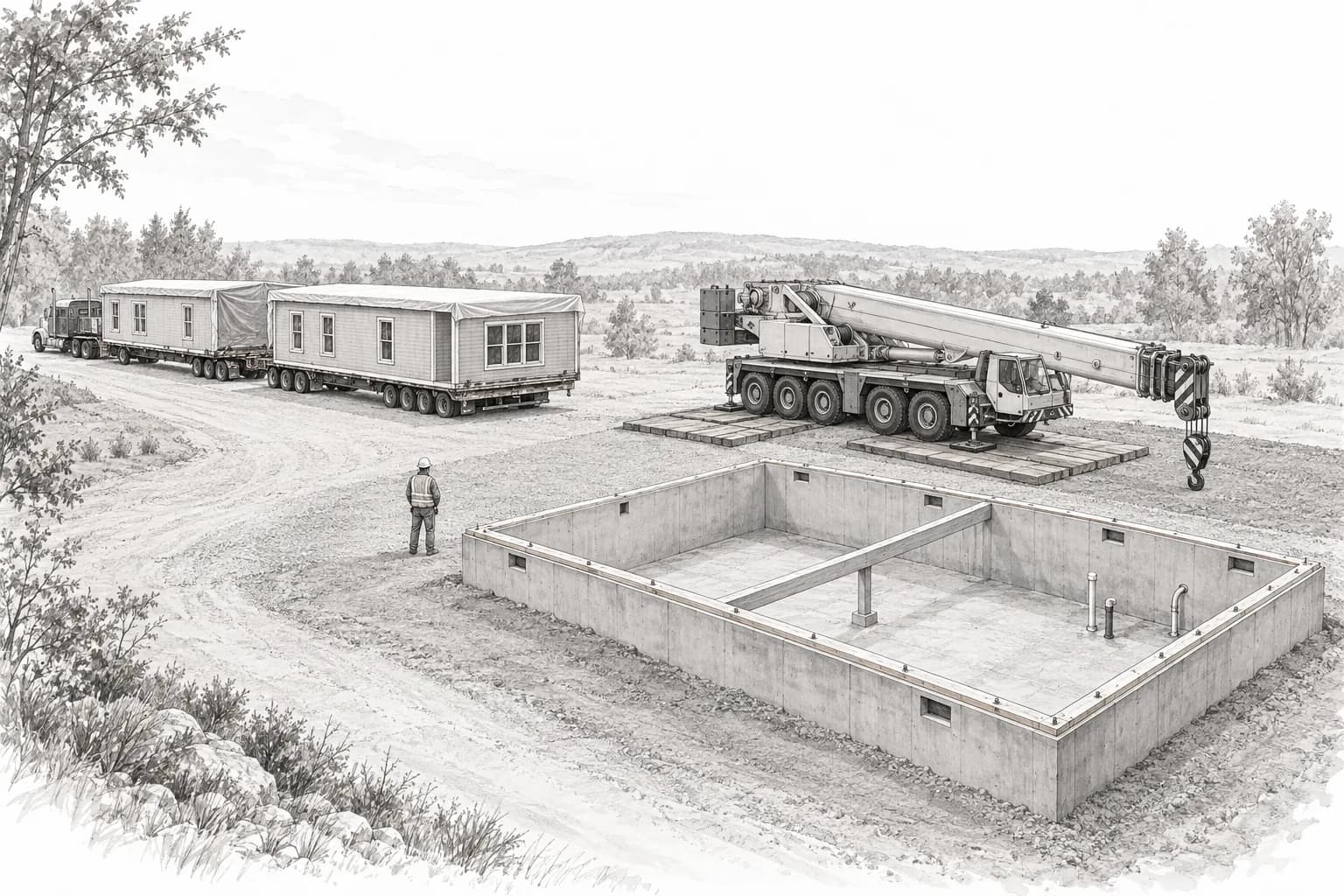
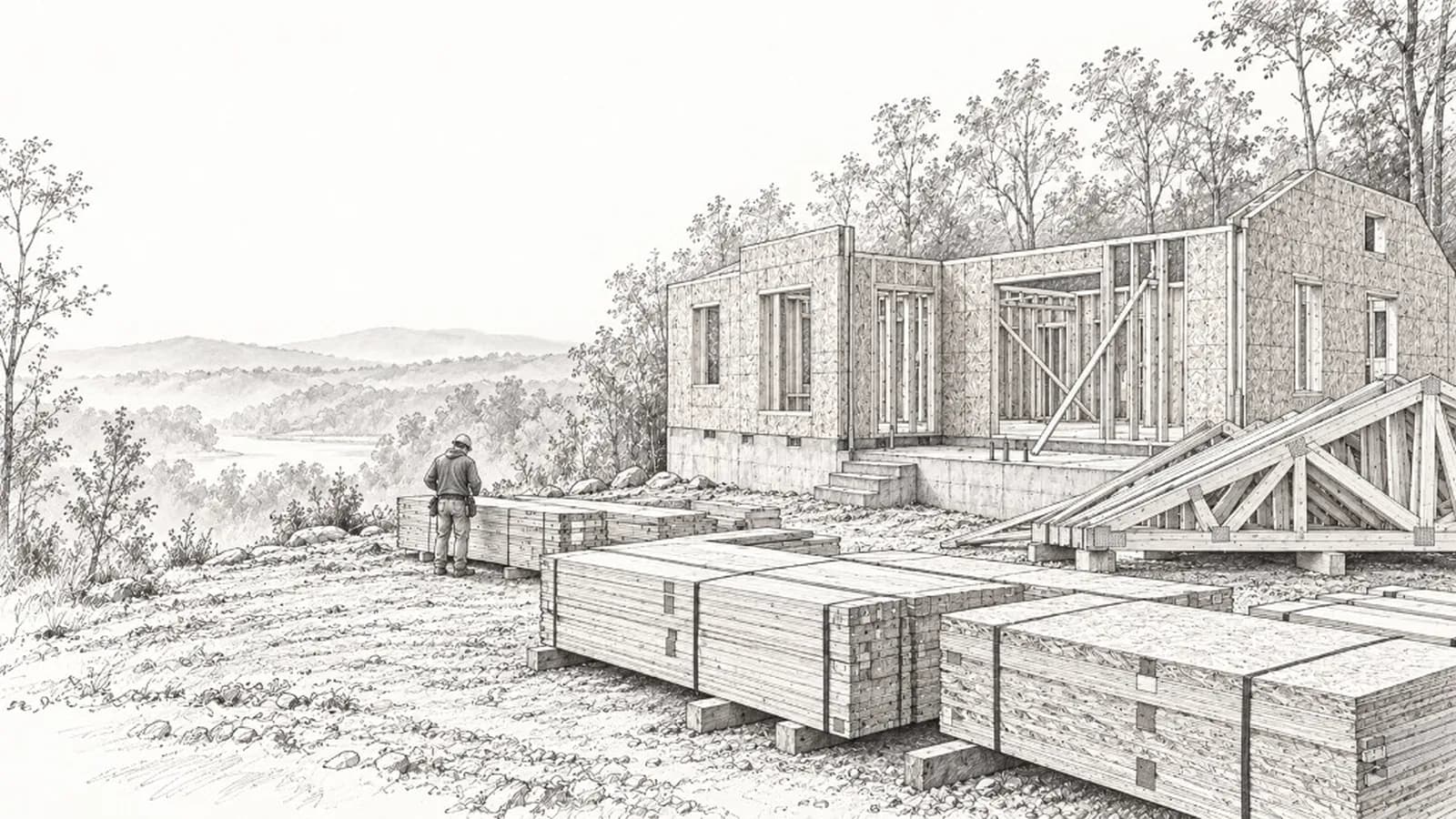
Oversize module transport requires specific road clearances, bridge weight ratings, and county-issued transport permits for every route. Some rural counties restrict heavy-haul routes seasonally, particularly after spring thaw when road surfaces are most vulnerable. A builder who has never delivered in your county won't know your local route restrictions, and that gap in knowledge will show up in their quote accuracy. Builders with real delivery history in your area can name the routes they've used and the permits they've pulled.
Local building codes and zoning vary by county
Modular homes are built to the state building code, but site-specific permitting, setback requirements, and foundation standards are governed at the county level. A builder who regularly works in your county knows what the local inspector will flag, which variance requests are likely to succeed, and how long permit reviews typically take. A builder working outside their normal service area is essentially learning your county's rules on your dime and your timeline.
Set crew and installer availability is a real constraint
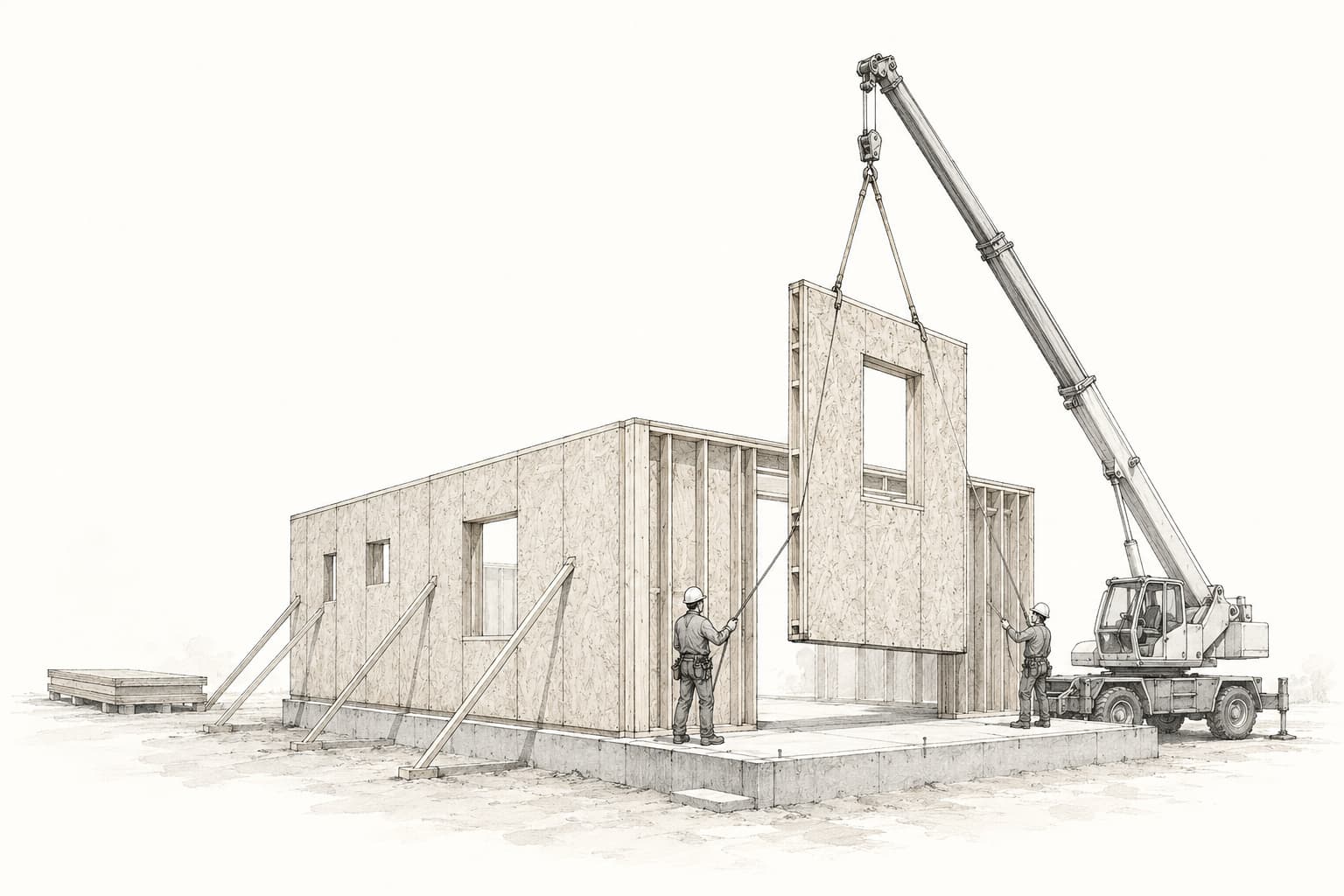
Even when a manufacturer can ship modules to your county, they need a licensed modular home installer and transporter to place, connect, and finish the home. Many builders maintain relationships only with set crews within an established radius from their plant. If those crews don't operate in your county, the builder either has to subcontract with an unfamiliar crew or decline the project entirely. Confirming crew availability in your county is just as important as confirming delivery capability.
The smartest place to start your builder search
Before you call a single builder, start with a directory that already organizes listings by state and service area. Cold Google searches often return a mix of national advertisers, outdated dealer pages, and lead generation forms that pass your contact information to multiple companies at once, the opposite of what a buyer at the research stage actually needs.
Prefably is a lead-free directory built for factory-built home buyers. You browse prefab home builders serving your state, review profiles at your own pace, and contact builders directly when you're ready. According to Prefably's stated business model, your inquiry stays between you and the builder you choose to contact, it isn't packaged and resold to companies you didn't select. That's worth verifying directly on their site, but it represents a meaningfully different approach for buyers who are still in the discovery phase and not ready to be treated as a sales lead. You can also check any directory's privacy policy before submitting contact information to confirm how inquiries are handled.
How Prefably's state-indexed directory works for this use case
Prefably organizes builders by state, with individual profiles covering service area details, home types offered, contact information, and ratings. Buyers comparing builders in their state can filter through results without triggering a sales process. The state-indexed structure means you're not sifting through national results hoping to find someone who actually reaches your delivery zone. You start with your state and narrow from there, a practical first step whether you're searching for modular home builders near you or evaluating manufactured vs. modular home builders to determine which product type fits your county's zoning rules.
What a builder profile tells you before you pick up the phone
A complete builder profile on Prefably includes the company's geographic service area, the types of factory-built homes they offer, and direct contact details. That information lets you screen for county-level delivery coverage before investing time in a conversation. Builders who have claimed and updated their profile can often indicate more active engagement and tend to be easier to reach, a useful early signal as you build your shortlist.
Questions to ask before assuming a builder can reach your lot
Even when a builder lists your state as a service area, county-level delivery is never guaranteed. Asking the right questions before you go deep into a sales conversation saves weeks of wasted time.
Confirming their actual delivery radius
Ask directly: "Have you delivered to [your county] before?" and "What is the farthest delivery distance from your factory?" Builders with genuine experience in your area can name the counties they service regularly and the set crews they use there. A vague answer like "we can usually work something out" is not the same as confirmed capability. Most modular home manufacturers in the U.S. typically operate within a 300 to 500 mile delivery radius, though actual service quality can vary significantly over longer distances, so it's always worth asking where most of their completed projects fall within that range.
Asking about site access and lot conditions
Before a builder can quote accurately, they need specific information about your property: driveway width and grade, road access from the nearest heavy-haul route, any low-overhead obstacles like power lines or tree canopy, and the general terrain. Ask what site details they need to confirm serviceability, and whether they conduct a site visit or virtual assessment before submitting a quote. Builders who skip this step and quote without site review are likely to revise their numbers significantly once delivery day approaches.
Factory distance and transport lead times
Distance from the factory to your county affects both cost and scheduling. Ask how far their production plant is from your location and what transport coordination typically looks like for deliveries in your area. Longer hauls require more coordination with local escort services, county permit offices, and the state department of transportation, all of which add time and cost that should appear explicitly in any quote you receive.
How to verify a builder's reputation and licensing
Delivery capability gets a builder on your list. Reputation and licensing determine whether they stay on it. A builder who can reach your county but has a pattern of missed schedules, disputed warranties, or unresolved complaints is not a better option just because they're local.
State contractor license lookup
Every state maintains a public database of licensed contractors, and most are searchable online by company name or license number. Search the builder's entity name, confirm the license is active and in good standing, verify the classification covers modular home construction or installation in your state, and check whether any disciplinary actions appear on the record. Some states also use a separate Manufactured Home Installer (MHI) license category, so confirm you're checking the right credential type for the work being performed.
BBB rating, online reviews, and references
Pull the builder's BBB profile and look beyond the letter grade. Read the complaint history and how the company responded to disputes. Then check reviews across multiple platforms, because a builder who manages their reputation on one site may have a very different record somewhere else. Pay attention to patterns: how do they handle communication delays, schedule changes, and warranty claims? Finally, request three to five recent customer references from comparable projects and actually call them. A reputable builder should provide these without hesitation.
Factory tours as a trust signal
Certified modular home manufacturers with strong production processes tend to welcome facility visits. An invitation to tour the factory signals genuine confidence in their work. A refusal without a specific, reasonable explanation can be a cautionary sign as you evaluate your options. Seeing how modules are constructed, inspected, and staged for delivery gives you a concrete basis for trust that no sales presentation can replicate.
What delivery and site-prep costs actually look like
Delivery and site preparation are two of the most frequently underestimated line items in a modular home budget. Knowing the ranges before you collect quotes helps you identify estimates that are suspiciously low or missing categories entirely.
Transport cost ranges and what drives them
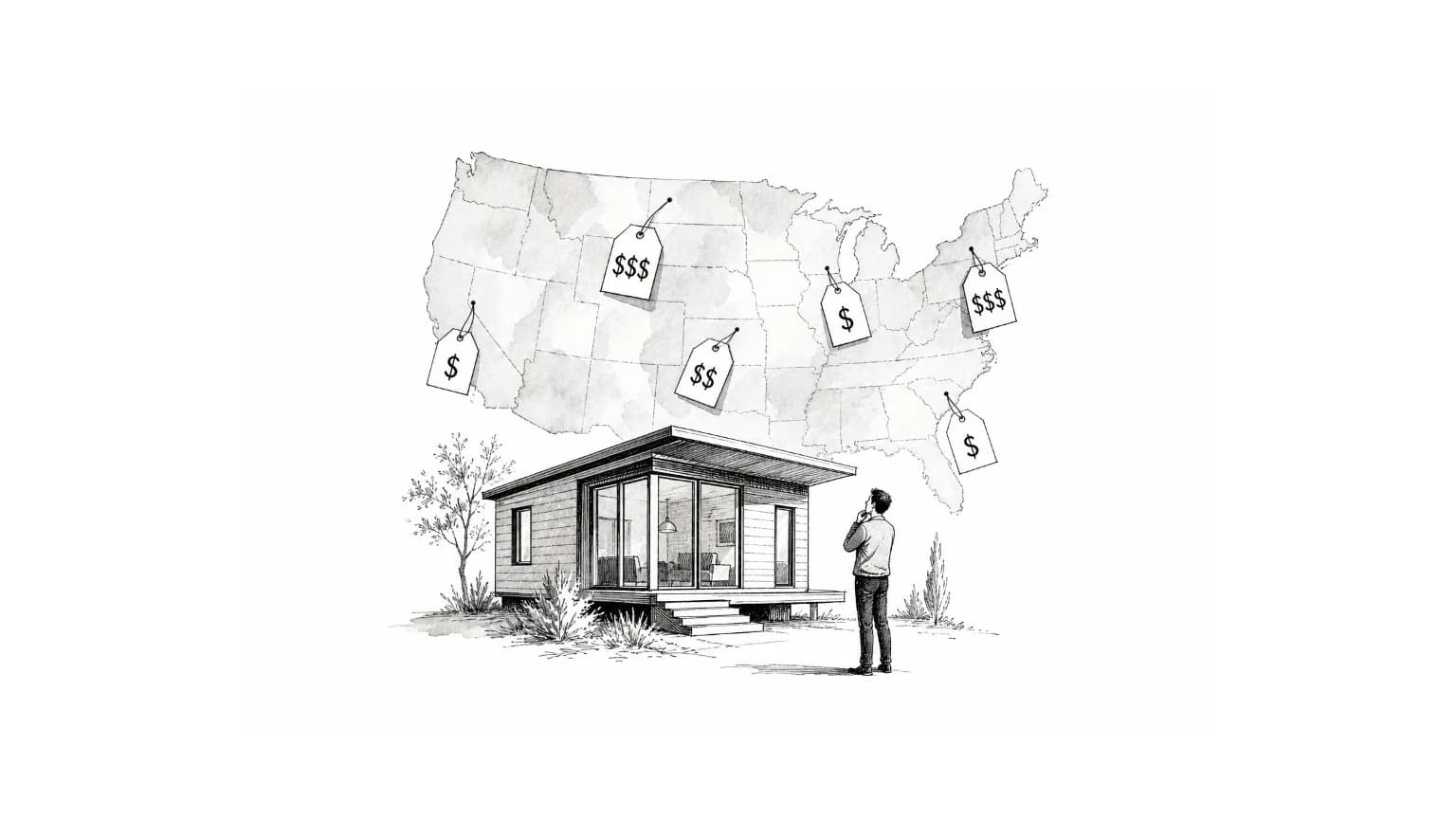
Transport for a modular home typically runs $3,000 to $15,000 for standard deliveries, with complex or long-haul projects reaching $25,000 or more. Distance from the factory, route difficulty, crane or rigging requirements, escort vehicle fees, and county transport permit costs all push the number upward. Builds in rural counties with limited road infrastructure or seasonal weight restrictions tend to land at the higher end of that range.
Site preparation budget ranges
Site prep, grading, excavation, foundation work, and utility connections, commonly runs $4,000 to $25,000 for straightforward lots. Difficult terrain, significant clearing, steep grades, or complex foundation requirements can push that figure to $45,000 to $70,000 or more. If your lot requires significant work before modules can even be set, that cost needs to be part of your total budget conversation from day one, not a surprise after you've signed a purchase agreement.
Getting comparable quotes across builders
To compare quotes fairly, ask each builder to itemize transport, set and installation, and site preparation as separate line items. Bundled quotes make it almost impossible to identify where estimates differ and why one builder is $30,000 less than another. Itemized quotes let you see whether the difference reflects a genuine cost advantage, a narrower scope of work, or an estimate that is simply missing items the others included.
Certifications and warranties that signal a legitimate builder
Beyond licensing, reputable modular home manufacturers carry certifications that confirm their homes meet code before they leave the factory. These aren't marketing labels; they're verifiable credentials tied to specific state programs and third-party inspection bodies.
State modular program approval and third-party inspection
Most states require modular manufacturers to be registered with a state industrialized housing agency, and modules are inspected during factory production by an approved third-party certifier. States like New York, Pennsylvania, and Utah each maintain their own approval programs with specific insignia or labels that should appear on the modules before shipment. Ask any builder for their state approval number and the name of their third-party inspection agency. If they can't answer both questions immediately, that's a gap worth investigating. Common third-party inspection organizations in the U.S. include Intertek, ICC NTA, and Twining Inc.
Written warranties and what they should cover
A reputable builder provides a clear written warranty covering the home's structure and systems, with explicit terms on what is covered, for how long, and whether installation and foundation work fall within the warranty or are handled separately. This matters because financing requirements for FHA, VA, and conventional loans may require an engineer's certification of the foundation, and you need to know upfront whether that certification is included in the builder's scope or comes as an additional cost. Vague verbal assurances about warranty coverage are not a substitute for clear written terms.
You now have the framework: here's how to use it
Finding a reputable modular home builder that delivers to your specific county takes more than a Google search and a few phone calls. Delivery zones, road access, set crew availability, and county-level code familiarity all determine whether a builder is genuinely equipped to complete your project. The builder who looks great on a website but has never pulled a transport permit in your county is a much higher-risk choice than one with a verifiable track record in your area.
Start your search on Prefably, where builders are organized by state and service area so you can filter for genuine county coverage before you contact anyone. Review profiles, check credentials using the verification steps in this guide, and request itemized quotes from builders who pass your initial screening. You're looking for specific answers, not vague assurances, and now you know exactly what to ask.
The right builder for your county and your lot is out there. Use delivery zone as your first filter, back it with a solid verification process, and you're not leaving that to chance.
FAQ
- How do I find a modular home builder that delivers to my county?
- Start with delivery zone, not floor plans. Use a state-indexed directory like Prefably to shortlist builders that serve your state, then ask each one whether they have delivered to your specific county, which set crews they use there, and how far their plant is from your lot.
- Does statewide service mean a builder can reach my county?
- Not automatically. Statewide marketing still depends on transport routes, county haul permits, road clearances, and local installer availability. Ask for prior deliveries in your county and named set crews before you treat the project as feasible.
- How much does modular home delivery cost?
- Standard modular transport often runs about $3,000 to $15,000, with complex or long-haul projects reaching $25,000 or more. Distance, route difficulty, crane needs, escorts, and county transport permits drive the total. Ask for an itemized line for transport, not a bundled number.
- How much does site prep cost for a modular home?
- Straightforward lots commonly land around $4,000 to $25,000 for grading, excavation, foundation work, and utility connections. Difficult terrain, clearing, steep grades, or complex foundations can push the figure much higher. Get a written site-work bid before you sign the modular contract.
- What should I ask before requesting a modular home quote?
- Ask whether they have delivered to your county, the farthest delivery distance from their factory, what site details they need for access, whether they do a site visit before quoting, and how transport, set, and site prep appear as separate line items.
- How do I verify a modular home builder’s license and reputation?
- Look up the company in your state’s contractor database, confirm the license is active and covers modular construction or installation, review BBB complaint history and multi-platform reviews, and call recent customer references from comparable projects.
Keep reading