Buyer guide
What Is a Prefab ADU and Is It Right for Your Property?
Prefab ADU meaning, modular vs panelized vs manufactured backyard units, 2026 cost ranges, how the code path changes the loan, permits, and how to shortlist builders by state without a lead marketplace.

Dmitry Bilchenko
Co-founder, Prefably
- Published
- Reading time
- 13 min read
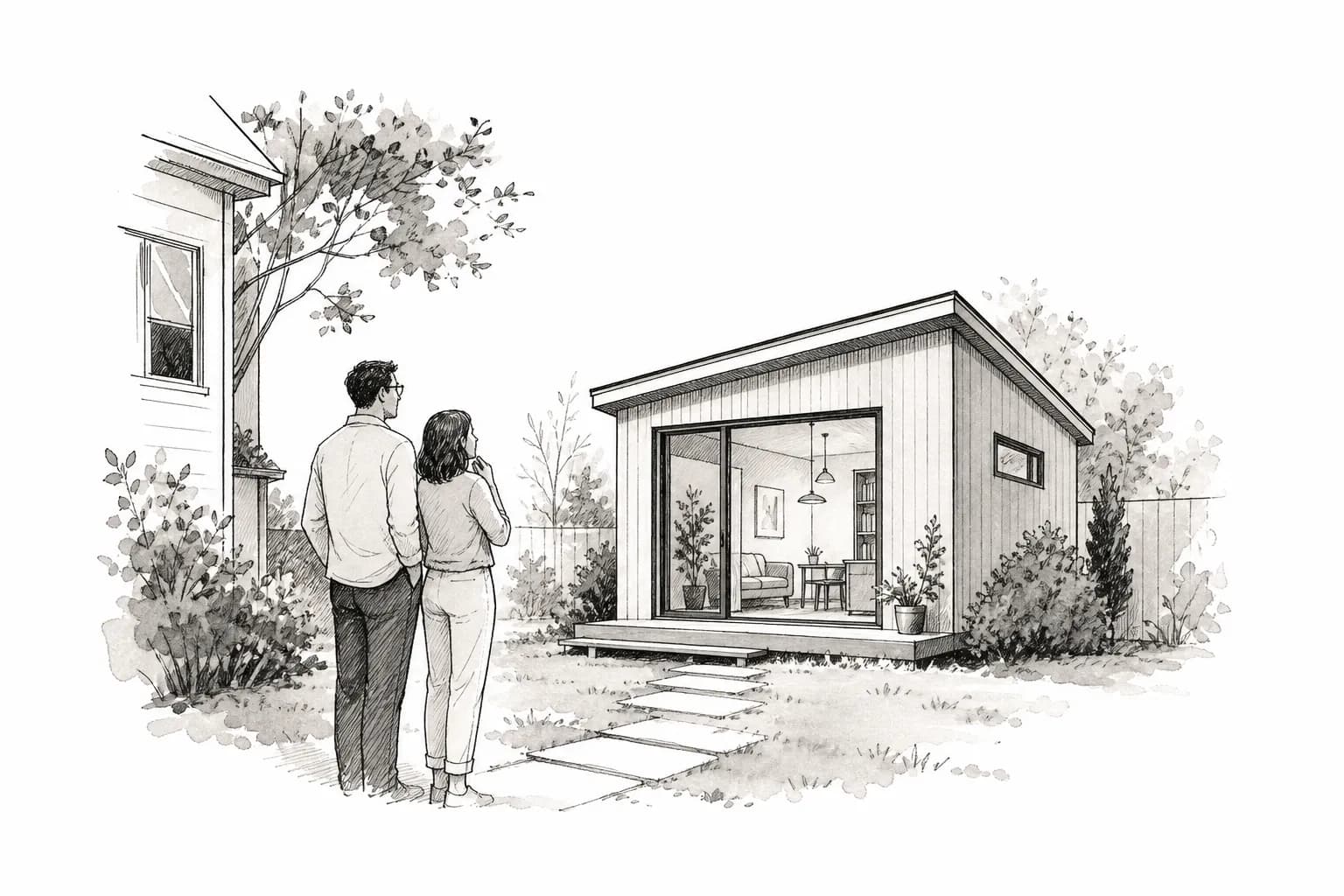
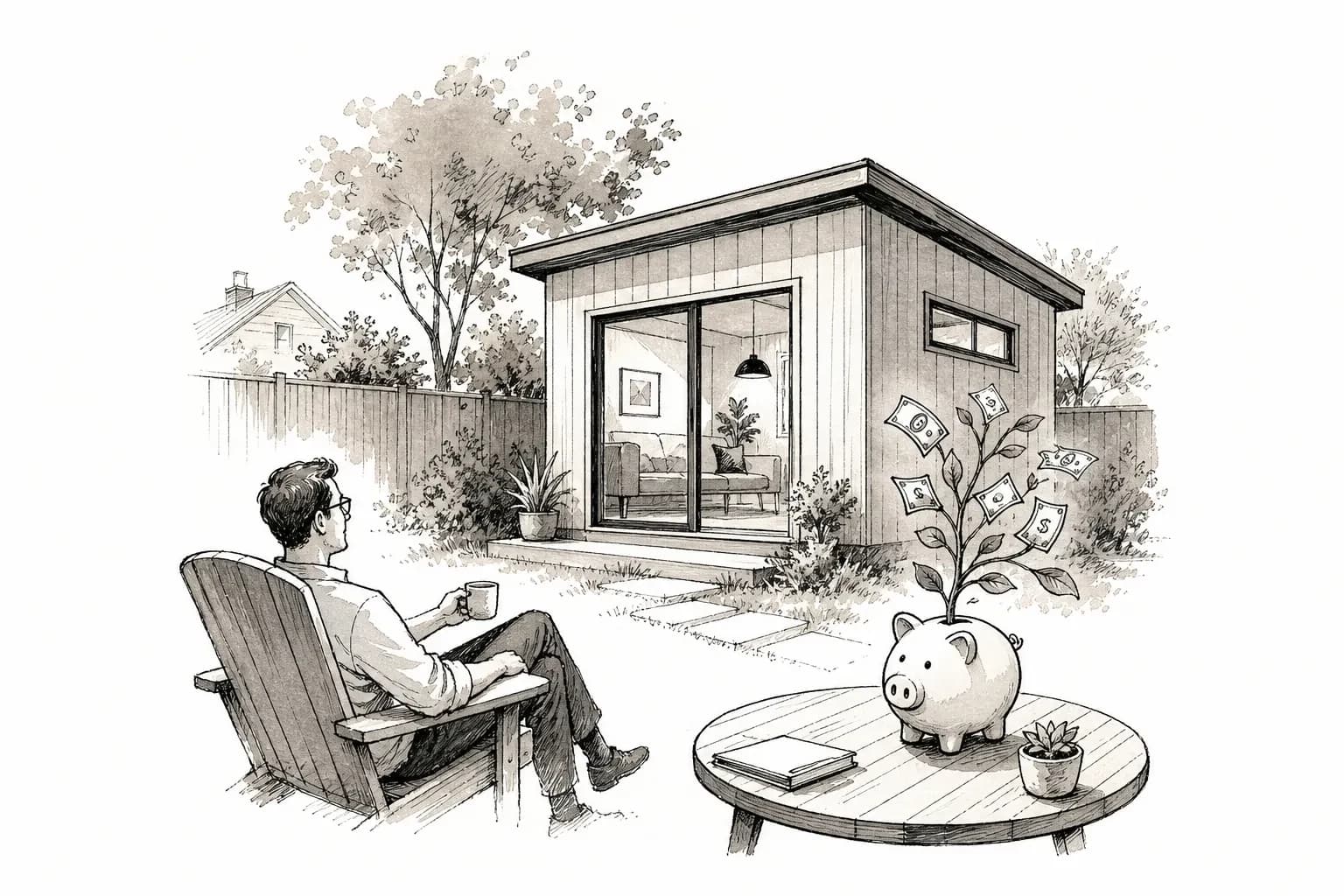
A growing number of homeowners are adding backyard units for rental income, aging parents, or a workspace that is not the kitchen table. Factory-built options have made that project faster and more cost-predictable than a full site build for many lots, with occupancy measured in months rather than years when permits and site work cooperate. If rental income is the reason you are building, use Turn your backyard into rental income with a prefab ADU for the cash-flow model and lender rules. If you still need the legal definition, unit types, zoning, and financing for any secondary dwelling, start with What is an accessory dwelling unit.
A prefab ADU, short for prefabricated accessory dwelling unit, is a secondary dwelling where the structure, or most of it, is built in a factory and then delivered and assembled on your property. Design, framing, and a large share of interior finish happen off-site. What arrives is either engineered panels or a nearly complete module set onto a prepared foundation.
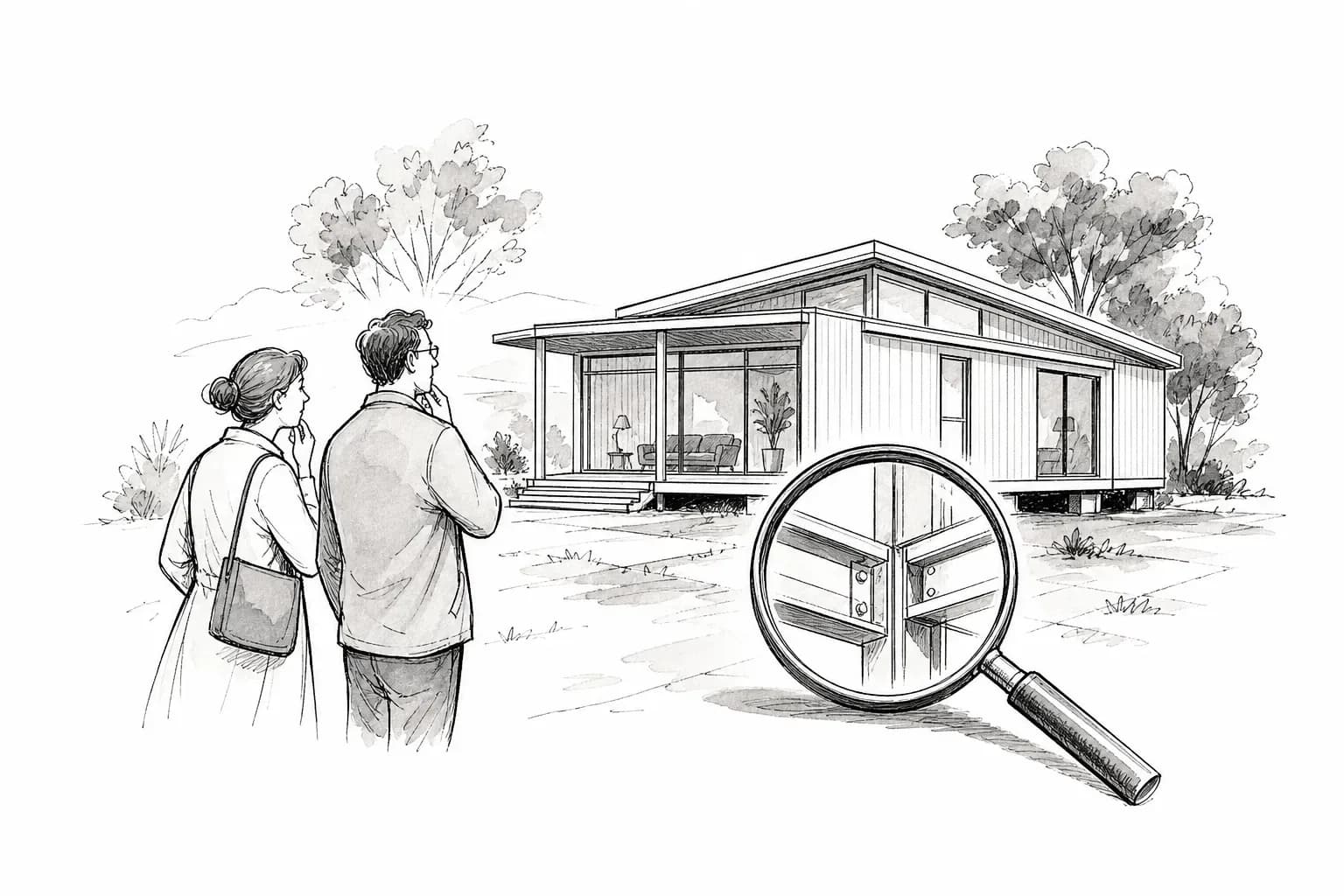
ADU kits, modular units, manufactured homes, and turnkey builder packages all get called prefab. They are not interchangeable. Permit path, financing, and timeline change with the type. Prefably lets you browse builders by state and contact companies directly. Sort the type first, then talk to anyone.
What a prefab ADU is and how it differs from building on-site
Factory-built vs. stick-built
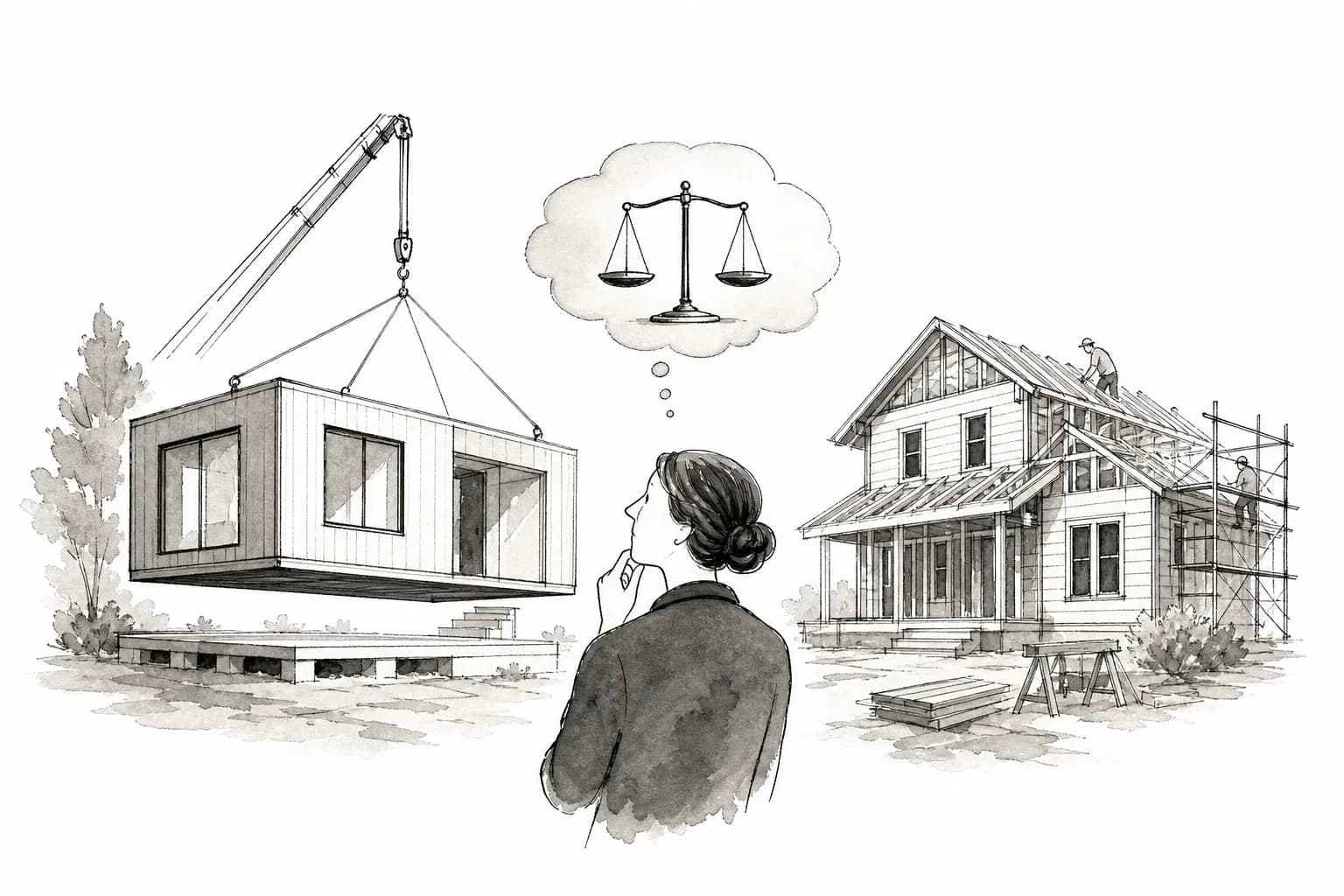
A site-built ADU is framed on your lot. Crews work in the weather, and the schedule moves with rain, inspections, and material delays. A prefab ADU moves most of that work into a plant, where cuts, assemblies, and quality checks happen under a roof. Major components ship when they are ready.
The practical result is a shorter on-site window, less weather exposure, and more consistent factory QC. You still need a foundation, utilities, and a legal occupancy certificate. Factory speed does not skip those steps.
Where prefab ADUs show up most
California was an early high-volume market because state law tightened local process. California HCD guidance describes a 60-day shot clock for complete ADU applications and impact-fee waivers for many units under 750 square feet. Confirm current HCD and city rules before you treat any number as a guarantee. Other high-cost coastal markets have added their own ADU-friendly reforms.
Texas, Colorado, and other Sun Belt states see backyard units used for rent and for multigenerational housing. Zoning and delivery still vary by county. A builder who actually sets units in your market matters as much as the floor plan.
The three types of prefab ADUs you will encounter
Panelized ADU kits
A panelized ADU arrives as factory-built wall panels, floor systems, and roof trusses. A crew assembles the shell on your foundation, then finishes interiors on-site. You get more layout flexibility than a sealed volumetric box, and more field labor than a crane-set module.
Timelines often run four to seven months from permit approval to occupancy. The shell can go up in days once the foundation is ready. Interior finish, utilities, and inspections add the rest. If you want more customization in plan and finishes, compare this path with modular vs panelized vs kit and the dedicated panelized homes guide.
Modular ADUs
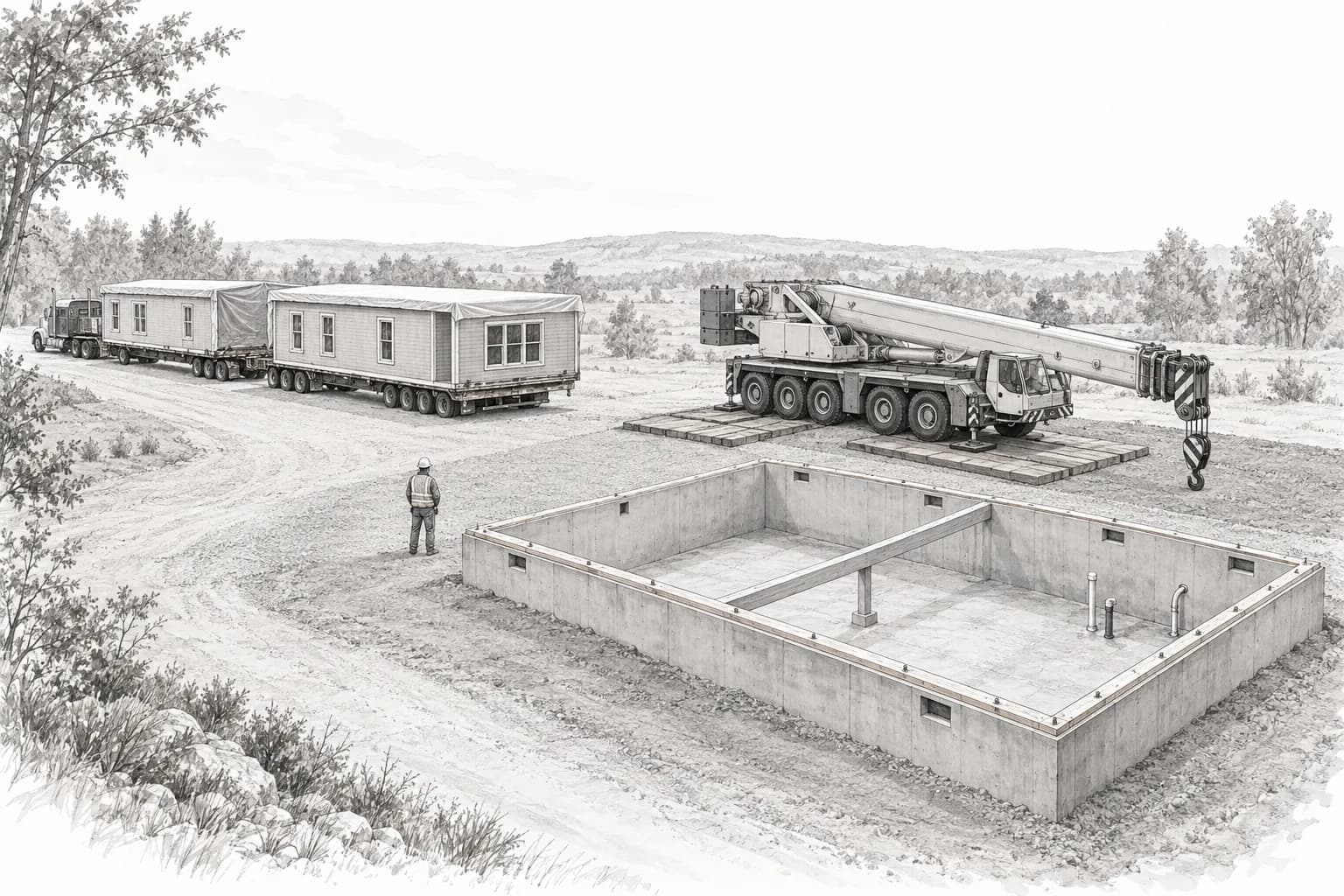
Modular units are volumetric sections built in a factory, with most interior work done before shipping. A crane sets the boxes on a prepared foundation in days. On-site completion is shorter. Many projects land in a three-to-five-month range from permit to certificate of occupancy when the site cooperates.
These units are inspected in the factory, at sequential build stages, and must meet the same local building codes as site-built work in that jurisdiction. That is why they often finance more like conventional construction. If timeline and a standard construction-loan path are the priority, modular is usually the category to start with. Read Prefab vs modular if the labels on a quote are fuzzy.
Manufactured ADUs
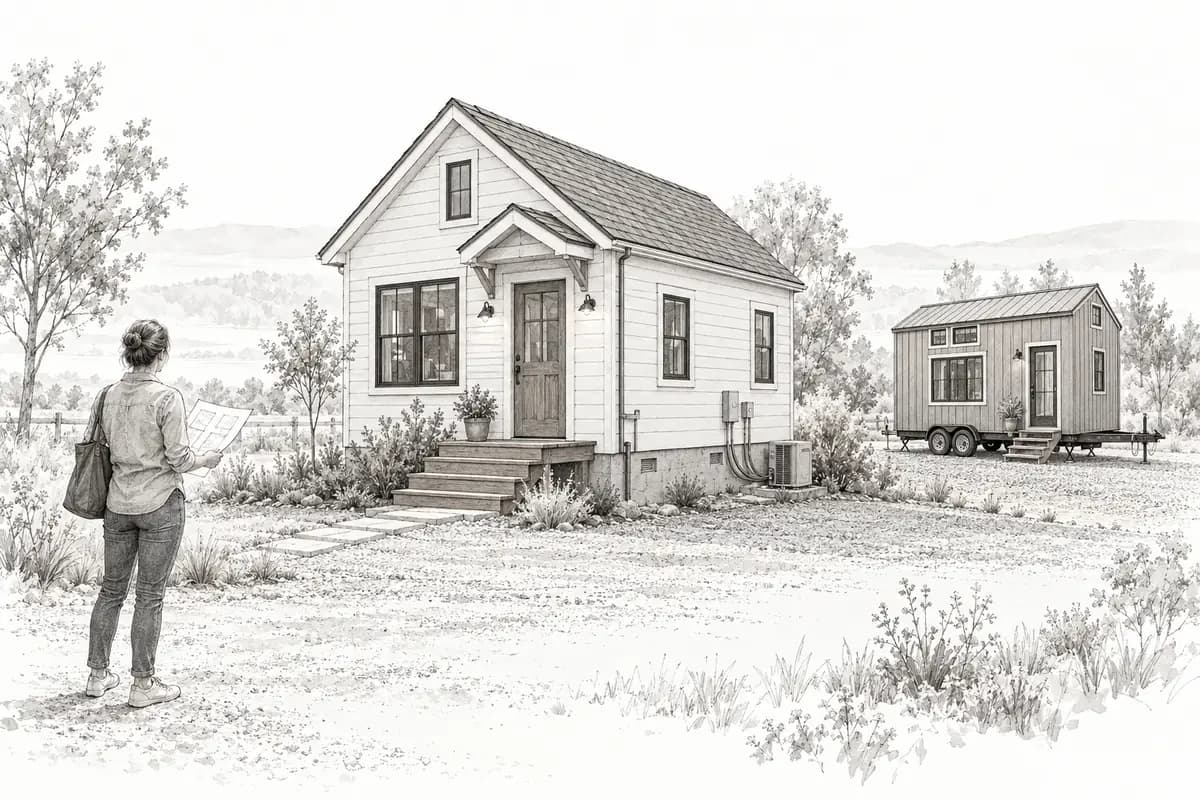
Manufactured units are built to federal HUD Manufactured Home Construction and Safety Standards and arrive nearly complete, often on a permanent or removable chassis. They usually need the least on-site assembly of the three types. Financing and permitting are not the same as modular. Talk to a lender early if you expect a construction loan or a conventional mortgage.
Not every county treats a HUD-code dwelling like modular. Some restrict placement or add extra approvals. Confirm with planning staff, and ask the builder in writing whether the product is HUD-code or local-code modular before you pay a deposit.
How the code path changes the loan
Lenders do not treat every backyard box the same. A local-code modular ADU on a permanent foundation is usually titled as real property, so many conventional, FHA, VA, USDA, and construction-to-permanent products that work for a site-built house can work here too. A HUD-code manufactured ADU is a different loan file. It often needs a chattel loan, FHA Title I, or another manufactured-home program, and occupancy rules can be stricter.
That gap can outweigh a lower factory sticker. A one-percentage-point rate difference on a $200,000 loan is on the order of $40,000 in interest over 30 years. Confirm the regulatory category in writing before you compare bids, then read How to get a mortgage for a factory-built home for the program names. Prefably does not broker loans.
Popular unit sizes and what they realistically cost in 2026
Studio, one-bedroom, and two-bedroom options
Studios and efficiency ADUs typically run 300 to 450 square feet and are the cheapest entry point: one tenant, a studio office, or a visiting relative. One-bedroom units, about 450 to 650 square feet, are the most common because they rent and live more easily.
Two-bedroom ADUs, often 650 to 900 square feet, fit multigenerational use or higher rent targets. They cost more and can hit local size caps. Check zoning. In California, state law generally protects a path to at least 800 square feet when you meet objective standards. That is a floor in many cities, not a statewide maximum.
2026 cost ranges: kit price vs. all-in installed price
Factory or kit pricing for prefab ADUs often runs about $80 to $160 per square foot, a Prefably planning range from 2026 builder conversations, not a survey. That band runs higher per square foot than whole-house modular pricing because fixed costs spread across less floor area. That number is not the installed cost. Foundation, utilities, transport, permits, crane, and set sit on top. The factory quote and the all-in installed price are almost never the same number.
Turnkey installed pricing, bundling most of those costs, typically lands between $150 and $525 per square foot nationally. At those bands, a 500-square-foot unit is roughly $75,000 to $263,000 and a 750-square-foot unit is roughly $113,000 to $394,000. Texas and Colorado mid-market builds sit in the lower half of that range, about $150 to $300 per square foot installed, with Austin-area work toward the top of that slice. In California, coastal metros often run $600 or more. A 400-square-foot studio in California commonly quotes about $190,000 to $230,000 all-in, roughly $475 to $575 per square foot, at the high end of the national band and above it on the coast. Treat every figure as a range, not a Prefably bid.
Ask every builder: is this the factory unit only, or does it include foundation, utilities, delivery, set, and permits? Get a fully installed, permitted, and connected price before you compare bids. A factory-only number next to a turnkey number is not a comparison.
Permits, site prep, and what happens before delivery
The permit checklist most buyers underestimate
Occupancy still needs zoning confirmation, a site plan review, a building permit, utility and drainage review, inspections, and a certificate of occupancy. None of that is optional. California’s statewide ADU rules, described in HCD’s handbook, include the 60-day complete-application clock, common four-foot rear and side setbacks for many detached units, and impact-fee relief for many units under 750 square feet. Complete ADU applications there are typically ministerial: no public hearing. Plan-check queues still run from a few weeks to four months. Your city still reviews the packet.
In Texas and Colorado, local zoning drives the timeline more than a single statewide ADU statute. A builder who has pulled permits in your county knows what reviewers bounce. That local record is worth more than a national brochure. Once permits, or at least the foundation permit, are in, factory production and site work can overlap. The crane day is usually one day. Utility tie-ins and municipal inspections after the set commonly add one to four weeks. Companies that already hold state-reviewed plan sets can shorten local plan check.
Site prep costs that show up after you sign
The lot still needs clearing, grading, and staking. Slopes, retaining, and drainage can add a lot. Foundation, slab, pier, or stem wall depending on type, is usually outside the factory quote. On a flat suburban lot with nearby utilities, site prep commonly runs $15,000 to $45,000 before the unit is ordered. That band is a simple-lot bundle, not a starter you add every other line on top of.
On a harder lot, foundation work alone often runs $25,000 to $50,000. Water, sewer, and electrical commonly add $10,000 to $25,000. A septic system or a long sewer run can be another $20,000 to $50,000. Ask what is already inside the $15,000 to $45,000 number before you stack those highs. A lower factory price on a complex lot can finish more expensive than a higher factory price on a flat, utility-ready site.
Modular sets need crane access. A tight driveway, overhead lines, or a dense canopy can turn a simple set day into extra cost. Ask every builder to split demolition and clearing, grading, survey, foundation, utility trenching, crane and set, and permits. Same scope, different companies, fewer surprises.
| Line (do not add every high end together) | Typical range |
|---|---|
| Simple suburban lot: grade, straightforward foundation, short trench | $15,000–$45,000 for that bundle |
| Foundation on slope, poor soil, or a raised system | $25,000–$50,000 |
| Water, sewer, electrical hookups | $10,000–$25,000 |
| Septic or a long sewer run | $20,000–$50,000 extra |
How to find the right prefab ADU builder for your property
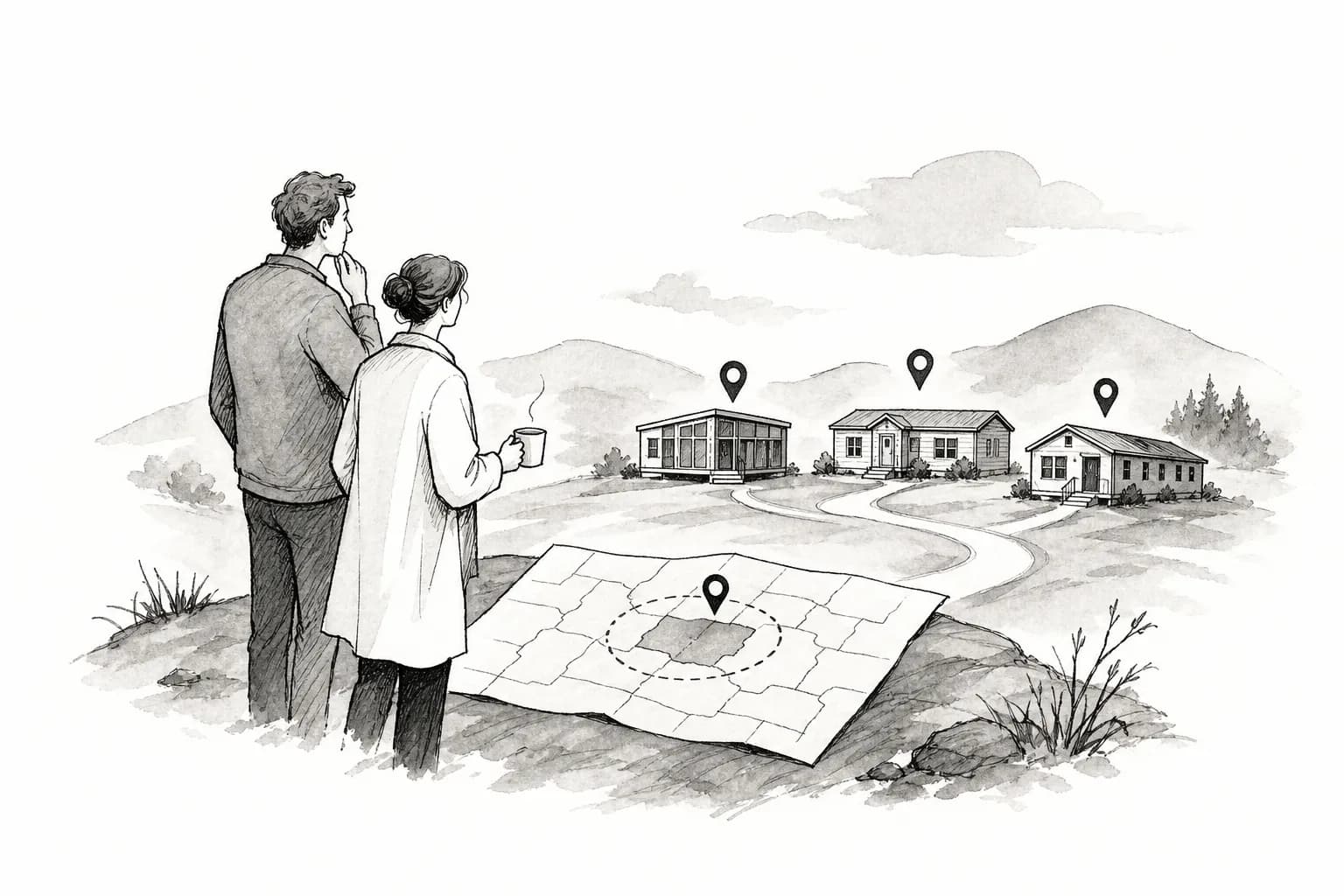
Not every prefab ADU company delivers to every state. Confirm delivery zone and a local set crew first. Then look for permit experience in your jurisdiction and projects on lots like yours. Published model-based all-in prices are easier to compare than a number that only appears after a long discovery call.
Prefably lists prefab and modular ADU companies by state. You open profiles and contact them yourself. Your inquiry is not sold as a lead. Start with California, Texas, or your own state hub, then keep type labels honest: modular to local code, manufactured to HUD, or panelized kit.
Next steps
The cost range is wide, permits are real, and site prep is extra. Once those layers are visible, you stop stacking factory quotes against turnkey quotes, and you know what to ask about delivery and permits before anyone wants a deposit.
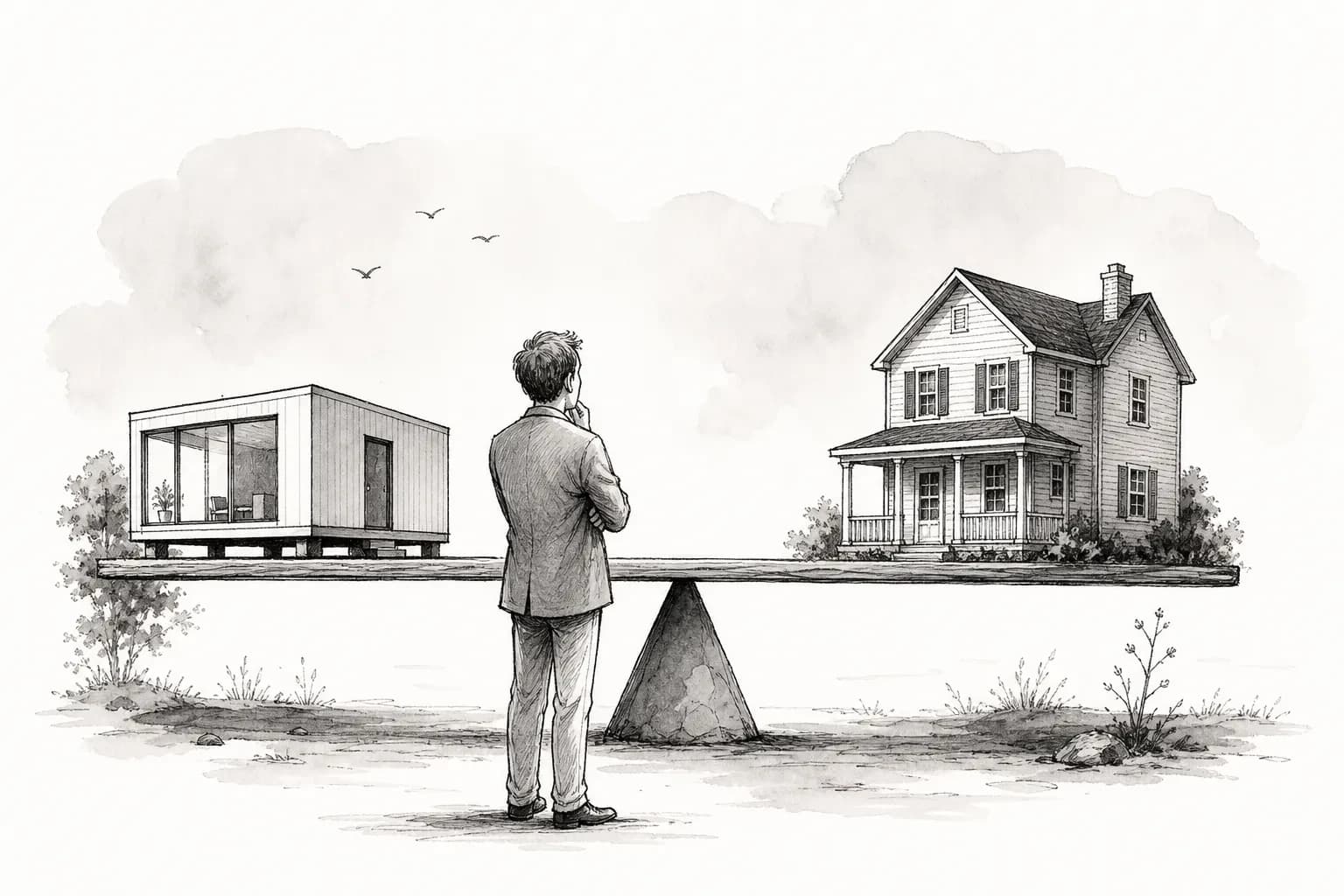
Choosing a kit, a modular unit, or a manufactured home depends on budget, local code, the lot, and how much field work you want to coordinate. There is no single right product. There is a right fit for one property.
Build a shortlist of companies that actually serve your state, compare installed pricing, and read modular home financing or how to get a mortgage for a factory-built home if a loan is part of the plan. Browse builders by state and reach out on your own terms.
Sources
Prefably does not provide construction, legal, appraisal, insurance, lending, or permitting advice, and is not a builder, lender, or permitting authority. Zoning, costs, timelines, and loan rules vary by jurisdiction, lot, contractor, and financing program. Confirm current local zoning, a written all-in bid, and lender terms before signing contracts or transferring funds.
FAQ
- What is a prefab ADU?
- A prefab accessory dwelling unit is a secondary living space where the structure, or most of it, is built in a factory and then delivered and assembled on an existing residential lot. It can be a panelized kit, a volumetric modular unit, or a HUD-code manufactured unit. Those three paths have different permit and financing rules.
- Is a modular ADU the same as a manufactured ADU?
- No. Modular ADUs are built to state and local building codes and usually set on a permanent foundation, so many lenders treat them more like site-built construction. Manufactured ADUs follow the federal HUD Code, often arrive on a chassis, and can face different zoning and loan products. Get the code path in writing before you deposit.
- How much does a prefab ADU cost in 2026?
- Factory or kit quotes often run about $80 to $160 per square foot. Turnkey installed pricing, including foundation, utilities, delivery, set, and permits, more often lands around $150 to $525 per square foot nationally, and can exceed $600 in coastal California. Always compare fully installed, permitted, connected prices, not factory-only quotes against turnkey bids.
- How long does a prefab ADU take?
- Panelized kits commonly run four to seven months from permit approval to occupancy. Modular units often land in a three-to-five-month range once permits are in hand. Getting those permits can take one to four months on its own. Site conditions, utility work, and local plan-check queues can stretch either window. The factory phase is usually the short part.
- Are prefab ADUs cheaper than stick-built?
- The factory box often is. The project is not always. Compare turnkey installed prices, including foundation, utilities, crane, and permits, to a site-built bid with the same scope. A cheap volumetric quote on a tight lot with a long sewer run can cost more than a stick-built ADU on a flat, utility-ready yard.
- What are the drawbacks of a prefab ADU?
- You still need permits, a foundation, and utilities. Volumetric modules need crane access and give you less on-site layout flexibility than a panelized kit. HUD-code units can face zoning and loan limits that modular does not. Delivery zones are local. A factory-only price is not an occupancy-ready price.
- Can I get a conventional mortgage on a modular ADU?
- Often yes, if it is built to local code, set on a permanent foundation, and titled as real property. HUD-code manufactured ADUs usually need different products. Details are in How to get a mortgage for a factory-built home. Prefably does not broker loans.
- Do I still need permits for a factory-built ADU?
- Yes. Zoning confirmation, site plan review, a building permit, utility and drainage review, inspections, and a certificate of occupancy still apply. California has statewide ADU processing rules; Texas, Colorado, and most other states leave more of that to the city or county.
- Is Prefably an ADU builder?
- No. Prefably is an independent directory. You browse prefab and modular ADU companies by state and contact them directly. We do not resell your inquiry as a lead.
Keep reading