Buyer guide
How Much Does a Modular Home Cost?
Modular home cost explained: all-in budget beyond the factory quote, price per square foot caveats, land and site costs, and how to compare prefab pricing to stick-built.

Dmitry Bilchenko
Co-founder, Prefably
- Published
- Reading time
- 8 min read
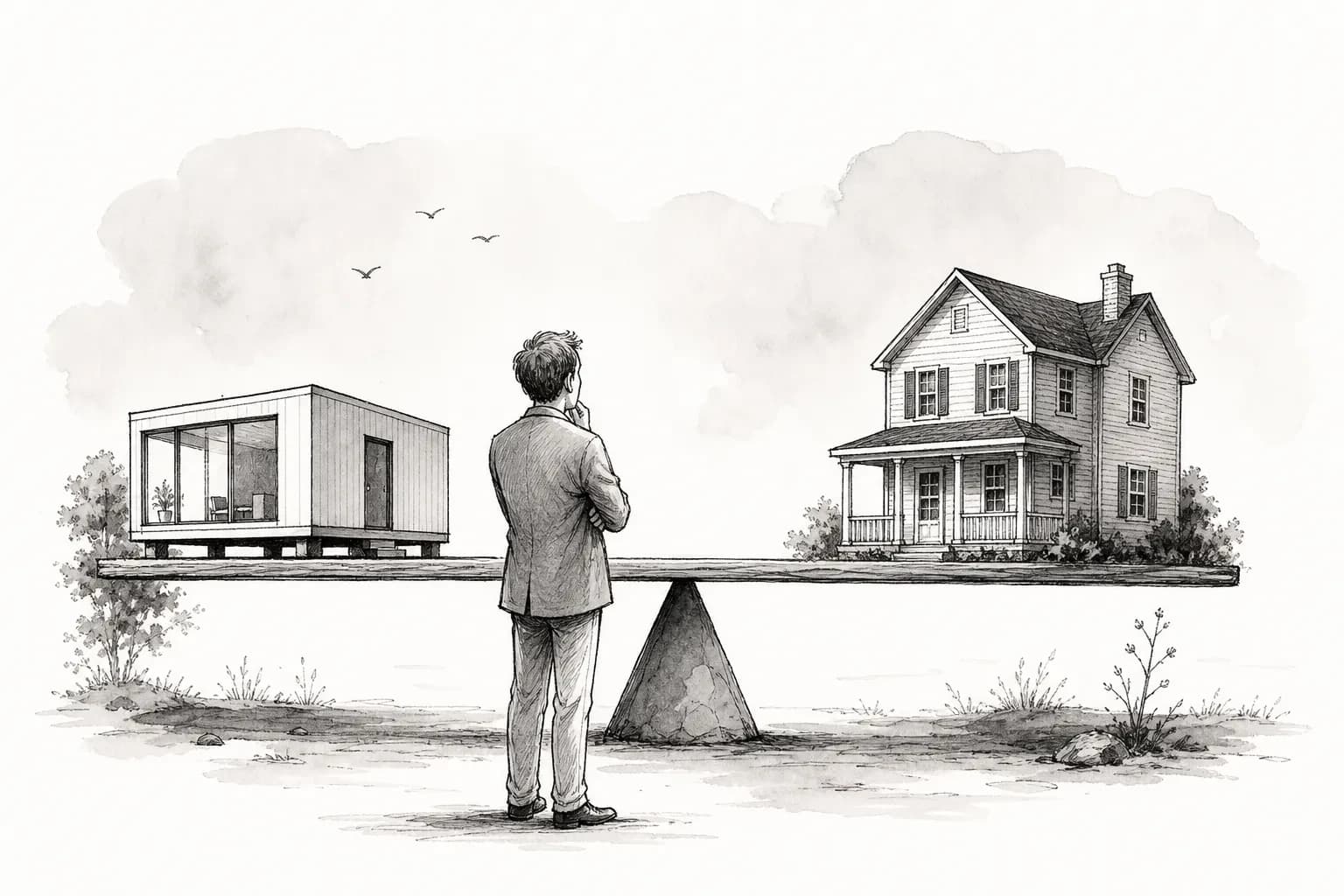
“How much does a modular home cost?” and “what is the all-in cost beyond the factory quote” rarely have a single sticker answer. The factory quote covers the home package; your all-in budget also includes land (if you do not already own it), foundation, utilities, permits, delivery and crane, site finish work, and contingency. Treat early online price ranges as directional, then rebuild the number from scopes you can compare across builders.
This guide breaks cost into the buckets lenders and builders actually use, explains what moves totals the most, and shows how to use Prefably’s state directories to gather apples-to-apples quotes from modular home builders near you.
The factory package vs the all-in budget
Factory package typically includes the modules as designed, structure, many finishes, and factory-installed systems depending on the brand. It usually excludes or only partially covers foundation, excavation, utility trenches, driveway, septic or sewer tap, well, landscaping, permits, and sometimes HVAC final or exterior decks.
All-in budget means everything required to occupy the home legally and comfortably. Buyers who compare only factory prices often understate project cost by tens of thousands of dollars. Ask every builder for a written split: factory price, site package, allowances, and exclusions. For HUD-code manufactured homes, the factory home budget guide walks through Census stickers, setup line items, and lot rent.
Major cost drivers
Plan size and complexity: square footage, number of modules, roof geometry, and custom interiors drive factory cost. Simple rectangular plans with standard finishes cost less per square foot than complex multi-wing designs.
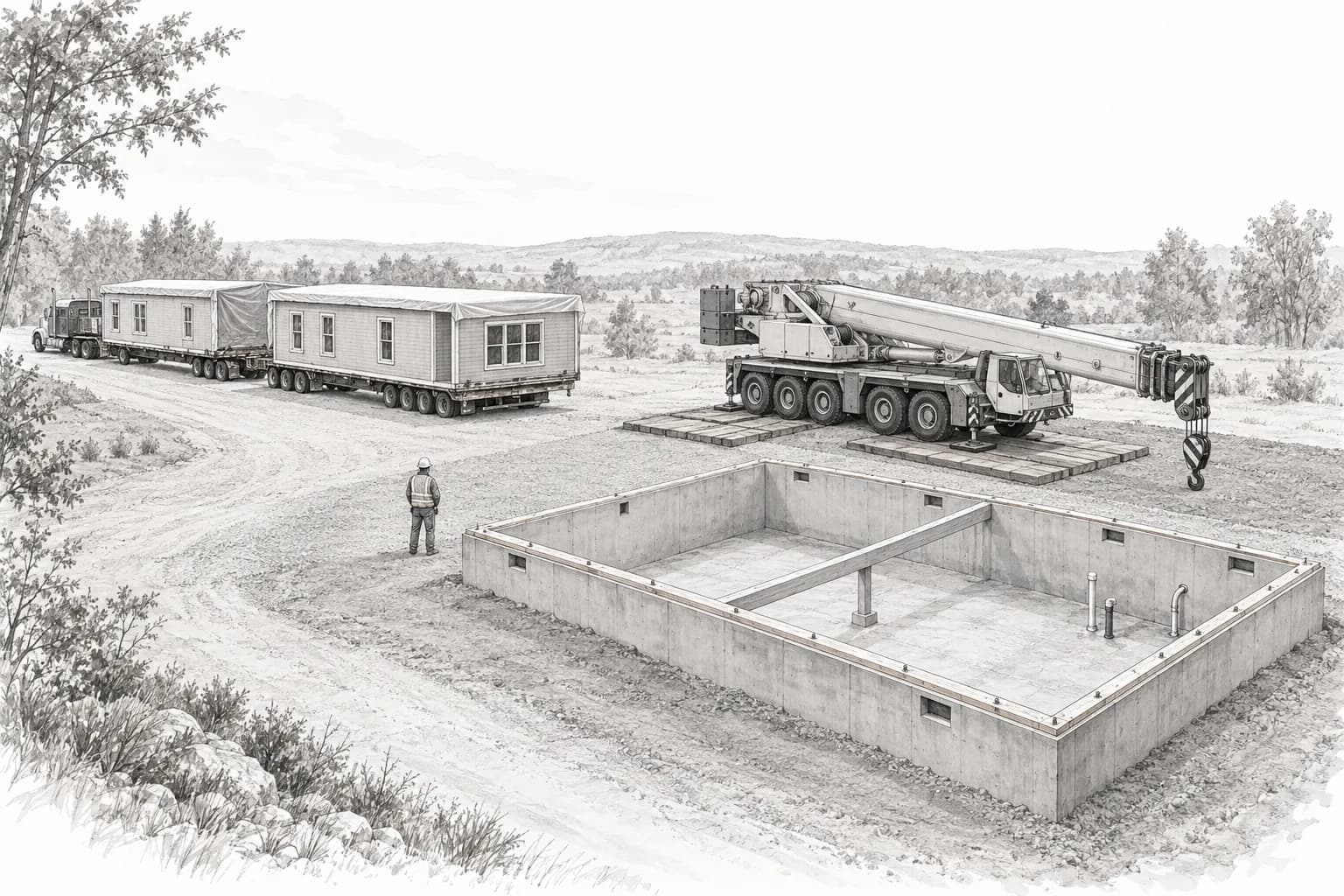
Site conditions: slope, soil, rock, trees, wetland buffers, long utility runs, and flood or wind design requirements can outweigh floor-plan upgrades. A flat, utility-ready lot is the cheapest modular canvas.
Delivery distance and access: farther plants, narrow roads, low bridges, and difficult crane pads increase transport and set cost. Island, mountain, and urban-infill sites need early logistics review.
Code and climate packages: hurricane, wildfire, snow-load, and high-performance energy packages add to both factory and site scopes. Do not assume a catalog base price includes your jurisdiction’s requirements.
Finish level and change orders: mid-project upgrades are expensive in any construction method. Lock selections early and keep a contingency (often 5–10% of hard costs) for unknowns.
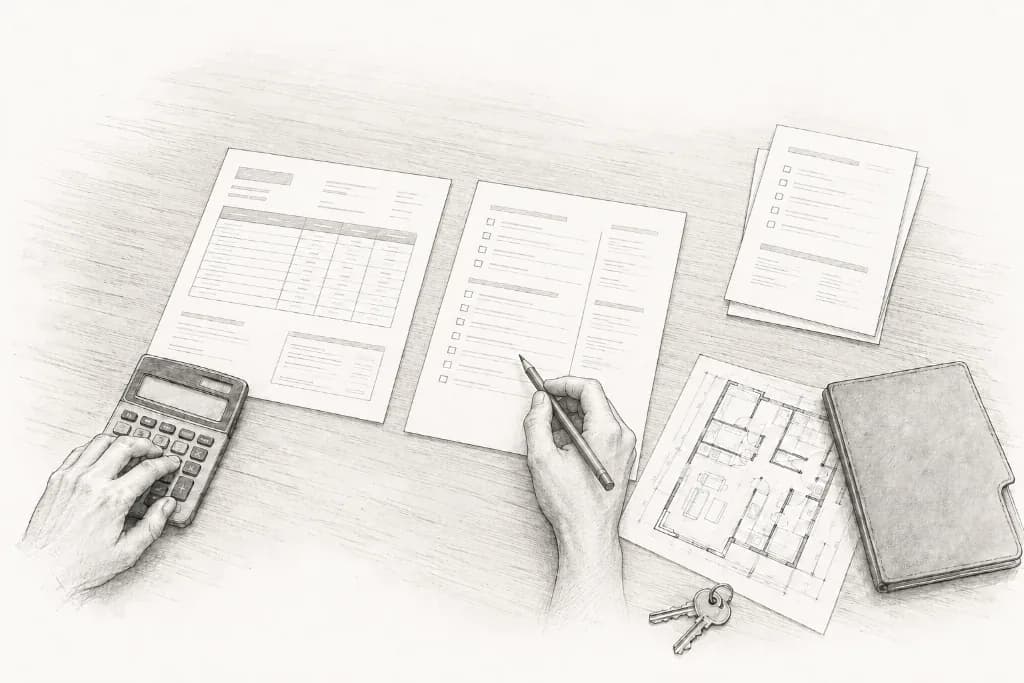
Budgeting checklist (use with every quote)
Land purchase or carry costs, survey, and soil report. Foundation and waterproofing. Water, sewer/septic, electric, gas, and telecom. Driveway, grading, drainage, and erosion control. Building permits, impact fees, and inspections. Module transport, escorts, and crane. On-site finish carpentry, roofing tie-ins, and exterior envelope completion. HVAC final, appliances if not included, and window coverings. Landscaping, fencing, and temporary living costs during construction. Contingency and interest during a construction loan.
Print or copy this list into a spreadsheet with columns for Builder A / B / C. Anything listed as “by owner” still belongs in your total.
Regional reality check
Texas projects often hinge on foundation type, septic, and long rural utility runs more than coastal wind upgrades. California totals frequently include Title 24 energy measures, ADU-specific fees, and high labor rates for site finish. Florida budgets must account for wind design, impact products, and flood elevation when mapped. Your state page on Prefably is the right place to find builders who already price those realities.
Never transplant a national “average modular cost per square foot” onto your lot without a site review. Two identical floor plans can diverge sharply once soil and access enter the model. Regional 2025 installed bands are in modular home price per square foot by state.
How to compare builder quotes fairly
Require the same plan assumptions: square footage, finish grade, foundation type, and utility responsibility. Ask what happens if soil reports force a deeper foundation. Confirm whether sales tax, freight fuel surcharges, and storage fees are included.
Clarify modular vs manufactured labeling. A lower manufactured quote is not comparable to a modular package if financing and foundation assumptions differ.
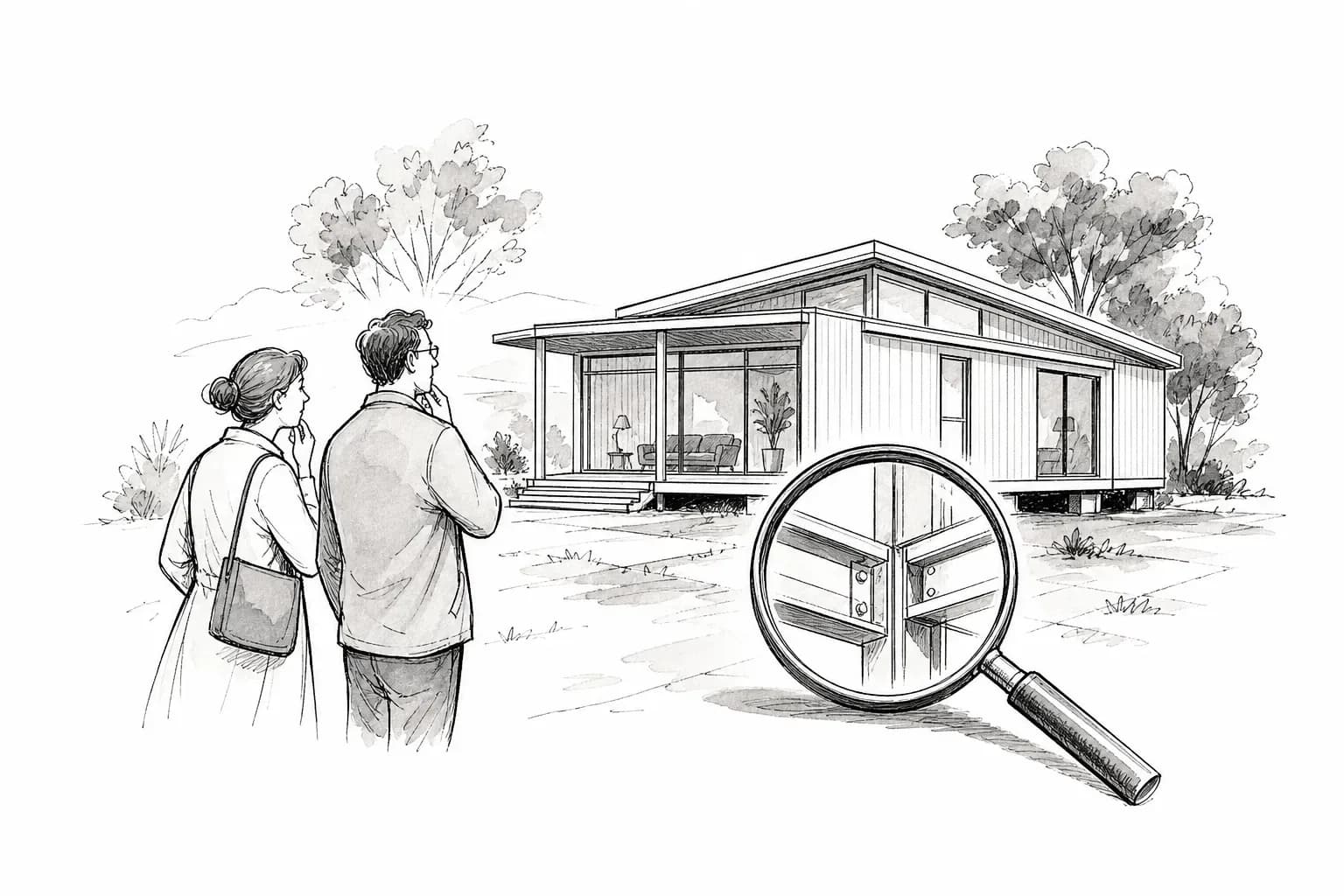
Meet or video-tour the project manager who will run your job, not only the salesperson. Ask for recent nearby sets as references.
Owner-builder vs turnkey GC roles
Some modular buyers act as owner-builders and hire separate trades for foundation and utilities. Others hire a turnkey general contractor who coordinates the factory and the site. Owner-builder paths can look cheaper on paper and cost more in delays; turnkey paths cost more in margin and can reduce coordination risk.
Be honest about your capacity. If you have never pulled a residential permit, a turnkey modular builder or GC experienced with factory sets is usually worth the premium. Put responsibility matrices in the contract: who calls inspections, who schedules the crane, who owns weather delays.
Prefably listings help you find companies, your contract still has to assign roles. Ask each shortlisted firm which model they prefer and what happens when a subcontractor fails a critical path item.
Cost ranges without false precision
Public “average modular cost” articles often cite wide national bands that ignore land, utilities, and climate packages. Treat any single number as a conversation starter only. What matters is the delta between Builder A and Builder B on the same assumptions, plan, finish level, foundation type, and utility responsibility.
If a quote is dramatically cheaper, look for missing site work, a different code path (manufactured labeled as modular), thinner finish allowances, or freight exclusions. If a quote is dramatically higher, ask whether wind, snow, or custom geometry is already engineered in. Document the explanation; do not assume malice or magic.
Revisit totals after the soil report. Foundation changes are the most common mid-stream budget movers for factory-built projects on imperfect lots.
Sample cost conversation (what “good” sounds like)
A useful quote conversation sounds like this: “Here is the factory price for Plan X at finish level B. Here is the site package assuming a slab on grade, municipal utilities within 50 feet, and standard crane access. Exclusions are driveway beyond 40 feet, landscaping, and window coverings. If the soil report requires piers, here is how we re-price. Delivery from Plant Y is included within Z miles; beyond that, freight is $N per mile.”
Vague quotes sound like: “Homes start at $X per square foot, turnkey.” Turnkey means different things to every salesperson. Push for line items before you emotionally commit to a floor plan.
Contingency and cash flow
Even clean modular projects surprise buyers with utility tap fees, temporary power, driveway upgrades, and HOA deposits. Keep contingency liquid, not only on a spreadsheet. If you are using a construction loan, understand whether contingency is inside the loan amount or must come from cash.
Ask when factory deposits are due relative to loan approval. Paying 20–40% before financing clears is a common stress point. Align the builder’s production calendar with your lender’s draw schedule so you are not bridging with high-interest personal funds.
Where Prefably fits
Use the builders hub and your state directory to shortlist modular home builders, review ratings where available, and open company websites. Contact three or more firms directly with the same checklist. Read the financing guide next so deposit schedules and construction draws match how modular projects actually get paid.
If you build factory-built homes, claim your Prefably listing so cost and specialty details stay accurate for buyers running this process. Accurate specialties (modular vs manufactured vs ADU) help buyers stop comparing unequal quotes.
FAQ
- How much does a modular home cost all-in?
- Factory-only packages often run about $50–$100 per square foot. All-in totals including foundation, delivery, utilities, permits, and finish work commonly land around $80–$160 per square foot, and can exceed that in high-cost or custom markets. Treat online ranges as directional until you have comparable written scopes.
- How much should I budget for a modular home beyond the factory quote?
- Plan a separate site package: foundation, excavation, utilities, septic or sewer, driveway, permits, delivery, crane, and finish work. On many lots those line items rival or exceed the factory box. Ask for a written split and a contingency, then rebuild the all-in number before you treat prefab home pricing as final.
- What does modular home price per square foot actually include?
- Often only the factory package. Published $/sqft figures mix factory-only, turnkey, and manufactured quotes, and they ignore soil, utility runs, and delivery. For 2025 regional installed bands, see modular home price per square foot by state. Those ranges are planning baselines, not a sticker that replaces a site-specific scope.
- How does modular home cost compare to traditional construction?
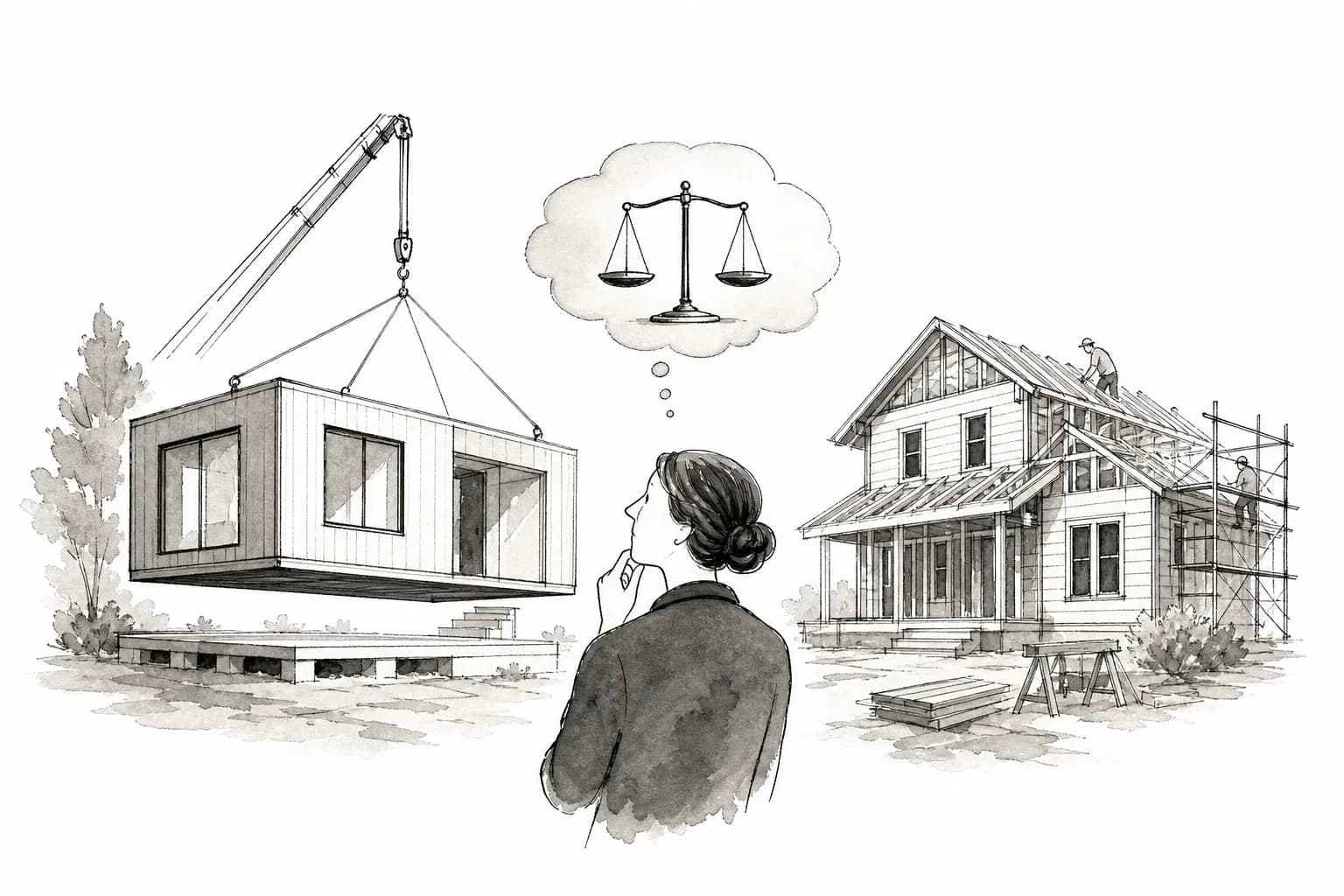
- The factory box can undercut stick-built on weather-protected labor. Site work, land, and permits often converge with traditional construction. Modular home cost vs traditional only makes sense when both quotes include foundation, utilities, and finish. A cheaper factory photo is not an all-in win.
- What is included in the factory package versus site work?
- The factory package usually covers the modules, structure, and many finishes. Site work typically includes foundation, excavation, utilities, driveway, septic or sewer, permits, crane set, and exterior finish. Ask every builder for a written split: factory price, site package, allowances, and exclusions.
- How should I compare quotes from multiple modular builders?
- Send the same lot notes to three to five companies on Prefably. Require a written factory-vs-site split, code path (modular vs manufactured), sample timeline, and what the deposit covers. Discard anyone who will not put those items in writing.
Keep reading