Buyer guide
Manufactured Home vs Modular: Code, Cost, Financing, and Resale
Manufactured vs modular homes explained: HUD Code vs local code, chassis vs permanent foundation, cost, mortgages vs chattel loans, insurance, and resale. How to tell which type a builder is selling.

Dmitry Bilchenko
Co-founder, Prefably
- Published
- Reading time
- 11 min read
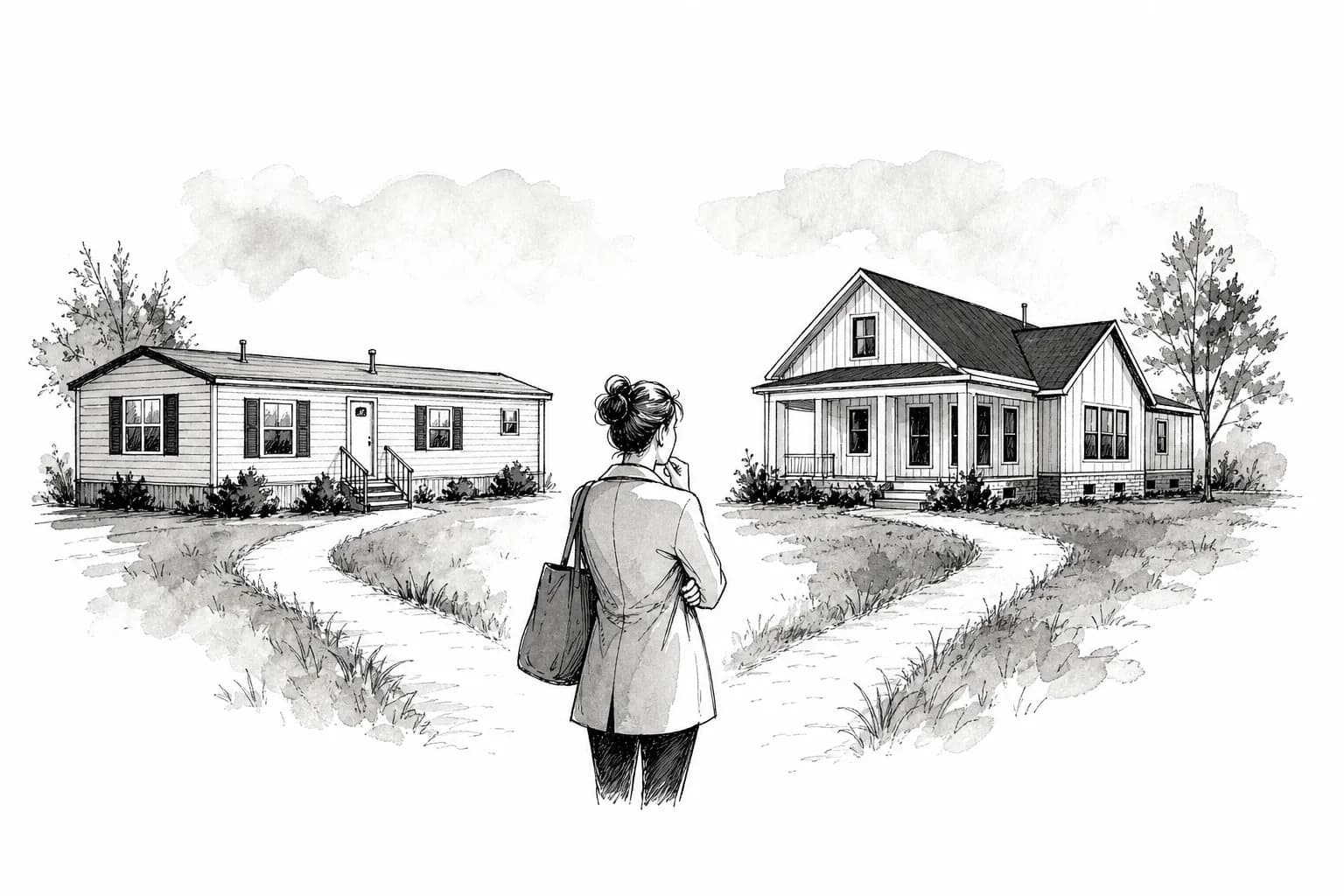
A manufactured home is not a modular home with different marketing. Both leave a factory on a truck. After that, the law, the foundation, the loan, and often the insurance policy split.
Manufactured homes are built to the federal HUD Code and keep a permanent steel chassis. Modular homes are built to the same family of state and local residential codes as site-built houses, then crane-set onto a permanent foundation. Treating those labels as synonyms is how buyers compare unequal quotes and lock the wrong loan.
This page is the 1:1 split. For the wider taxonomy (prefab as the umbrella, plus panelized, kits, ADUs, and tiny homes), use Prefab vs modular. Prefably lists manufactured and modular companies by state. Contact them directly. Prefably does not sell the inquiry as a lead.
Manufactured vs modular at a glance
Use this as a starting point, then verify with your builder, county, and lender. Local programs create exceptions.
| Factor | Manufactured (HUD Code) | Modular (state / local code) |
|---|---|---|
| Building code | Federal HUD Code (24 CFR Part 3280), uniform in all 50 states | IRC or state equivalent, plus site rules in the county |
| How you identify it | Red HUD label on each transportable section | State insignia from the modular / industrialized-building program |
| Chassis | Permanent steel chassis stays with the home | Transport frame is not the finished structure; home sits on a permanent foundation |
| Foundation | HUD-approved supports, piers, slabs, or permanent systems with tie-downs | Crawl space, basement, or slab built to local code |
| Typical land setup | Owned land or a land-lease community | Almost always owned land with a permanent foundation |
| Financing tendency | Chattel or specialized products unless titled as real property on owned land | Often conventional, FHA, VA, or USDA after certificate of occupancy |
| Insurance tendency | Often a manufactured-home / HO-7 style policy | Typically a standard homeowners (HO-3) policy |
| Best-fit buyer | Tighter factory budget, rural or park placement, HUD installation path | Code parity with site-built, standard mortgage, crane-accessible lot |
The legal split: HUD Code vs local residential code
The clearest way to tell the two apart is not the elevation or the interior photos. It is the code the plant built to.
Manufactured homes follow the HUD Manufactured Home Construction and Safety Standards (24 CFR Part 3280). Homes built to that standard after June 15, 1976 carry a HUD certification label on each section. The HUD Code covers structure, thermal protection, plumbing, electrical, and fire safety the same way in every state. Placement and installation still have to satisfy HUD installation rules and the local authority.
Modular homes follow the International Residential Code or the state program that adopts it, the same code family used for site-built houses. There is no federal HUD label on a true modular home. The state industrialized-building agency inspects the plant. Local building officials inspect the foundation, set, and site work. After a certificate of occupancy, the house is generally treated like other code-built dwellings on that lot.
Mobile vs manufactured vs modular
People still say “mobile home” for anything that arrived on a truck. Lenders do not. Factory-built dwellings produced before June 15, 1976 are mobile homes in the legal sense and usually cannot use today’s FHA, VA, USDA, or conventional manufactured-home programs. HUD-code manufactured homes are the post-1976 federal category. Modular is a different code path entirely. If a salesperson uses the three words as synonyms, stop and ask for the label.
Construction, chassis, and what happens on your lot
A manufactured home is built on a steel chassis that remains part of the home. That chassis is how HUD defines the product and how the home is transported. On site it is set on HUD-approved supports, anchored, and connected to utilities. Foundation options can look more flexible than modular. The chassis does not disappear, which is why title and lending still ask whether the home is personal property or real property.
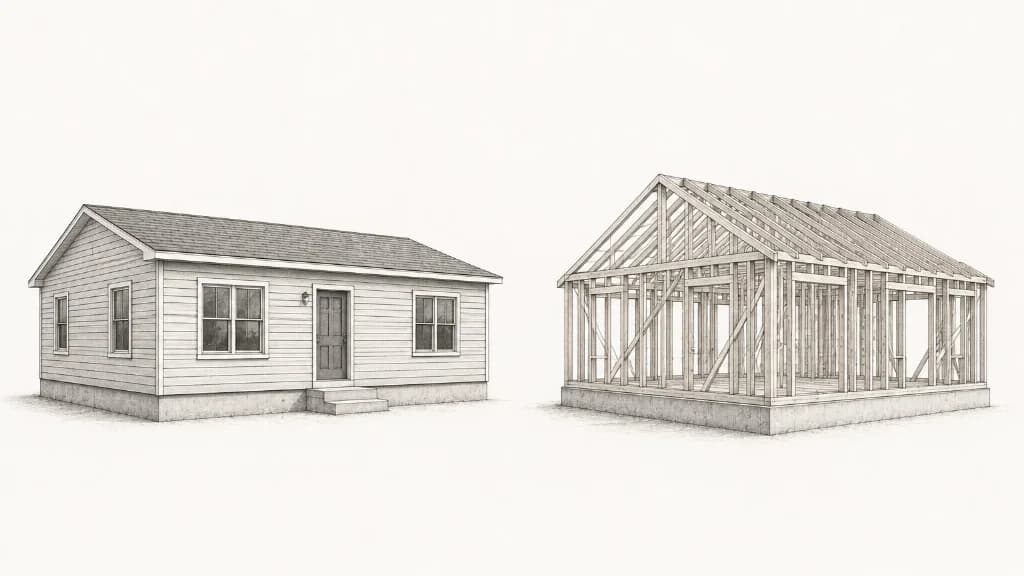
A modular home is built as volumetric sections, trucked, and crane-set onto a foundation that was already poured or built to local code, typically a slab, crawl space, or basement. The sections are joined, weatherproofed, and finished on site. Inspectors review the foundation and the assembly the way they would for other new construction. Site work is often heavier than a HUD set because the foundation has to meet local residential code, not only HUD installation standards.
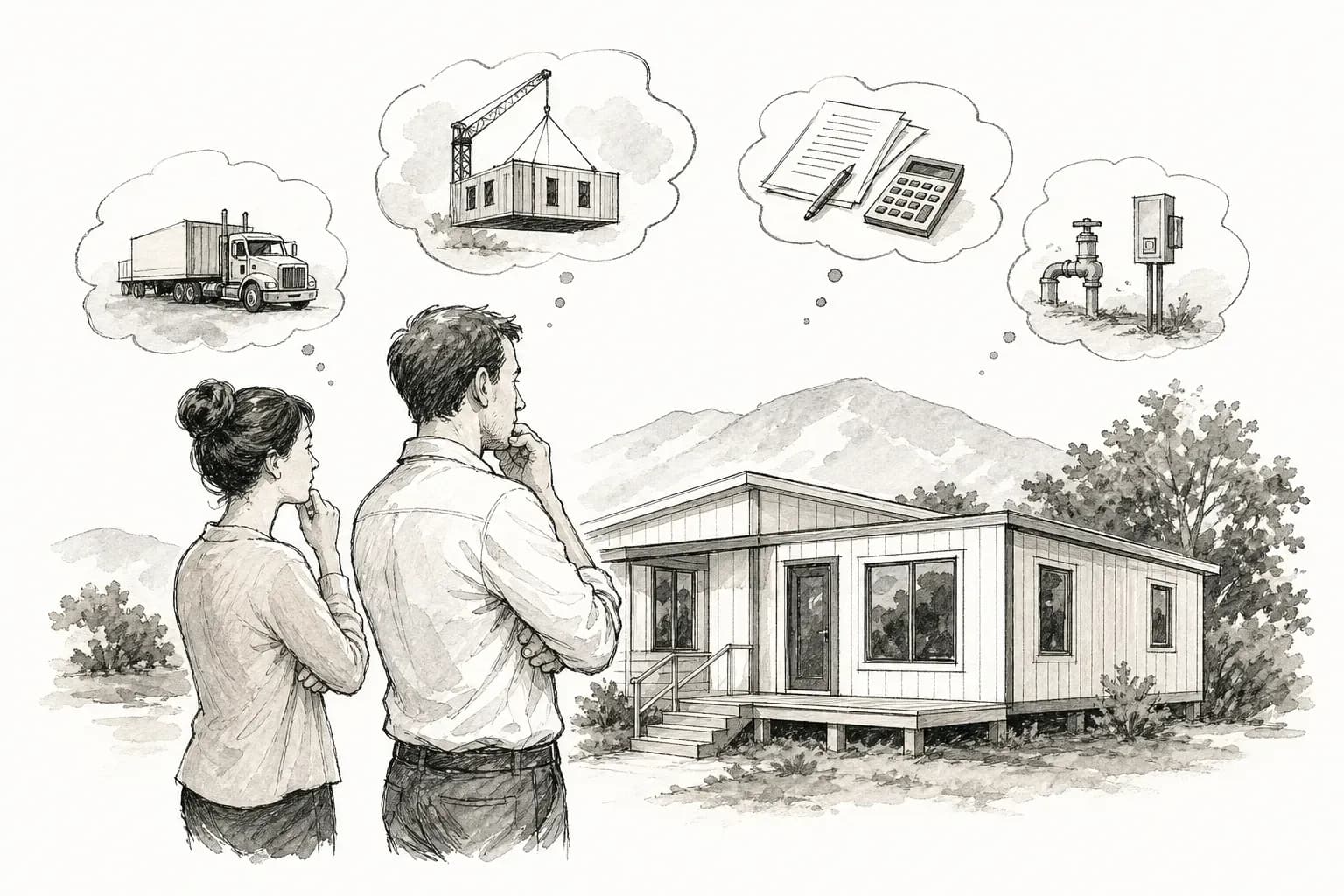
That is also why a cheap manufactured quote and a modular quote are not comparable until both include foundation, delivery, utilities, permits, and finish. The factory home budget guide walks HUD stickers versus landed cost. The modular cost guide does the same for local-code modules.
What each type actually costs
The factory price gap is real. It is also incomplete.
The Census Bureau’s Manufactured Housing Survey (via FRED) put the average new manufactured home at $137,500 in March 2026: about $90,700 for a single-section and $164,200 for a double. That is the home only. Not land, not tax, not installation. On a simple suburban lot the landed cost can sit roughly $20,000 above the sticker. On raw land with well, septic, and a permanent slab it can sit $80,000 above. Those stacked examples live in the factory-budget guide, not here.
Modular factory packages often run about $50 to $100 per square foot. All-in totals including foundation, delivery, utilities, permits, and finish commonly land around $80 to $160 per square foot, and higher in custom or high-cost markets. A typical installed modular project is often discussed in the $160,000 to $320,000 band for a standard house. Treat those as directional. Two identical floor plans diverge once soil and access enter the quote.
Financing can close an attractive sticker. A cheaper HUD-code home on a chattel loan, or in a park with lot rent, can cost more per month than a modular house on a conventional mortgage. Compare payment, term, and what you own, not only line one on the dealer sheet.
Financing: why lenders treat them as different products
This is where the code split shows up on a closing disclosure.
When a manufactured home sits on land the buyer does not own, or still carries a vehicle-style title, lenders treat it as personal property. Chattel loans commonly need a larger down payment and run about 2 to 4 percentage points above a real-property mortgage, often with a shorter term. FHA Title I covers many personal-property and leased-land files. FHA Title II, VA, USDA, and some conventional products can apply when the home is permanently affixed on land you own and titled as real estate. Fannie Mae’s titling guidance is the practical checklist: foundation certification, title retirement through the state, and a recorded deed. That conversion is not automatic. Confirm your state’s steps before you assume the cheaper mortgage is available.
Modular homes built to local code on a permanent foundation are usually real property from day one. They commonly use conventional, FHA, VA, and USDA mortgages on the same terms as other houses after certificate of occupancy. New projects still often need construction or construction-to-permanent financing while the factory and site work are underway. There is no HUD title-retirement step.
The longer program walkthrough is How to get a mortgage for a factory-built home. Modular-specific underwriting is in Modular home financing and FHA modular home loans. Prefably does not broker loans.
Insurance and long-term equity
Insurers classify the two products differently even when the finished interiors look similar. Manufactured homes often need a specialized manufactured-home policy (commonly discussed as HO-7). Modular homes that meet local code and sit on a permanent foundation more often qualify for a standard homeowners (HO-3) policy. Premiums vary by carrier, county, wind, flood, and wildfire maps. Ask the insurer which form they will actually write before you treat either path as “normal homeowners insurance.”
Resale follows title and land more than the factory brand. Urban Institute analysis of FHFA data found that from 2000 to 2024, manufactured homes with GSE mortgages (owner holds the structure and the land) appreciated 211.8%, versus 212.6% for site-built homes, roughly 5% a year. That is not a study of personal-property titles or land-lease parks. Homes in parks face a smaller buyer pool, ongoing lot rent, and harder refinance. Modular homes that are deeded as real estate generally appraise against local site-built comps. Fannie Mae treats comparable selection for modular similarly to site-built housing, with marketability still the appraiser’s job.
Which type fits, and what to ask before you sign
Start with land and lender, not floor plans. If you own the lot, can take a crane, and want a standard mortgage, modular is usually the first path to price. If the binding constraint is the factory number, or the home will sit in a land-lease community, interview manufactured dealers who already install in that county and can explain title. If a salesperson will not put HUD versus state modular in writing, you do not have a comparable quote.
Ask every company the same questions:
- Which code does this home meet: HUD Code or state/local modular? Can I see the label or insignia spec?
- What foundation types do you support here, and who engineers and pours them?
- Is this a land-lease placement or a privately owned lot, and who pulls permits?
- What is in the factory price versus site package: delivery, set, utilities, skirting, finish?
- Which loan files have you actually closed in this county in the last year?
- What does the post-set warranty cover, and who is on the hook if the set fails inspection?
Write the answers down. Compare three companies on Prefably in your state, filter by manufactured or modular, and email them yourself. Browse builders by state. If you are still choosing among factory methods, use Which prefab home type is right for you. If the alternative is stick-built, read Modular vs stick-built homes.
FAQ
- Is a manufactured home the same as a modular home?
- No. Both are built in a factory, but they follow different codes. A manufactured home is built to the federal HUD Code and keeps a permanent steel chassis. A modular home is built to state or local residential code, crane-set on a permanent foundation, and treated like other code-built houses once it has a certificate of occupancy.
- Which is cheaper, a manufactured home or a modular home?
- The factory sticker is usually lower on a HUD-code manufactured home. Census figures for March 2026 put the average new manufactured home at $137,500 for the home only. Modular all-in budgets commonly land around $80 to $160 per square foot once foundation, delivery, and site work are included. Compare landed cost and the loan, not two catalog prices.
- Can you get a conventional mortgage on a manufactured home?
- Sometimes, when the home is permanently affixed on land you own and titled as real property. Otherwise lenders often use chattel, FHA Title I, or other manufactured-home products. Modular homes on a permanent foundation typically use the same conventional, FHA, VA, and USDA family as site-built houses. Confirm with a lender before you treat either factory quote as financeable.
- Do manufactured homes appreciate like site-built houses?
- Urban Institute analysis of FHFA data found that from 2000 to 2024, manufactured homes financed as real property with the land appreciated 211.8%, versus 212.6% for site-built homes. That dataset is GSE mortgages on owned land, not personal-property titles or land-lease parks. Modular homes that are deeded as real estate generally track local site-built comps.
- What is the difference between a mobile home, a manufactured home, and a modular home?
- Mobile home is the common name for factory-built dwellings produced before June 15, 1976. Manufactured homes are HUD-code homes built after that date. Modular homes follow state or local building code, not the HUD Code. Salespeople still mix the three words. Read the certification label, not the brochure.
- Is a modular home better than a manufactured home?
- Neither is universally better. Modular usually fits buyers who own land, want a standard mortgage path, and can take a crane set. Manufactured often fits a tighter factory budget, certain rural lots, and land-lease communities. The binding constraints are land ownership, foundation, zoning, and which loan your lender will actually close.
- How can I tell whether a builder is selling manufactured or modular?
- Ask which code the home meets and get it in writing. A HUD-code manufactured home carries a red HUD certification label on each transportable section. A modular home carries a state insignia from the industrialized-building program. Brand names are not a reliable shortcut. Some companies sell both lines.