Buyer guide
Modular vs Stick-Built Homes: Cost, Timeline, Quality, and Resale
Compare modular vs stick-built homes by total cost, construction timeline, quality, financing, and resale value before choosing how to build.

Dmitry Bilchenko
Co-founder, Prefably
- Published
- Reading time
- 11 min read
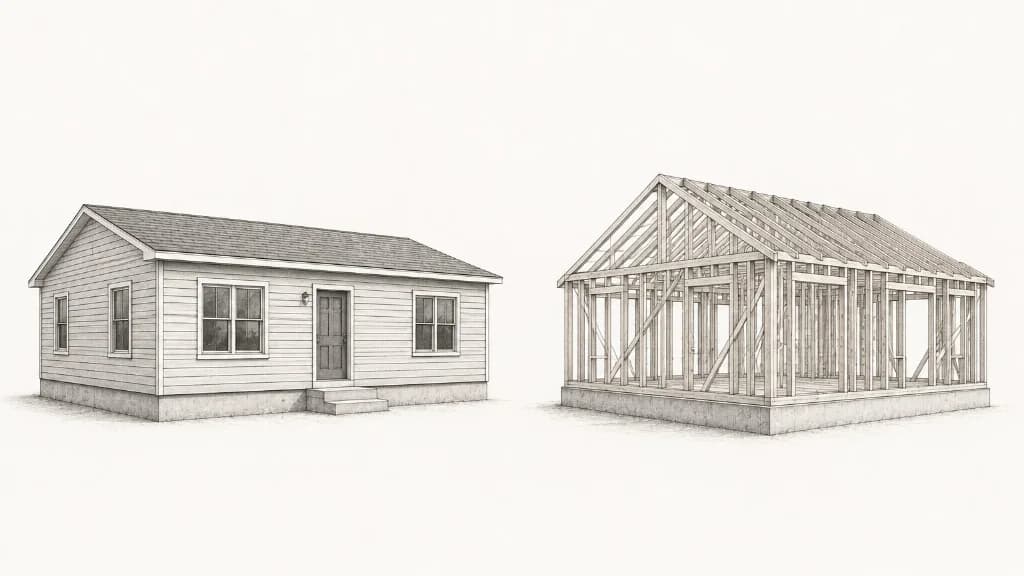
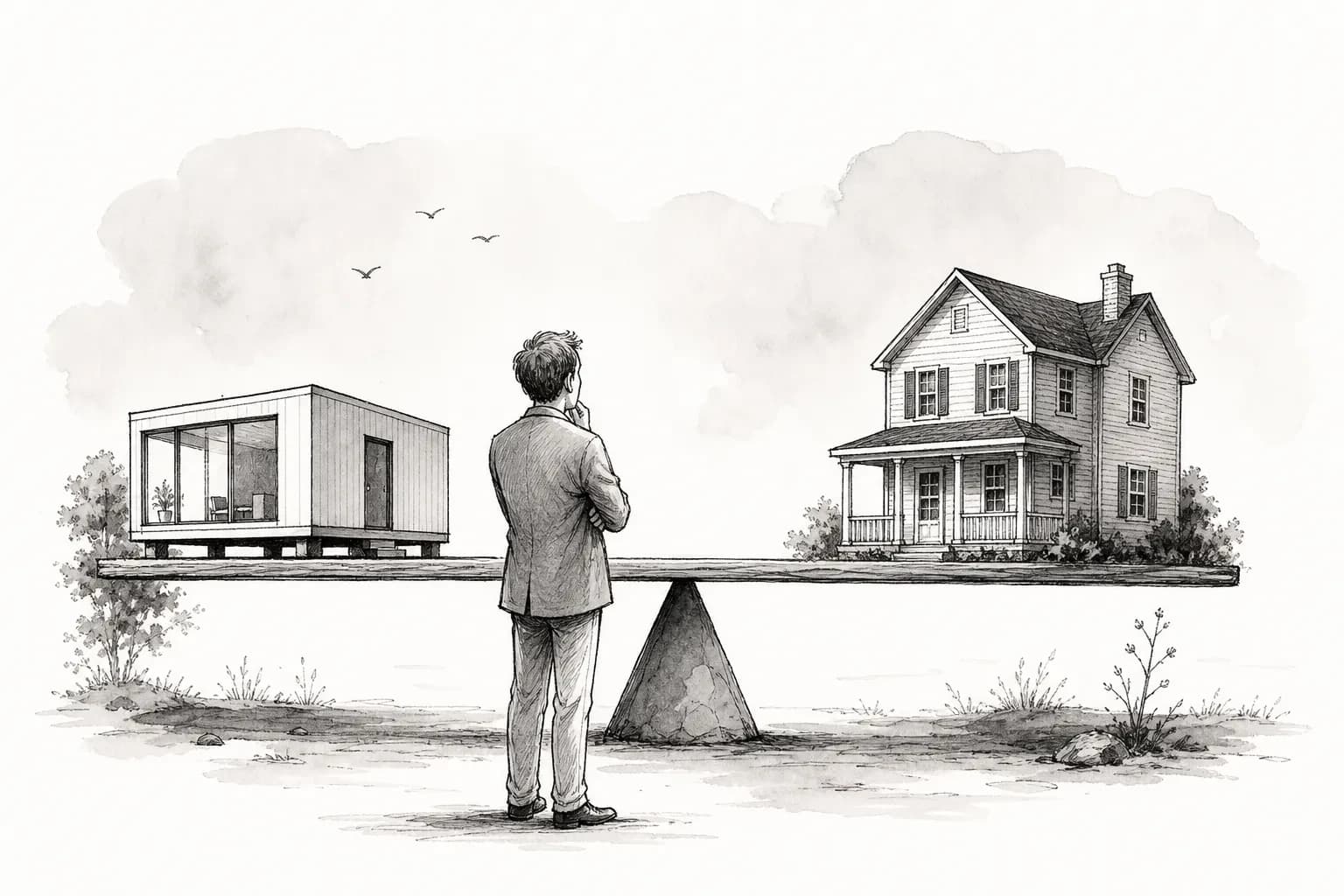
Neither modular nor stick-built construction is automatically cheaper or better. Modular construction can shorten the period between design approval and move-in because factory production and site work can happen at the same time. Stick-built construction usually offers more freedom for complex designs, difficult sites, and changes during the build.
The cost winner depends on the entire project, not the advertised price of the house. Land, excavation, foundation, utilities, permits, transport, crane access, local labor, financing, and finish selections can outweigh any factory savings.
The practical answer is to compare two complete, site-specific scopes for the same finished house. A modular base price and a stick-built turnkey estimate are not comparable.
What is the difference between modular and stick-built construction?
A stick-built, or site-built, home is framed and assembled primarily on its permanent site. Materials arrive in stages, and local trades complete the structure, exterior, mechanical systems, and interior under the supervision of a builder or general contractor.
A modular home is built as three-dimensional sections in a factory. Those modules are transported to the property, placed on a permanent foundation, joined together, and completed by a site crew. It is one type of prefab construction, but it is not the same as a HUD-code manufactured home.
Fannie Mae's factory-built housing guidance states that modular homes must be built under the International Residential Code administered by the responsible state agency. Site work and the completed installation must also satisfy the requirements that apply where the home is placed. Manufactured homes follow a separate federal HUD Code.
Modular remains a small part of new-home construction. Census completion data analyzed by NAHB counted 13,000 modular homes and 15,000 panelized or pre-cut homes among 1,019,000 single-family completions in 2024. For the broader terminology, read Prefab vs Modular Homes: What's the Difference?.
Modular vs stick-built homes at a glance
The two methods can produce comparable finished homes, but they organize design, labor, logistics, and risk differently.
| Factor | Modular home | Stick-built home |
|---|---|---|
| Main construction location | Factory, followed by assembly and finish work on site | Primarily on the permanent building site |
| Building-code path | IRC-based state modular program plus applicable site requirements | Locally adopted residential code and local inspections |
| Design flexibility | Strong within the manufacturer's system; major decisions must be locked earlier | Usually better for unusual geometry and changes during construction |
| Weather exposure | Modules are largely enclosed in a factory | Framing and materials spend more time exposed on site |
| Schedule | Factory work and site preparation can overlap | Most phases occur sequentially on site |
| Site requirements | Foundation, permits, utilities, drainage, delivery route, staging, and crane access | Foundation, permits, utilities, drainage, material access, and trade access |
| Cost advantage | Possible with a suitable plan, accessible lot, nearby factory, and controlled scope | Possible where local labor is competitive or the design and lot favor site construction |
| Financing during construction | Construction financing commonly used for a new project | Construction financing commonly used for a new project |
| Mortgage after completion | May qualify for conventional real-estate financing when property and borrower requirements are met | May qualify for conventional real-estate financing when property and borrower requirements are met |
| Resale | Depends on the finished property and local market response | Depends on the finished property and local market response |
Modular home cost breakdown
Are modular homes cheaper than stick-built homes? Sometimes, but the factory price alone cannot answer the question. Factory production may reduce waste, weather exposure, and repetitive labor. The property still needs everything outside the factory scope.
Home type changes the calculation. A simple ranch may be efficient in the factory but need more foundation and roofing per square foot. A two-story design can reduce the foundation footprint while adding stacking and structural coordination. Custom modular plans add engineering, selections, and production changes.
The all-in modular home cost may include:
- Design, engineering, surveys, soil work, permits, and inspections.
- Clearing, excavation, drainage, foundation, driveway, and landscaping.
- Water, sewer or septic, electricity, gas, and communications.
- Transport permits, escorts, module delivery, staging, and crane work.
- On-site connections, exterior completion, garages, porches, and decks.
- Construction interest, temporary housing, storage, and contingency.
Hidden costs are usually unresolved assumptions
The common surprises are rock or weak soil, long utility runs, foundation redesign, road improvements, extra crane time, fuel surcharges, storage, permit revisions, and finish upgrades beyond allowances. Stick-built quotes can omit many of the same site costs.
Request separate figures for the house, foundation, site preparation, utilities, permits, delivery or material handling, on-site completion, and contingency. Compare the same square footage, finish level, energy specification, and owner responsibilities. The modular home cost guide provides the longer budgeting checklist.
Foundation, transport, and site access
Both building methods need a legal building site, an engineered foundation appropriate for the design and soil, safe access, drainage, utilities, permits, and inspections. That does not mean their site costs are identical.
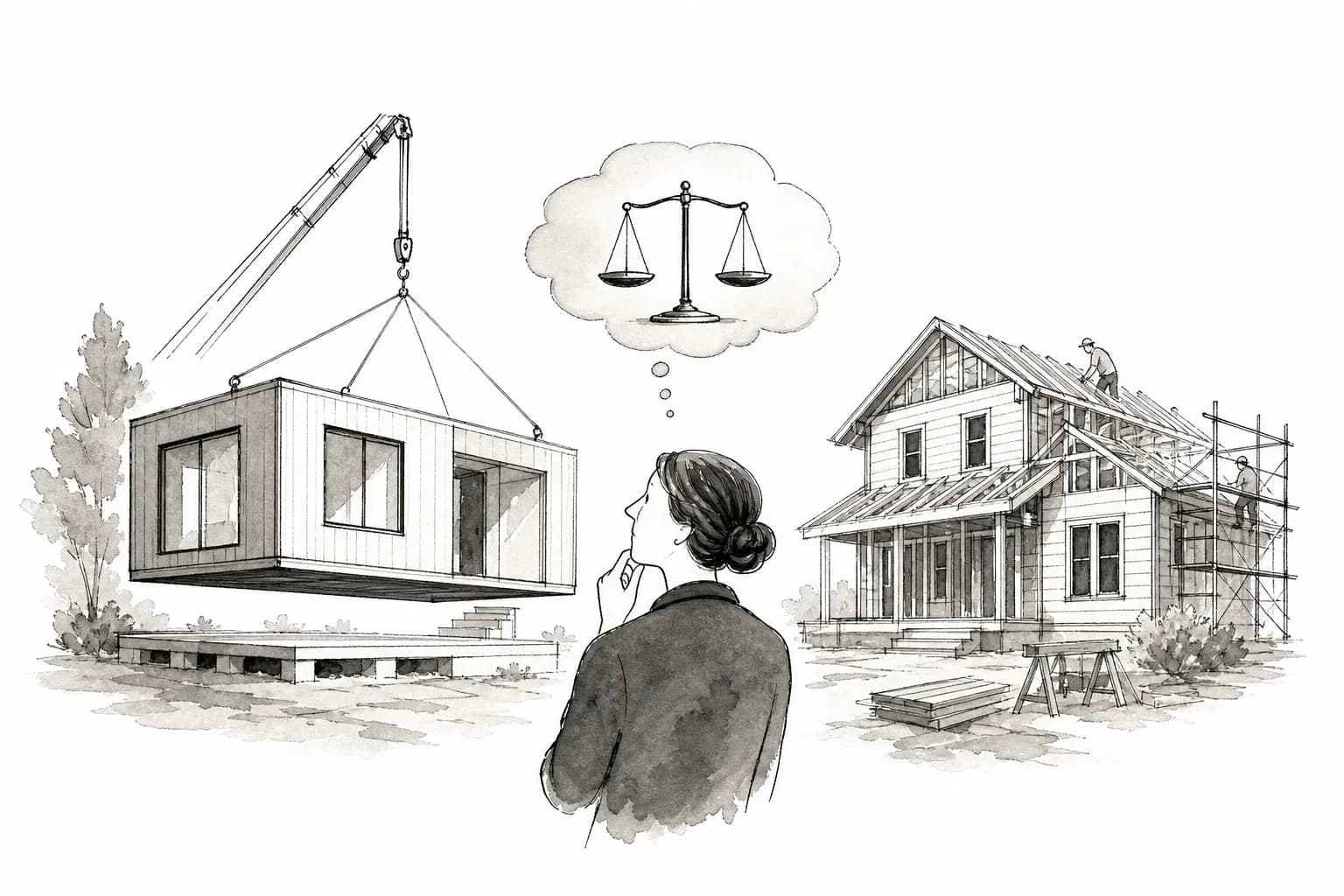
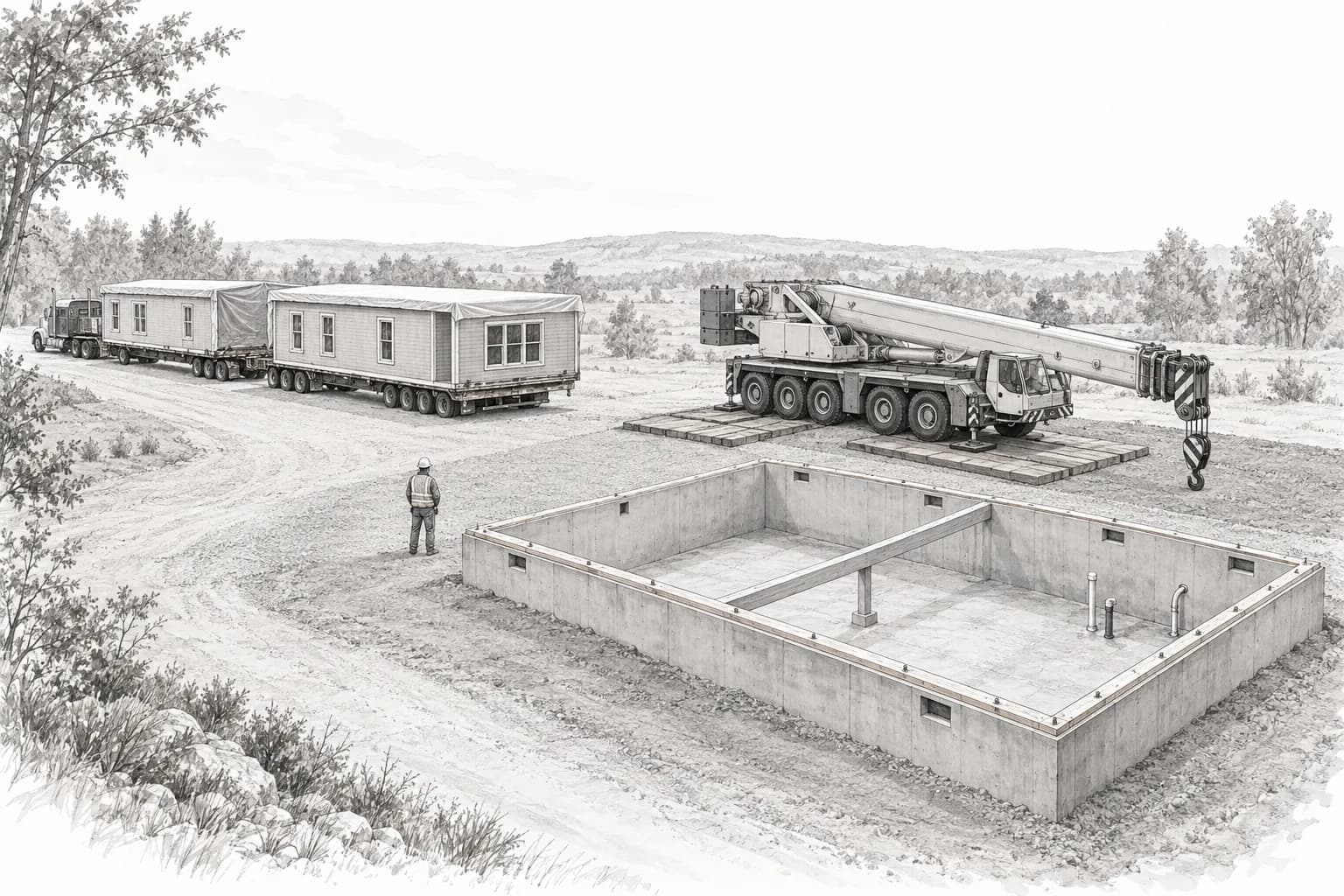
A modular foundation must be ready when the modules arrive and must match the approved dimensions and connection points closely. The project also needs a route that can accommodate large loads, space for staging, and a crane position with suitable ground conditions and clearance. Narrow roads, sharp turns, low wires, bridges, trees, steep grades, and limited urban lots can increase costs or rule out a volumetric modular design.
Stick-built construction avoids transporting complete modules and may work where crane access is impossible, although it still needs repeated material deliveries and trade access. Before selecting a modular floor plan, review:
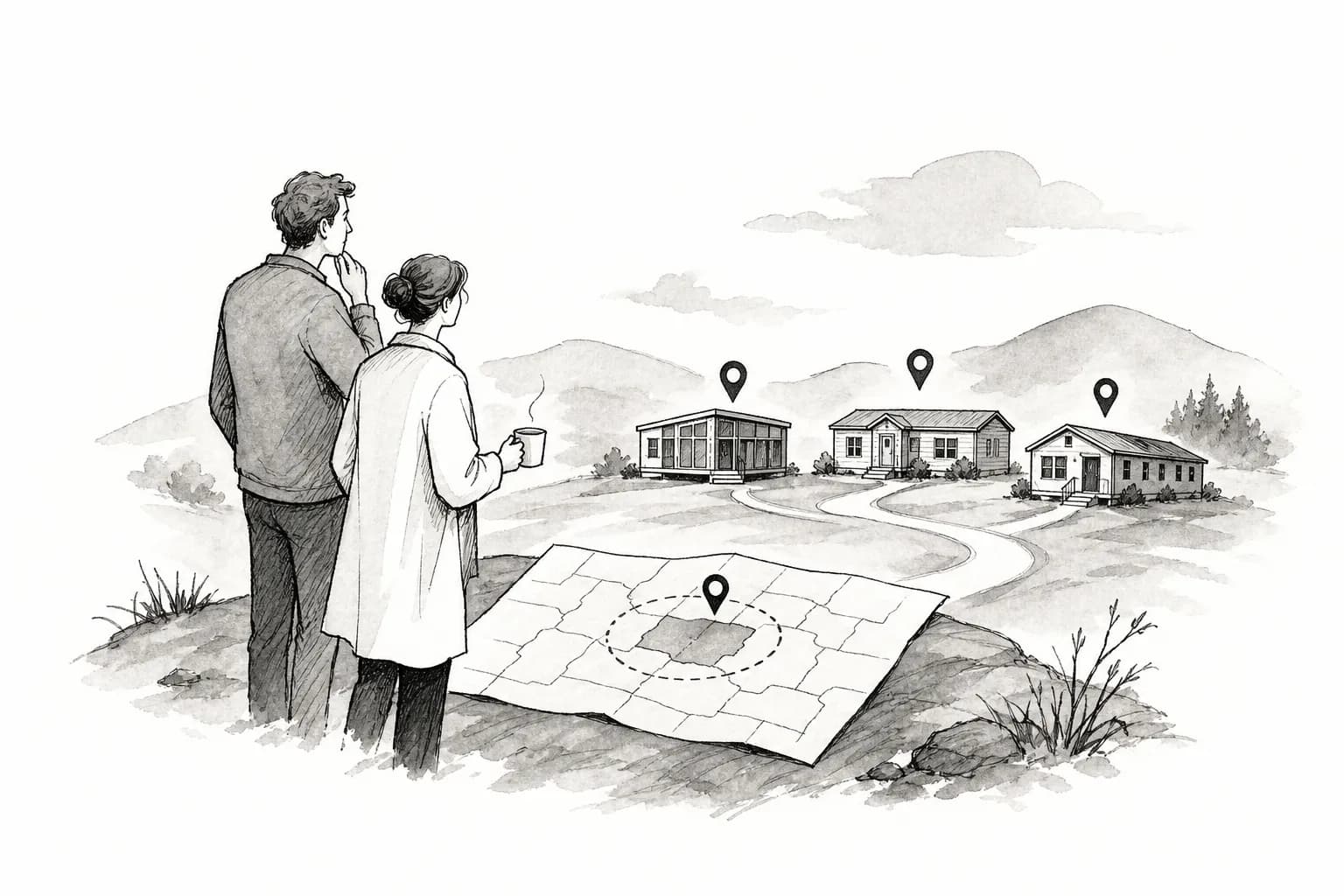
- The delivery route from the factory to the property.
- Road width, turning radius, grades, bridges, and overhead obstructions.
- Crane reach, crane-pad location, and ground-bearing requirements.
- Staging space, survey, setbacks, easements, and utility locations.
- Soil, slope, drainage, flood, wildfire, wind, and snow requirements.
- The division of responsibility between the factory, set crew, and local contractor.
Is modular construction faster?
Modular construction often has a schedule advantage because the factory can build the modules while the local team prepares the site and foundation. Stick-built construction generally moves through those phases more sequentially. Factory enclosure also reduces the amount of framing work directly exposed to rain, snow, and temperature swings.
That advantage is not a guaranteed move-in date. Permits, financing, factory backlog, site readiness, transport, crane scheduling, inspections, and finish work can delay a modular project. A well-managed stick-built project can still move efficiently.
The financial value of speed comes from reducing construction interest, temporary housing, storage, rate-lock extensions, and exposure to later price changes. Ask both builders for milestones rather than only a completion month:
- Design freeze, permits, and site start.
- Foundation completion and factory start or site framing.
- Delivery, set, or weather-tight status.
- Rough inspections, finish work, final inspection, and certificate of occupancy.
Quality and design flexibility
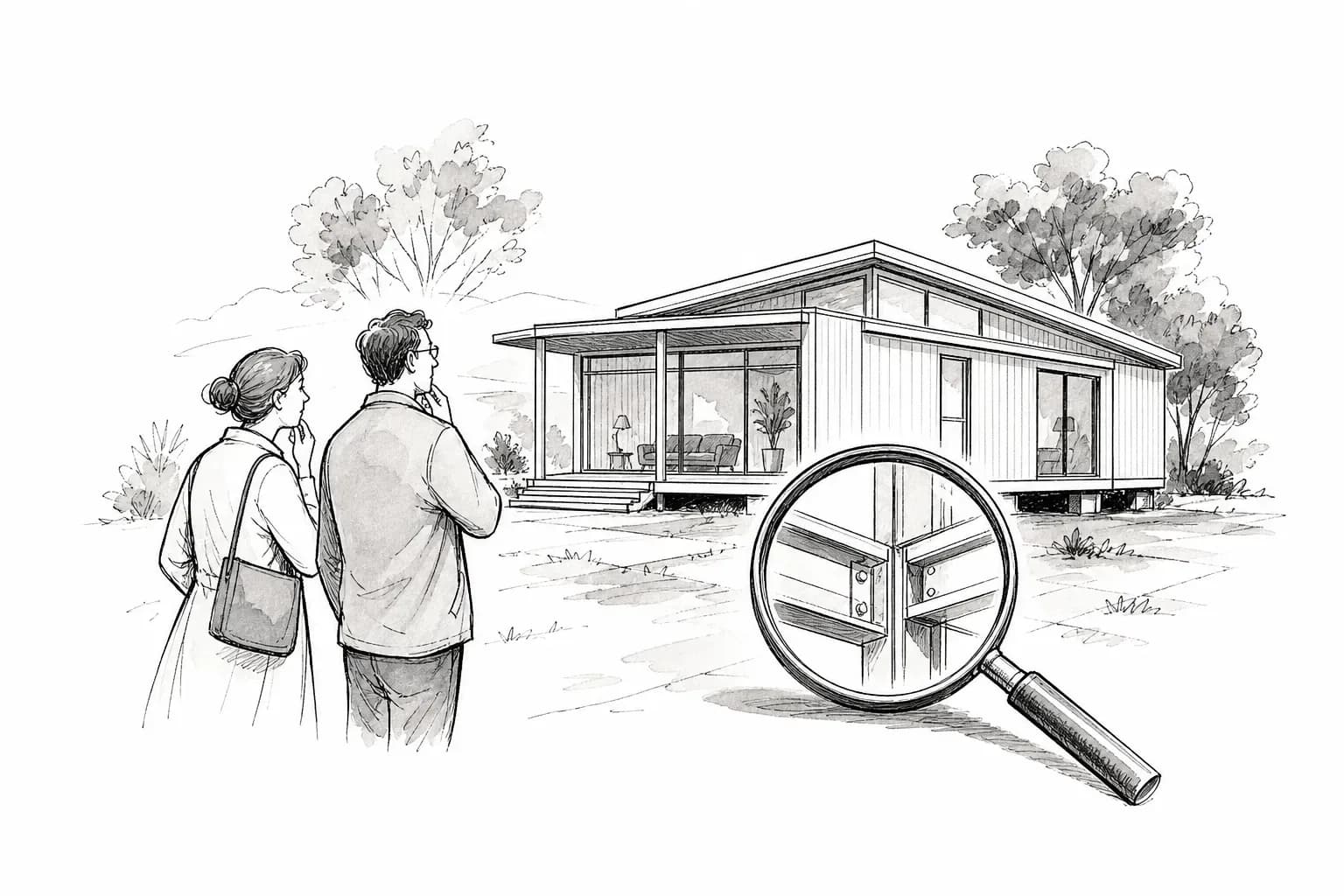
Modular homes are not automatically higher quality, and stick-built homes are not automatically better crafted.
A factory can provide controlled storage, repeatable workstations, documented inspections, and less weather exposure during module construction. The modules must also tolerate transport and lifting loads specified by the project engineering. These are meaningful process advantages. For the building-code details, FEMA storm-performance data, HERS energy scores, and documented defect rates behind that claim, see Modular Home Quality: How Does It Compare to Stick Built?
Quality can still fail at the handoffs. Poor site work, an inaccurate foundation, transport damage, rushed connections, weak water management, or incomplete finish work can undermine a well-built module. Buyers should evaluate the factory, local general contractor, set crew, and written responsibility matrix as one delivery team.
Stick-built construction usually offers more freedom for complex rooflines, constrained lots, and field adjustments. Modular customization can be extensive, but decisions must be finalized earlier because late changes affect engineering, permits, material orders, and factory scheduling.
For either method, request detailed specifications, inspection responsibilities, recent occupied projects, warranty terms, and the process for documenting damage or defects. A skilled local builder can outperform a weak factory team, and a disciplined factory and site crew can outperform a poorly supervised conventional build.
Financing modular homes, appraisal, and resale value
New modular and new stick-built projects commonly need construction financing because the lender is funding an unfinished improvement. Depending on the lender, this may be a single-close construction-to-permanent loan or a construction loan followed by permanent financing.
A completed modular home is different. When it is code-compliant real property on an acceptable site and permanent foundation, it may qualify for a conventional purchase mortgage. It does not automatically require a specialized modular loan simply because it was assembled in a factory.
For appraisal, Fannie Mae says the process of selecting comparable sales for modular and other factory-built housing is generally the same as for site-built housing. The appraiser must address marketability and comparability and use the most appropriate sales. Fannie Mae does not require that one or more comparable sales use the same factory-built method, although genuinely similar homes may strengthen the analysis.
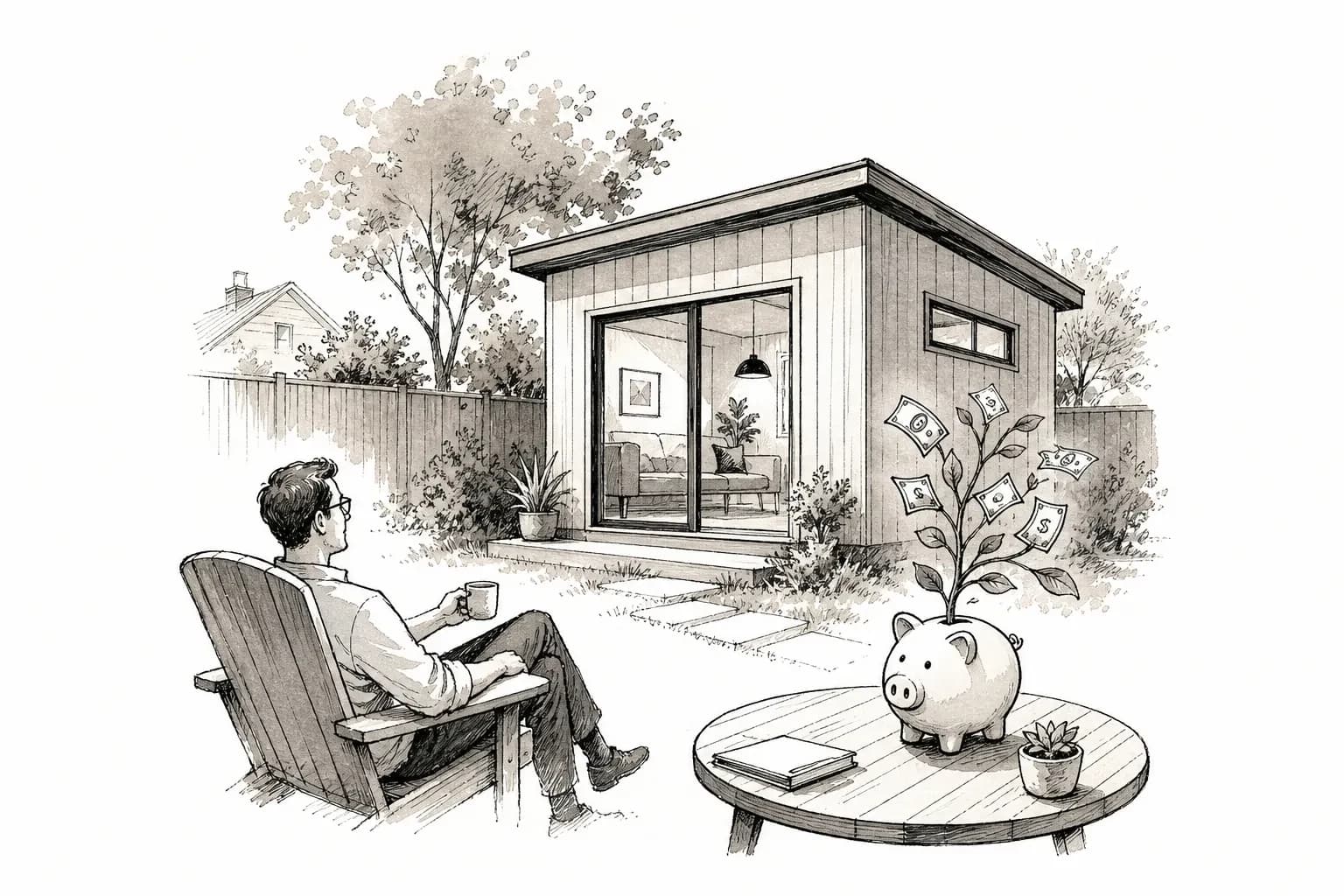
That guidance does not guarantee a particular value or appreciation rate. Modular home resale value still depends on location, land, design, quality, condition, comparable sales, and local buyer demand. Construction method is one property characteristic, not a promise of equal appreciation.
Before paying a factory deposit, speak with lenders that have recently closed modular construction in your state. Confirm whether the loan is single-close or two-close and whether its draw schedule fits the factory contract. Give the builder, lender, and appraiser the same plans, specifications, site scope, timeline, and contingency budget.
Read Modular Home Financing: Can You Get a Conventional Loan? for the detailed lending process.
Which building method is better for you?
Modular construction may be the stronger candidate when:
- An established factory serves your area.
- The lot has a practical delivery route, staging area, and crane position.
- A manufacturer's existing design system meets your needs.
- You can finalize selections early.
- Reducing the on-site construction period matters.
- Local contractors have experience coordinating modular projects.
When stick-built construction may fit better
Stick-built construction may be the stronger candidate when:
- The design has complex or highly site-specific architecture.
- Module transport or crane access is impractical.
- You want materials or details outside available factory systems.
- Field flexibility matters more than an early design freeze.
- A trusted local builder and trade network can deliver a competitive complete scope.
Choose the complete plan, not the category
Neither list is a verdict. A modular project with long transport, poor local coordination, and extensive customization may lose its schedule and cost advantages. A stick-built project with unstable labor, weak supervision, or repeated weather delays may become slower and more expensive than expected.
Give every bidder the same parcel information, plan, finish level, foundation assumption, utility information, schedule, and financing status. Require written scopes, allowances, exclusions, responsibilities, milestones, payment terms, change-order rules, warranty coverage, references, and contingency.
Compare the final totals and risk allocation, not the headline prices. Use the Prefably builder directory to identify modular companies serving your state, then contact several with the same lot information and questions.
How this comparison was prepared
This guide separates federal or industry data from project-specific judgments. Market-share figures come from Census completion data analyzed by NAHB. Code and appraisal explanations rely on Fannie Mae guidance. Prefably does not use one national price-per-square-foot figure because scope, labor, transport, land, and local requirements vary too widely.
Sources
Prefably does not provide construction, legal, appraisal, insurance, or lending advice. Requirements and costs vary by jurisdiction, property, contractor, and financing program. Verify the project with the relevant building officials and qualified professionals before signing contracts or transferring funds.
- National Association of Home Builders: The Offsite Construction Market Share Flattens Nationally in 2024
- Eye on Housing: Market Share for Modular and Other Non-Site Built Housing in 2024
- U.S. Census Bureau: Characteristics of New Housing
- Fannie Mae Selling Guide: Factory-Built Housing - Modular, Prefabricated, Panelized, or Sectional Housing
- U.S. Department of Housing and Urban Development: Manufactured Housing Programs
FAQ
- What is a stick-built home?
- A stick-built, or site-built, home is framed and assembled primarily on its permanent property and inspected through the locally adopted building-code process.
- Are modular homes cheaper than stick-built homes?
- They can be, but not on every project. Factory efficiency may reduce part of the home cost, while transport, crane work, site preparation, utilities, foundation changes, and customization can offset those savings. Compare complete site-specific budgets.
- Are modular homes built to the same code as stick-built homes?
- Modular homes follow an IRC-based state modular program and applicable site requirements. Stick-built homes follow the residential code administered locally. Requirements can align closely, but approval and inspection responsibilities differ.
- Are modular homes faster to build?
- Often, because factory production and site work can overlap. Permits, factory capacity, site readiness, transport, inspections, and finish work still affect completion.
- Are modular homes as durable as stick-built homes?
- Either method can produce a durable home. Engineering, materials, workmanship, water management, site completion, and maintenance matter more than the label.
- Do modular homes have lower resale value?
- Not automatically. Appraisers evaluate the finished property's marketability and comparability. Location, land, design, quality, condition, and local buyer demand influence resale. No construction method guarantees an identical appreciation rate.
- Can you get a conventional mortgage on a modular home?
- Many completed modular homes can qualify for conventional financing when the borrower and property satisfy the lender's program requirements. New construction commonly needs construction financing before conversion to or replacement by a permanent mortgage.
- Which is better, modular or stick-built?
- Modular often fits established designs, early decisions, and accessible sites. Stick-built often fits complex architecture, constrained lots, and projects needing more field flexibility. Choose the complete plan with the most credible cost, schedule, team, and risk allocation.
Keep reading